game of thrones kingsroad mobile — A Player’s No-Filter Deep Dive
When I first heard about game of thrones kingsroad mobile, my knee-jerk reaction was basically: “Oh great, another famous IP slapped onto a mobile game that plays itself.” But after digging into the official info, watching gameplay impressions, and comparing notes with what people are actually saying after getting hands-on time, my vibe shifted. This one tries to be a real action RPG—manual combat, parries and dodges you actually have to time, and a story hook that isn’t just “collect heroes.” It’s a story-driven action-adventure RPG built around the Game of Thrones world, and it leans hard into that gritty “you’re not special, you’re just desperate” feeling that fits Westeros way better than shiny hero vibes.
The pitch is pretty clear: you create your own character—an illegitimate heir to House Tyre in the North—and you’re thrown into a mess of politics, survival, and the looming threat beyond the Wall. That’s already a better starting point than “you’re the chosen one,” because GoT has always been about people scrambling to live through forces bigger than them. And mechanically, it’s not hiding what it wants to be: hack-and-slash action combat with manual controls, combos, and defensive timing (parry/dodge) as a core skill check.
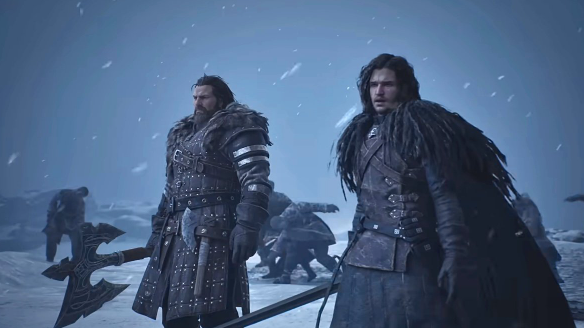
I. Introduction & Game Overview (What You’re Actually Signing Up For)
game of thrones kingsroad mobile is a story-driven action-adventure RPG developed by Netmarble using the Game of Thrones license. That sentence alone can mean a lot of different things in mobile gaming—but the important part is that the official positioning emphasizes action combat and a narrative campaign, not a turn-based gacha collector. On PC, the Steam listing frames it as an action RPG where you explore Westeros, fight using manual controls, and experience an original story threaded through familiar locations and themes.
Platforms are a big part of the identity here. Netmarble has publicly communicated it as a cross-platform title, including Steam (PC) and mobile platforms. If you’re like me—someone who likes mobile convenience but hates touch controls for “precision timing” combat—you should care about this. It’s the difference between “I can play anywhere” and “I’m forced to play on a phone even when the boss requires perfect parry windows.”
Release status is one of those things that changes fast, and it’s been handled in phases. There was a demo/limited access period and a rollout that didn’t feel like a giant hype explosion the way some mobile launches do. Media coverage around the time of Steam Next Fest talked about playable demos and wider platform plans, while Netmarble’s later announcements clarified broad availability and a global release window.
The core gameplay is where it tries to separate itself: manual hack-and-slash combat with dodging and parrying. If the game is tuned well, that means your hands matter more than your wallet. If it’s tuned poorly, it means you’ll get clowned by latency, input delay, or mobile UI. On paper, though, it’s the right ambition for a GoT action RPG: brutal fights where timing and positioning matter.
The story premise is honestly one of the best design choices: you’re an illegitimate heir to House Tyre, a minor Northern house, dealing with winter and the creeping threat of White Walkers while trying to keep your family from being erased. That’s GoT in a nutshell: you’re not the king—you're the person trying not to get stepped on while giants fight above you.
The campaign scope is pitched big: “explore Westeros,” travel across regions, see iconic places, and do it in a way that feels like an actual world rather than a lobby with portals. Whether it’s truly seamless on every device is another question, but the stated goal is a connected open-world experience with major locations.
Now about the visual tech. A lot of chatter throws around “console-quality visuals,” and the Steam presentation definitely leans into high-fidelity marketing screenshots. Official materials I can directly verify talk more about the experience and scope than the specific engine name, but the visual goal is clear: realistic-ish, grounded GoT aesthetics rather than cartoon fantasy.
II. Character Creation & Customization (Where Your “Westeros Self” Gets Built)
Let me be blunt: if a GoT game doesn’t let you look like someone who belongs in Westeros, it’s already failing the vibe check. The good news is game of thrones kingsroad mobile leans into a character creator where you’re not picking a named hero—you’re building your own. The Steam description and promotional materials emphasize making your character and stepping into an original storyline, which naturally pairs with customization.
A. Avatar building: You pick from three playable classes—Knight, Assassin, Sellsword—and each one can be customized. This matters more than people think because it changes how you interpret your character in the story. A Knight feels like someone trying to be legitimate in a world that hates illegitimate heirs. An Assassin feels like someone who accepted that honor is a luxury. A Sellsword feels like the realist who knows survival beats pride every time.
B. Face customization: The outline mentions face templates, sliders, scars, tattoos, freckles, makeup—the full “RPG barber shop” suite. The reason this matters in GoT specifically is that scars and wear-and-tear fit the world. In a bright anime gacha, scars are cosmetic. In Westeros, scars feel like backstory.
C. Hair and cosmetics: Hair styles, color tuning, beard options, eye color—these are classic character creator pieces, but the real test is whether the textures look believable in the game’s lighting. GoT isn’t a world where neon hair makes sense. You want browns, blacks, muted blondes, and the kind of grimy realism that makes your character feel like they’ve slept in snow.
D. Outfit selection: Region-flavored starter outfits are a huge immersion win if done right. A Northern starter outfit should look like it’s designed to not freeze you to death. Stormlands gear should look like it’s survived rain, mud, and war. If armor sets in the game carry that sense of place, collecting gear becomes more than stats—it becomes a way to “wear your story.”
E. Voice selection: This is sneaky important. Two characters with the same face can feel totally different with different voice options. In a GoT game, voice tone matters because the world is political—your character is always negotiating status, threatening someone, or trying not to sound weak.
III. The Three-Class System & Playstyles (Pick Your Poison: Tanky Honor, Glass Cannon Speed, or Axe-Swinging Chaos)
This is the heart of what most players really care about. Not lore. Not graphics. Not even gear. The question is: “How does my class feel when I’m in the dirt, outnumbered, and a boss is winding up a hit that can delete me?”
A. Knight — The Frontline Defender (AKA: The “I Want to Live” Class)
Role & vibe: The Knight is the closest thing to a classic “frontline tank” in an action RPG. You’re built to take hits, hold aggro in co-op, and survive mistakes. If you’re new to the game, the Knight is usually the safest bet because you get more time to learn enemy patterns.
Weapon & identity: Two-handed sword, often marketed with Valyrian steel flavor. Whether it’s truly Valyrian or just “inspired,” the point is: big sword, big arcs, big presence. A Knight looks like someone who belongs on a battlefield, not in a back alley.
Core passives and mechanics: Your outline calls out Valor (reducing rage consumption) and Ignite (burn). The “reduce rage consumption” part is the type of passive that makes a class feel smoother—more skill uptime, less dead air. Ignite is also a nice thematic touch: steel and fire.
Signature ability set (how it plays):
Repost Stance / Parry-counter kit: This is the Knight’s soul. If you like learning patterns and punishing enemies for attacking you, this feels great.
Iron Resolve / defensive stance: When the game throws elite enemies at you, defensive stances let you survive while you figure out the rhythm.
Boost Morale / team utility buff: In co-op, these buffs are what make a Knight feel like a leader, not just a meat wall.
Stuns/knockdowns (Pommel Strike, Pound, etc.): These exist to control space and create safe windows to deal damage.
Strengths: The Knight tends to be the most beginner-friendly because it forgives bad timing. In content with lots of human enemies (who telegraph attacks and can be parried), the Knight can feel almost unfair—in a good way. You read the attack, parry, counter, repeat.
Weaknesses: Slower movement, less flashy mobility, and sometimes weaker “burst” compared to Assassin. If the game’s meta rewards speed clears or DPS rankings, Knight players can feel like they’re working twice as hard for half the spotlight.
Best for: Worm Walks-style wave fights with parry opportunities, elite content where survival matters, and team dungeons where a stable frontline keeps everyone else free to play greedier.
Build focus: Your outline nails the typical direction: parry/defense set stacking (Sentinel vibe) plus crit damage when you’re confident. The real player advice is: don’t chase damage until you stop dying. Nothing tanks your progress like a glassy Knight who tried to cosplay Assassin.
B. Assassin — The Burst DPS (AKA: “I’ll Kill It Before It Kills Me”)
Role & vibe: Assassin is the class for players who like speed, precision, and mechanical reward. If you’re the kind of person who plays action games with “no-hit” aspirations, this is your playground.
Weapon: Twin daggers = fast combos and lots of animation cancels (if the game supports them). On mobile, this is also where control comfort becomes a make-or-break issue.
Passives and kit identity:
Sanguine Crush stacks leading to burst consumption is classic Assassin design: set up, then cash out.
Poison stacks to stun adds a “control through aggression” layer.
Signature moves (how it feels in practice):
Ambush is your opener that says “this target dies first.”
Cutting Mutilation (consuming stacks for a big hit) is your payoff button.
Retreat / smoke dash is your “I messed up—undo” tool.
Blood Burst / passive amplification is how your kit rewards keeping momentum and not dropping your rotation.
Strengths: Highest burst potential, great for speed farming, and usually the best candidate for “boss DPS rankings” or time trials like Altar of Memories. When you’re playing well, you feel unstoppable.
Weaknesses: You’re squishier, you can get punished by enemies that parry often or have long attack chains, and you suffer more in long fights if you don’t manage your cooldowns and stack windows. Also: on mobile, high APM classes can be miserable if the UI isn’t customizable enough.
Best for: Boss burn phases, competitive speed runs, and players who enjoy “execution equals power.”
Build focus: Crit rate first, then anything that multiplies your burst window. If your class revolves around stacking and cashing out, then boosting the “cash out” button is the whole point.
C. Sellsword — Heavy AoE Brawler (AKA: “One Swing, Three Bodies”)
Role & vibe: Sellsword is the class for people who like weighty hits and crowd destruction. It’s not always the best on paper, but it’s often the most satisfying.
Weapon: Massive two-handed axe. The fantasy is simple: you are a walking catastrophe.
Passives and the “momentum brawler” identity:
Shock stacks converting to Destruction suggests a debuff/amp cycle: build stacks, convert them, then smash harder.
Hit-stun immunity is a huge deal if true, because it changes how you approach dangerous enemies—you trade mobility for unstoppable offense.
Signature skills (how it plays):
Rampage buff windows are when you go full blender.
Earth Strike / AoE knockdowns give you control and setup.
Whirlwind / sweeping attacks are how you clear mobs and feel like a raid boss.
Strengths: The most “impactful” feel, strong AoE, and often strong in equal-momentum content where you’re not constantly getting out-scaled. If you love clearing elites and feeling powerful, this is it.
Weaknesses: Typically the slowest, hardest to dodge with, and struggles against high-momentum enemies that don’t flinch. If the game’s hardest content is built around relentless bosses with tiny punish windows, Sellsword can feel like you’re playing with ankle weights.
Best for: Elite clear modes like Last Hideout, satisfying PvE loops, and players who want that “heavy hitter” fantasy.
Build focus: Crit damage and heavy-hit multipliers. You want each swing to matter.
IV. Core Combat Mechanics & Systems (The Part That Makes or Breaks the Game)
The Steam listing sells the game as an action RPG built around real-time combat, and it’s not subtle about the direction: fight, explore, upgrade, repeat.
A. Fully manual combat: Light/heavy/charged attacks plus dodge/parry/counter. This is the big promise. If you’ve played mobile action games before, you already know the concern: will inputs feel crisp or floaty? Crisp input makes timing-based combat addictive. Floaty input makes it rage-inducing.
B. Combo system: Combos matter because they create a skill ceiling. Anyone can mash light attack. But players who chain light into heavy into skill at the right timing will output more damage and control enemies better.
C. Hit-stun mechanic: This is the hidden glue. When hit-stun exists and is consistent, you can “earn” safe damage by playing well. When hit-stun is inconsistent, fights feel like random nonsense where enemies ignore your hits.
D. Rage/skill meter: The outline describes rage built from attacks and spent on abilities with cooldowns. This kind of system naturally rewards aggression—if you play too passive, you starve your own skills. But it also punishes panic spamming: if you dump rage at the wrong time, you’ll be helpless during the boss’s real danger phase.
E. Momentum system: Momentum acts like a power rating and difficulty scaler. In practice, momentum systems do two things:
they create progression gates (“you’re not strong enough yet”), and
they make you care about gear quality and optimization, because raw level isn’t enough.
F. Status effects: Ignite, Shock/Destruction, Poison, Bloodburst—these effects are how the classes feel distinct even when everyone is technically just “doing damage.” If status effects are tuned well, you’ll start making decisions like: “I save my burst until Destruction is active,” or “I need to poison-stun the add before it casts.”
G. Targeting and environment: Lock-on matters more than people admit, especially on mobile. A bad lock-on system makes you lose fights you should’ve won. Environmental positioning—height, narrow paths, obstacles—can either create fun tactical moments or just be annoying.
V. Gear & Equipment Progression (Where Your Time Actually Goes)
If combat is the hook, gear is the sinkhole. You’ll spend more hours chasing a perfect roll than you’ll spend watching cutscenes.
A. Equipment categories: The outline lists axes, greatswords, daggers, bows/crossbows, plus armor pieces and accessories. The core idea is standard ARPG: every slot is an opportunity to raise momentum and refine your build.
B. Gear tiers and rarity: T1 to T4 (Crude → Legendary). This is how the game structures your grind curve. Early on, any upgrade feels good. Midgame, you start caring about set bonuses. Endgame, you start caring about stat rolls and reforging outcomes.
C. Equipment sets & bonuses: Sets like Champion, Sentinel, Brute, Duelist, Crusher, Defender—these names scream “role identity.” The fun part of set design is when a set changes how you play, not just how hard you hit. A parry-focused Knight set should make parrying feel like a power fantasy. A burst set should make Assassin payoff windows feel insane.
D. Crafting & forging: Forge unlocks (like account level 24) and reforge randomization is where the grind turns into gambling—time gambling, not money gambling (unless monetization twists it later). Players always end up asking: “Is it better to craft a new piece or reforge this one?” That’s the moment you know you’re deep in the game.
E. Stat priorities by class:
Knight: crit damage → attack power → defense (after survivability baseline)
Assassin: crit rate → burst multipliers → penetration
Sellsword: crit damage → signature skill multipliers → attack power
In player terms: build toward what your class does best, but don’t sacrifice survivability until you’re consistently clearing content.
VI. Game Modes & Content Types (What You’ll Be Doing at 2AM)
The Steam description frames the experience around exploring Westeros, fighting enemies, and progressing your character, with mention of cooperative elements.
A. Story campaign: The main questline follows the House Tyre restoration arc while weaving in familiar GoT faces. The demo coverage specifically called out that the story is set around the show’s Season 4 timeframe and includes recognizable characters like Jon Snow (with actor resemblance being a marketing beat).
B. Dungeon farming: Instanced fights with waves, elite encounters, hideouts, and timed modes like Worm Walks. These modes exist for one reason: to feed you gear and materials while keeping the action loop tight.
C. Cooperative multiplayer: Team dungeons, co-op raid concepts (like a dragon raid), and shared hunt zones like the weirwood forest. The important detail is that co-op needs roles to matter. If everyone is just DPS, co-op becomes “same fight but with more particle effects.”
D. Resource farming routes: Sweetgrass gathering, camp resets, favor currencies—these are the daily/weekly routines. You’ll learn spawn paths, optimize routes, and start caring about timers more than you want to admit.
E. Endgame activities: DPS leaderboards, speed-run challenges, and high-momentum expeditions beyond the Wall. These modes are where the meta will form—because players always chase the most efficient way to win.
F. Endless mode at Castle Black: Endless survival modes are usually a test of build stability. If it scales well, it becomes a daily ritual. If it’s poorly tuned, it becomes content you try once and forget.
VII. Character Progression & Leveling (Why “Momentum” Becomes Your Real Level)
Account level is typically the system gate: it unlocks forging tiers, opens new regions, and determines what content you’re allowed to farm. That’s standard mobile RPG structure.
Character leveling is the obvious progression: more HP, more base stats, more talent points. But in momentum-based systems, raw level often stops mattering as much once your gear becomes the main driver.
Momentum is the real boss. If an enemy’s momentum outscales yours, your hit-stun might stop working, your damage feels like wet noodles, and your mistakes get punished harder. The outline’s example of needing significantly higher momentum for later regions is exactly how these systems control pacing: they prevent you from “skill skipping” the entire world.
Talent/trait trees add specialization: Knight might dump into parry and survivability, Assassin into crit and burst, Sellsword into heavy-hit multipliers and debuff conversion.
VIII. Open World & Exploration (Westeros as a Place, Not Just a Menu)
Exploration matters in GoT because the world is half the fantasy. The Steam pitch leans into traveling across Westeros, encountering dangers, and building your legend through action rather than just reading text boxes.
A seamless world is a strong claim. If the game pulls it off—even with some streaming/loading behind the scenes—it makes the world feel real. Horse travel systems are a smart choice here because Westeros should feel vast, and horses are culturally correct for the setting.
Points of interest like Castle Black, major capitals, wilderness roads, bandit camps, and resource nodes form the “exploration loop.” The best open-world games make travel meaningful—either through events, ambushes, or secrets. The worst ones make you run across empty fields just to pad playtime.
IX. Story & Lore Integration (How to Use GoT Without Turning It Into Fan Service)
The strongest part of this story setup is that you’re not stealing the spotlight from the main cast. You’re a small house heir caught in the same storm. That’s how you respect GoT lore: you let famous characters be famous, and you let the player be a believable survivor.
The outline lists major cameos: Jon Snow, Samwell, Bronn, Ramsay, Roose, Jaime, Varys, Cersei, and the White Walkers as an endgame threat. The demo coverage confirms at least some of this direction—original protagonist tied into show-era events and recognizable characters.
Lore themes like winter prep, house politics, Night’s Watch duty, and the mythic dread beyond the Wall are exactly the correct pillars. If the game focuses too much on “look, it’s X character!” it’ll feel cheap. If it focuses on survival and political tension, it can actually feel like Westeros.
X. Progression Gating & Difficulty Scaling (Where Players Either Get Motivated or Quit)
Momentum requirements are the big gate. When you hit a wall—like “you need 49k momentum for this region”—you face a choice: grind, optimize, or walk away.
Gear timegating shows up through tier requirements, forging unlocks, material rarity, and reforge costs. This is where the economy matters: if reforging is too expensive, players feel stuck. If it’s too cheap, builds converge too quickly and content gets trivial.
Account-level gating (like unlocks at 13 or 24) is normal, but it needs to feel earned, not arbitrary. Players don’t mind grinding if they understand the path. They rage quit when the path feels random.
XI. Currency & Economy Systems (The “Real Game” for Min-Maxers)
Copper for crafting/reforging, region favors for shops, jewelry boxes for rare mats—these currencies exist to diversify grind sources. It’s basically the game saying: “Don’t farm one thing forever; rotate activities.”
Premium currency expectations are always tricky. Official communications emphasize wide availability and platform access, but long-term monetization usually arrives through cosmetics, passes, or convenience. The key question for players is: will the shop sell power? If it doesn’t, the game earns goodwill fast.
XII. Multiplayer & Social Features (How Long This Game Can Stay Alive)
Co-op dungeons and raid-style bosses (like a dragon) are what keep action RPG communities engaged. A strong co-op loop creates friendships, guilds, and “I’ll log in for my group” habits.
Leaderboards (DPS, speed runs) create soft competition even without direct PvP. If PvP ever arrives, it changes everything: it becomes a whale magnet, but also a balance nightmare.
Social hubs like Discord and Reddit are where the real meta forms. People post farming routes, boss strategies, build screenshots, and then suddenly everyone is running the same “best” setup.
XIII. Platform & Technical Specs (What You Need to Run It Without Suffering)
On PC, you can rely on Steam and traditional settings options. On mobile, performance depends on chipset, RAM, thermal throttling, and whether the game lets you tune resolution and effects.
Control options are a big deal: keyboard/mouse, controller support, touch controls—each changes the class experience. Assassin on touch might feel like a chore if buttons are cramped. Knight might feel fine. Sellsword might feel okay until you need precise dodges.
Cross-platform account linkage and cloud saves are the dream. If they’re implemented well, you get “serious play on PC, casual farming on mobile.” If not, you’re forced to commit to one device.
XIV. Game Balance & Class Viability (Is There a “Best Class”?)
Your outline ranks classes by content type, and that’s usually the truth in action RPGs: there’s rarely one king of everything.
Worm Walks / parry-heavy fights: Knight shines because timing defense becomes offense.
Boss DPS: Assassin often wins because burst windows matter most.
Elite clearing: Sellsword feels great when enemies can be controlled and hit-stunned.
Accessibility matters too: Knight is the easiest for most people, Assassin is the hardest (especially on mobile), and Sellsword sits in the middle but demands awareness of momentum scaling.
Endgame viability is the important part: if all three classes can clear endgame with skill and investment, the game feels fair. If one class dominates every leaderboard and encounter, the game gets stale fast.
XV. Monetization Model & Free-to-Play Structure (The Part Everyone Side-Eyes)
The healthiest version of this game is: free-to-play access, cosmetics for revenue, maybe a battle pass, no gacha heroes, no stamina walls. That structure makes players feel respected. It also makes the devs rely on content quality rather than addiction mechanics.
The risk is sustainability. Some communities worry that “cosmetics only” isn’t enough revenue for constant updates, especially for a licensed IP. That’s when studios start adding convenience items, and convenience can slide into power if you’re not careful.
XVI. Community & Content Creator Presence (Where the Real Guides Come From)
YouTube channels, Twitch streams, and Reddit threads will define the game’s public opinion way more than official trailers. Creators will focus on: best farming routes, fastest builds, boss mechanics, and whether monetization is fair.
If the game has a quiet marketing strategy, creators become the marketing. That can be good (authentic hype) or bad (one viral negative take tanks perception).
XVII. Critical Reception & Community Feedback (The Mixed Bag You Should Expect)
The positives people highlight are predictable for a good action RPG: satisfying combat, strong visuals for the platform, decent GoT flavor, and the fact that it’s accessible.
The criticisms are also predictable: concerns about endgame depth, lack of PvP for long-term competition (depending on what players want), uncertainty about monetization sustainability, and whether the game will keep updating fast enough to keep grinders engaged.
XVIII. Comparison to Competitor Games (Where It Fits in Your Rotation)
Vs. Genshin Impact: Both are open-world and F2P, but Genshin is built around character collection and elemental team synergy. Kingsroad—at least in identity—leans toward manual combat mastery and gear progression rather than gacha hero collecting.
Vs. Diablo Immortal: Diablo is a content treadmill with heavy monetization controversy and strong multiplayer systems. Kingsroad looks more “action adventure RPG with co-op elements” than “massive MMO-style ecosystem,” but the comparison will happen because of the platform overlap.
Vs. Solo Leveling: ARISE: That’s a gacha-driven action RPG. Kingsroad differentiates itself if it truly avoids hero gacha and focuses on your custom character.
Vs. King Arthur: Legends Rise: Both have Netmarble DNA, but the gameplay identity is different if Kingsroad stays real-time action instead of turn-based collection.
XIX. Marketing & Launch Strategy (Why It Felt Like It Appeared Out of Thin Air)
Some players dislike silent launches because it feels like the studio isn’t confident. Others like it because it avoids overpromising.
There was playable demo exposure around Steam events, and later official announcements clarified platform availability and broader release.
If you’re waiting for a huge global countdown like Genshin does—this probably isn’t that style.
XX. Future Roadmap & Content Forecast (What Could Make It Great—or Kill It)
The game’s long-term success hinges on a few things:
Meaningful endgame updates (not just bigger numbers).
Co-op depth (roles, mechanics, reasons to team up).
Fair monetization (cosmetics and passes are fine; pay-to-power is poison).
Balance patches that keep all three classes viable and fun.
Optional: PvP, but only if they can balance it without turning it into a whale arena.
The biggest risk is content drought. Action RPGs live and die by “what do I do after I finish the story?” If the answer is only “grind gear forever,” the player base shrinks fast.
If you’re coming to game of thrones kingsroad mobile expecting a lazy IP cash-in, I get it—I had the same suspicion. But the game’s identity (as presented through official listings and rollout info) aims for something more ambitious: a GoT-flavored action RPG where your hands matter, your character is your character, and progression is tied to combat mastery and gear optimization rather than collecting a roster of famous faces.
Here’s my straight-up player recommendation:
Pick Knight if you want the safest path through most content and you enjoy parry/counter gameplay.
Pick Assassin if you want the highest mechanical ceiling, love burst damage, and don’t mind dying while you learn.
Pick Sellsword if you want the most satisfying heavy-hitter feel and you enjoy clearing elites with big swings.
And the real “best class” answer? It depends on what you like doing. The best class is the one you’ll still enjoy after the honeymoon phase—because if you’re not having fun, no amount of legendary gear rolls will save you from burnout.