Horizon Walker: A Player’s Deep-Dive Guide to the Tactical Grid RPG Everyone Keeps Talking About
If you’re the kind of person who gets that little brain-tingle from turn-based tactics, where one good placement wins a fight and one bad move gets your carry erased, then horizon walker is the sort of game that can absolutely eat your evenings. It’s a tactical strategy RPG with a very “Korean manhwa” character vibe—bold designs, dramatic personalities, and that whole “everyone looks like they walked out of a stylish webtoon panel” energy. But under the flashy art and gacha temptation, it’s really a positioning game. Like, seriously positioning: grid control, rectangular AoEs, turn order, and squad cost management. You’re not just pressing “auto” and watching numbers; you’re setting traps, baiting AI, and trying not to get clipped by a 1×7 laser rectangle because you stood one tile too far forward.
The thing that surprised me most when I started was how different it feels from the usual “turn-based RPG” label. A lot of gacha turn-based games are basically “speed + skill rotations + buffs,” and yeah, horizon walker has that too—but the grid makes everything more physical. Range matters. Lines of fire matter. Enemy clustering matters. Even the shape of an ability matters. In many games, “AoE” just means “hit multiple.” Here, it means “hit this specific rectangle,” which is way more tactical… and way more punishing when you misread it.
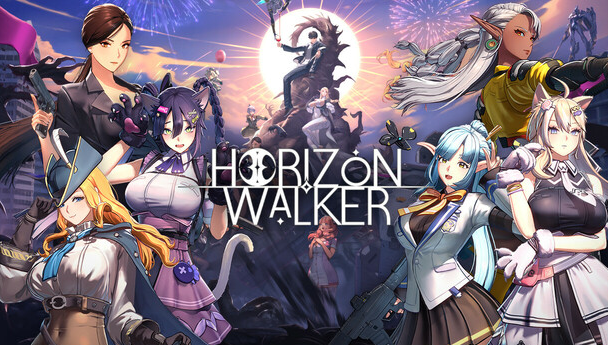
I. INTRODUCTION & GAME OVERVIEW
A. What is Horizon Walker (in normal human terms)?
Horizon Walker is a turn-based tactical strategy RPG developed by Gentle Maniac, and it leans heavily into a Korean manhwa aesthetic for its characters and story presentation. The basic pitch is: you collect and build a squad of “Vanguards” (your main playable units), recruit mercenaries, and fight on a grid-based battlefield where positioning and turn order are the backbone of everything. If you’ve ever played something like Final Fantasy Tactics, Fire Emblem, or modern grid strategy games—but wished it had more gacha collection and character bonding content—this is in that neighborhood.
The thing that defines the identity of horizon walker is the way it handles rectangular AoE abilities. A lot of attacks aren’t circles or “all enemies.” They’re lines, rectangles, cones, fans—shapes you can exploit if you’re smart and that the enemy will punish you with if you’re not.
B. Platform availability (where you can actually play)
From a player practicality standpoint, the platform story is:
PC (Steam) if you want the smoothest control and easiest “grid precision.”
Android via Google Play or OneStore (and yes, that matters for version differences).
iOS via the App Store.
macOS typically through emulator-style approaches (because native mac support is often less straightforward, and most players who do mac gaming end up emulating for stability or convenience).
If you are a “tactics game perfectionist,” PC feels the best because grid games love mouse precision. But mobile is totally playable—just expect a little more time spent double-checking placement.
C. Release status (what “global launch” actually felt like)
The game’s global launch window being November 2024, with concurrent servers across Korean/English/Chinese ecosystems, basically created a situation where meta knowledge traveled fast. You had players watching KR discussions, global communities translating team comps, and a ton of early tier list churn because different servers sometimes prioritize different content pacing and release cadence. In plain terms: if you’re new, don’t be surprised if you see ten “best team” posts that contradict each other—some are patch snapshots, some are server-specific assumptions, and some are just content creators farming views.
D. Core gameplay (the loop that hooks you)
At its heart, horizon walker is:
squad-based tactics combat
with positioning strategy
and a turn-order system where speed and sequencing can win fights before raw stats even matter.
The daily loop feels like: log in, burn stamina/entries on farming content, push story/side content, upgrade units/weapons, and slowly refine teams for harder stuff. The “tactics brain” fun comes from figuring out:
how to set up a turn so your carry hits max targets,
how to keep your supports safe,
how to manipulate enemy movement, and
how to avoid taking damage in the first place.
E. Story premise (the “why are we fighting” setup)
The world starts from a “we were fine” baseline—humanity in a golden age—then gets absolutely wrecked when dimensional rifts appear and the Oblivia phenomenon begins. Out of these gates come Forsaken Gods and their monstrous hordes, and humanity basically gets shoved back into survival mode. The narrative uses a lot of multiverse/dimensional theme language, and it leans into the concept of “Chosen Humans” who transcend normal limits to fight back.
Even if you’re not a story-first player, it does a decent job of giving stakes and making characters feel tied to the setting instead of being random gacha units pasted into a generic world.
F. Character system (Vanguards + Mercenaries)
The playable “main” units are Vanguards, and then you have a mercenary recruitment layer that supports roster depth and team flexibility. This matters because some modes and fights reward having niche tools—debuffers, tanks, healers, stealth assassins—rather than just one overleveled damage dealer.
G. The unique mechanic that actually makes it stand out
The signature gameplay feel comes from turn-based grid positioning + rectangular AoE abilities. This combo is what makes the game feel more tactical than the average turn-based gacha. When you start learning how to “herd” enemies into a rectangle, bait them with a tank, then erase them with a beam or sweep attack, that’s when the game clicks.
II. GAME PREMISE & LORE FRAMEWORK
A. World setting context (how the apocalypse hits)
The game’s worldbuilding is basically a hard left turn from “peaceful golden age” to “dimension horror invasion.” The Oblivia phenomenon isn’t just a random portal event—it’s treated like a reality breakdown. Rifts open, the Forsaken Gods emerge, and the invasion isn’t “one big war”—it’s chaos everywhere. The feeling is less “frontline vs enemy” and more “the world got punctured and now it’s bleeding monsters.”
Then you get the “Chosen Humans” concept: the first warriors who transcend mortality and gain authority/power to fight back. That’s the narrative excuse for why your Vanguards can do things like teleport across tiles, fire impossible AoE beams, or go stealth assassin mode and delete someone in one cycle.
B. Story progression (plot + character-driven structure)
The main narrative is about resisting these Forsaken Entities and preventing humanity from being erased. But horizon walker is also a character game, so it has a lot of personality-driven chapters and side events.
One thing the community talks about a lot is the romantic/affection content, which is structured as affection levels (1–5) with increasing intimacy and character-specific events. If you’re here for “waifu collector culture,” the game definitely knows its audience. If you’re not, you can treat it as optional flavor, but it’s still part of how the game monetizes attention and attachment.
The lore also claims depth through a shared universe/sequel relationship to other titles (like Isekai Trade Center and Madaeja Roguelike RPG references). Whether that matters depends on you. For most players, it’s “cool trivia” unless the game starts doing crossover-style content.
C. Thematic elements (why it feels like multiverse gacha)
The multiverse/dimensional theme makes it easy for the game to justify:
characters from different “origins”
weird factions that don’t match one culture
enemies that feel “not from here”
and a roster that grows without the story needing to explain every single new face with a full novel.
This is also why the community vibe leans hard into collection culture. People talk about favorites, romance events, skins, and meta teams in the same breath.
III. CHARACTER / VANGUARD SYSTEM & MECHANICS
A. Roster overview (what you’re actually collecting)
At launch, the game sits around 40+ playable Vanguards, with the player represented as a protagonist type—often described as a “Human God” or player-customizable figure depending on narrative framing. The rarity tiers are usually framed like:
EX (rarest, 5-star vibe)
SS (4-star vibe)
S (3-star vibe)
The factions are a big deal for flavor (and sometimes synergy), with categories like Human, Elf, Devil, Torta Savage, Ramori, Fairy, Catsidhe, Arcane Elemental, Unknown, and so on. Even if factions aren’t strict “elemental synergy” systems, they matter for identity, story hooks, and sometimes team constraints or bonuses.
B. Character roles (the practical way to understand the roster)
Most Vanguards fall into recognizable tactical roles:
Damage Dealer / Carry
The unit that turns your actions into progress. In horizon walker, a carry can be AoE-focused (farming king) or single-target focused (boss killer). A good carry isn’t just damage; it’s damage with positioning tools.Support
Buffs, utility, control, shields—things that make your carry’s life easier. Supports in grid games often matter more than people expect because preventing damage is better than healing damage later.Tank
Provokes, taunts, block buffs, damage reduction, body-blocking on the grid. Tanks are also “positioning anchors”—the unit you build your formation around.Assassin
Burst single-target damage with fragile survival. Usually needs stealth, speed, or movement tricks. Assassins are powerful but require brainpower: bad positioning equals dead assassin.Healer
Recovery, cleanse/purify, sustain. The healer question is always: do you actually need healing, or can you prevent damage with shields/control? In horizon walker, healing is valuable, but “prevention” often wins.
C. Ability system (how kits are structured)
Most characters are built around:
1st Active Ability (core move, often damage/utility)
2nd Active Ability (secondary move, cooldown-based)
Passive abilities (always-on effects)
Damage types and elemental effects are expressed through categories like Heat, Slash, Pierce, Immaterial, Crush, etc., and status effects include things like stealth, stun, defense reduction (Nomination), purify, and a bunch of buffs/debuffs.
Here’s how to think about kits in a tactical grid game:
A character isn’t “good” because numbers are high. They’re good because they can:
hit the right tiles,
move to the right tile,
force enemies into the wrong tile,
or survive long enough to do it again.
D. Strategic depth (why people get addicted)
This is where horizon walker shines.
Positioning-based combat
Every fight is a puzzle. Enemy range, your range, obstacles, corners, choke points—this all matters.Rectangular AoE
Rectangles are both a blessing and a curse. Blessing because you can delete lines of enemies. Curse because if you misplace, you hit one target instead of five.Range mechanics
Melee vs ranged vs magic scaling changes how you build formations. Melee wants safe approach paths. Ranged wants sightlines. Magic wants AoE setups.Turn order
Speed determines sequencing. Sequencing determines whether you get to “set up” before enemies act.Team composition with a cost system
The 4-point cost system and cost expansion progression is a sneaky important mechanic. You can’t just slap four EX units together early. You have to build smart: one premium carry, one utility support, one tank/healer, one flex—then expand as your point limit grows.
IV. S-TIER CHARACTERS – GAME-CHANGING POWERHOUSES
This is the section everyone scrolls to, so I’ll be blunt: tiers in horizon walker are heavily influenced by content type and weapon access, especially exclusive weapons. Still, there are characters that consistently feel like “cheat codes” when built correctly.
A. Everette (EX, Elf DPS) – the “endgame backbone” AoE carry
Everette is that kind of unit where the first time you see her kit working properly, you understand why people call her S-tier.
Role: Premier AoE DPS with mobility/teleport utility
Signature tools:
a heat beam style rectangle (think 1m × 7m line delete)
a teleport (9m is huge on a grid)
Why she’s busted in practice:
Everette doesn’t just do damage—she solves the main tactical problem: “I need to be over there without dying.” Teleporting lets you reposition for perfect rectangles, escape danger, or set up angles that other units can’t. And because tactical games reward hitting multiple targets, her rectangle beam is basically “farm mode on.”
Use case:
story clears
daily farming
endgame wave content
any fight where enemy clustering exists
Meta status:
Consistently top-tier because she’s useful everywhere. She’s not just a damage unit—she’s a positioning unit, and those age better across patches.
B. Nika (EX, Catsidhe Assassin) – speed demon with stealth (but patch-sensitive)
Nika is one of those units that feels amazing when the meta favors poison/assassin play.
Role: high-speed assassin
Tools: backward leap attack, stealth + speed buff
Why players loved her:
She was the “I go first, I delete a target, I vanish” fantasy. In grid tactics, going first is power. Stealth is power. Movement is power. Nika had all of that.
Why some players dropped her a tier:
When damage formulas shift—especially poison scaling—assassins can fall off if their “special sauce” gets normalized. And if a new assassin (like Marhim) arrives with similar speed but better consistency, Nika’s “main advantage” stops being unique.
Bottom line:
She’s still strong, but she’s no longer the unquestioned queen of her niche if poison is devalued or team comps evolve.
C. Fammene (EX, Human Support) – wind support who actually feels tactical
Supports are often underrated early because new players chase damage. Fammene is the kind of support that makes you realize damage isn’t the only win condition.
Role: defensive/utility support with wind flavor
Tools: knockback control + party defense buff scaling with magic
Why she matters:
Knockback is not “cute”—it’s grid control. You can push enemies out of rectangles, off your squishies, into hazard zones, or break their formation so they waste turns walking.
If you like supports that do something active instead of just “heal + buff,” she’s a great pick.
D. Griselda (EX, Arcane Elemental Mage) – the “100% accuracy” AoE nuke
Griselda’s identity is simple and brutal:
AoE immaterial damage
guaranteed hit regardless of enemy evasion
Why that’s insane:
Many tactics games have enemies that dodge, stealth, or stack evasion. When you hit endgame, missing one key hit can ruin your entire plan. Griselda’s guaranteed accuracy is a hard counter to that frustration. It also makes her a “stability unit” for players who don’t want to gamble.
E. Marhim (EX, Catsidhe Assassin) – the “Nika but optimized” assassin replacement
Marhim exists in the same ecosystem as Nika but leans into:
speed scaling
marking mechanics
high assassination consistency
If you’re building optimized teams and want an assassin who is less patch-sensitive and more “reliable burst,” Marhim often becomes the preferred pick.
V. A-TIER CHARACTERS – ESSENTIAL SUPPORTS & SPECIALISTS
A-tier in horizon walker usually means: “not universally broken, but absolutely core in the right team.”
A. Matrotho (EX, Human Debuffer) – the defense shred king
If you do boss fights, Matrotho is that unit you feel weird not bringing.
Role: defense reduction specialist
Signature debuff: Nomination-style defense removal/reduction
Why it’s so important:
In many endgame fights, bosses have the kind of defenses that make your DPS feel like they’re throwing pebbles. A good defense shredder makes your whole team feel stronger. Also: debuff value scales with your damage roster—meaning the better your carry becomes, the more Matrotho matters.
B. Headless Knight (EX, Unknown Tank) – tank that also clears
Headless Knight is one of those tanks that doesn’t just “stand there.” Wide sweep attacks mean your frontline isn’t dead weight. In wave content, that matters because you don’t want your tank to consume turns without contributing to clear speed.
C. Platina (EX, Unknown Tank) – shield control with stun chance
Platina’s identity is shields + control. Stun chance sounds small until you realize: in grid tactics, one stun can break an enemy’s entire turn cycle and keep your formation intact.
She’s not always the “best tank,” but she’s often the “most comfortable” tank for players who like consistency.
D. Valeta (EX, Human Support) – healing + shielding hybrid
Valeta is valuable because she combines two things:
healing to recover mistakes
shields to prevent mistakes
In a tactics game, preventing damage is king, but people still make mistakes. Hybrid sustain units are the “I’m not perfect and I don’t want to restart the mission” solution.
E. Vlissing (EX, Human Healer) – wide-range sustain and cleanse flavor
Wide-range healing + purify effects matter when fights have:
AoE chip damage
debuffs that ruin your carry
enemy control effects
Vlissing can keep your team stable over long fights and protect against “death by a thousand cuts.”
VI. B-TIER CHARACTERS – SITUATIONAL SPECIALISTS
B-tier doesn’t mean “bad.” It means “you need a reason.”
A. Luise (SS, Human DPS) – fire ranged DPS with burn (but outclassed)
Luise is the kind of unit you might love aesthetically, but meta-wise she often gets overshadowed by newer or more efficient DPS.
Her kit has:
fire/heat damage
AoE fireball style tools
Why she’s tricky:
If the meta has stronger AoE carries, Luise becomes “fine” but not optimal. Some players keep her for future exclusive weapon potential or because they like her vibe (which is valid—this is a game, not a job). But if you’re optimizing early, you usually invest elsewhere.
B. Araha (SS, Elf Sniper) – stealth crit sniper with high ceiling
Araha has a “sniper fantasy” kit:
high accuracy
stealth/camouflage
crit amplification
This is the type of unit that can feel mediocre if you play casually, but feels nasty if you plan turns carefully and protect her. If you enjoy precision play, Araha is a fun specialist.
C. Lisandria (SS, Human Sword User) – overlap hybrid with support flavor
Lisandria’s issue is role overlap. In a game with limited squad slots and a cost system, overlap can be a death sentence unless the kit is exceptionally efficient. She’s not useless—she’s just sometimes redundant if you already have better versions of her niche.
D. Other B-tier examples (the “utility roster”)
Gillan (Tank): solid provoke but positioning-dependent
Min Eun Sol (Tank): shields that scale with exclusive weapon investment
Inz (Assassin): huge single-target deletion but needs protection
Pantyly (Tank): low-cost counter style, short provoke range
These units become valuable when your roster is missing a key tool. For example, if you don’t have a premium tank, Pantyly can hold the line early. If you need a low-cost unit to fit point limits, some B-tier picks become “team glue.”
VII. C-TIER & D-TIER CHARACTERS – EARLY GAME ONLY (MOSTLY)
This section always causes drama because people have favorites. So I’ll say it like a player: you can clear a lot of the game with lower-tier units if you invest and play well. The reason they’re low tier is not “they can’t function.” It’s “they require more investment for less return” compared to better options.
A. C-tier examples (viable early, falls off later)
Some characters help early because:
early enemies are weak
your roster is limited
you need cheap cost options
But later, they feel outclassed because they lack scaling, utility, or modern kit design.
B. D-tier examples (outclassed and painful)
D-tier units usually suffer from:
low scaling
no unique utility
fragile survival
overlapping roles with better alternatives
C. Exceptions (mole units and cheese strats)
The funniest part of tactical games is that “bad” units sometimes enable dumb strategies. Mole-style units that dig, block, or force pathing can sometimes break certain encounters. So even if a unit is “low tier,” don’t instantly delete them from your brain. Sometimes they become puzzle keys.
VIII. RECENT CHARACTER RELEASES & META SHIFTS
Meta shifts are the lifeblood of gacha tactics games. New units drop, old units get buffs, damage formulas change, and suddenly someone goes from “mid” to “monster.”
A. New S-tier additions (why players panic pull)
Olivia: described as a low-cost “complete monster” carry who feels ridiculously satisfying to play
Yui: often treated as the strongest ranged attacker, with AoE ult and weakspot triggers
Yeonwoo (pre-nerf talk): high damage 6-cost unit with survivability via regen
Berga: gained value as poison got devalued and certain team comps evolved
B. Meta evolution (what actually changes)
Damage formula reworks can change everything overnight.
Poison effectiveness dropping makes poison assassins less dominant.
Exclusive weapons can redefine a unit’s tier by multiplying their performance.
Patch buffs can elevate low rarity units into relevance.
C. Tier movement examples (how it looks in real life)
You’ll see stuff like:
Nika dropping from S to A due to formula shifts
Berga rising quickly because he enables a top comp
random A-tier units climbing because a buff finally made their kit click
This is why tier lists are patch snapshots. If you pick a unit because they’re S-tier “today,” make sure you also like their playstyle—because “tomorrow” might be different.
IX. WEAPON SYSTEM & EXCLUSIVE WEAPONS
If you ignore this section, you will eventually hit a wall and wonder why your unit “feels weak” compared to what people claim online.
A. Weapon mechanics (what’s bound to whom)
Each Vanguard typically has a specific weapon type—sword, gun, staff, curved sword, etc. You’re not freely equipping every weapon on everyone. Weapon identity is part of character identity.
B. Exclusive weapons (the biggest power multiplier in the game)
Exclusive weapons are character-specific gear that can dramatically amplify performance. In many cases, the exclusive weapon is the difference between:
“this unit is okay”
and“this unit is ridiculous”
C. Impact tiers (how to think about weapon dependence)
Some units are:
high dependency: they feel incomplete without exclusive
medium dependency: exclusive helps a lot but not required
low dependency: kit works regardless, weapon just adds stats
The practical advice: don’t “half-build” too many units. Pick a carry, commit to their exclusive weapon plan, then build supports.
D. Weapon upgrade system (where your resources go)
Weapons upgrade through levels, ascension materials, and stat optimization. You’ll chase things like:
ATK
crit rate
crit damage
elemental damage scaling
This ties directly into the game economy, which is why planning matters (more on that in the gacha/resource section).
X. TEAM COMPOSITION & SYNERGY FRAMEWORK
This is where horizon walker becomes a real tactics game instead of “pull shiny unit, win.”
A. Team building mechanics (4 units, point costs, and why you can’t just run four gods)
Squad size: 4 Vanguards
Each has a cost (often 2–6)
Your point limit starts limited and expands with progression
Early game, you’ll build around point efficiency. Late game, you’ll build around synergy.
B. Synergy examples (how meta comps evolve)
Yvonna comps shifting from Nika to Berga is a classic “patch changed value” example.
Olivia comps often become “easy mode” farming teams because she carries hard with minimal setup.
Yui comps revolve around weakspot triggers and ranged AoE dominance.
Nari comps sometimes get phased out when a superior ranged DPS arrives.
C. Role-based template (the squad skeleton that works everywhere)
If you’re lost, use this template:
Core Carry (your main damage engine)
Support Enabler (buff/debuff that multiplies carry)
Defensive Layer (tank/shields/control)
Healing Backup or Flex (healer or extra utility/damage depending on mode)
This structure is boring but effective, and it teaches you the “real” game: the carry needs a stage, and everyone else builds the stage.
XI. ENDGAME CONTENT & TIER LIST CRITERIA (HOW TIERS ARE ACTUALLY MADE)
A. Content types (what people mean by “endgame”)
Daily farming: efficiency and consistency
Story clearing: progression and survival
Fun factor content: units that feel satisfying
Endgame challenges: boss raids, high-difficulty encounters
A unit can be S-tier for farming and only A-tier for bosses, or vice versa.
B. Assumptions behind tier lists (why your results may differ)
Most tier lists assume:
maxed level
exclusive weapon equipped
optimal team synergy
strong execution
If you’re missing any of those, your “tier experience” will feel different.
C. Real criteria (what matters more than hype)
Damage output (AoE, single-target, burst, sustained)
Survivability (self-heal, shields, positioning tools)
Team utility (buffs, debuffs, control)
Ease of use (execution demands)
Synergy value (how much they enable others)
XII. GACHA SYSTEM & RESOURCE ACQUISITION
This is where people either fall in love or get annoyed.
A. Summoning mechanics (how you roll)
You have:
roll tickets as primary summon currency
gold as a secondary option in some systems
multi-pull features
pity/guarantee structure after certain pull counts
B. Recruitment (the “pulling isn’t always ownership” feeling)
Some systems require:
employment tickets to “recruit” summoned characters
gold alternatives
resource costs tied to rarity
If you’ve played games where pulling is not the full acquisition, this won’t shock you. If you haven’t, it can feel confusing at first. The key is to understand your resource pipeline so you don’t pull a unit and then stare at a “need more recruitment currency” wall.
C. Economy (why planning matters)
Players often discuss costs like “millions of gold” to guarantee a character + weapon outcome, plus passive farming systems that generate income over time. The “idle gold per minute” concept is basically the game saying: “Even if you’re not actively playing, you’re not completely stuck.” That’s good for F2P, but you still need daily play to stay efficient.
XIII. MONETIZATION & FREE-TO-PLAY MODEL
A. Monetization structure (what they actually sell)
premium gacha currency
battle pass
cosmetics/skins
limited cosmetic collaborations
B. Is it pay-to-win?
In practical “player reality” terms: spending accelerates progress, but tactics games tend to keep skill relevant because positioning and sequencing can beat raw stats in many encounters. Still, exclusive weapons and high-tier units can feel like power spikes.
The fairest description is:
not hard paywall-gated
but investment matters, and spenders invest faster
C. Cosmetic-focused revenue (skins are the “safe” monetization)
Skins usually don’t change power, but they change how often people open their wallets. If the game relies heavily on skins, it’s often a sign it’s trying not to become a brutal pay-to-win stat war. That’s usually a good thing for long-term community health.
XIV. COMMUNITY FEEDBACK & PLAYER CONSENSUS
A. What players generally like
Tactical depth feels real because the grid matters.
Devs adjusting underperformers keeps the roster from being dead.
Character art/manhwa vibe is strong and consistent.
Collection culture is active and social.
F2P pressure feels manageable compared to harsher gachas.
B. What players complain about
Tier volatility: patches reshuffle rankings fast.
Exclusive weapon meta: some units feel incomplete without them.
Power creep fears: new units debut strong.
Late game can become gear-dependent if you don’t plan.
C. Where consensus usually lands
S-tier “everyone agrees” picks often include Olivia/Everette/Yui style names
A-tier placements are debated based on content and team context
B-tier units get argued about because “hidden value” exists
C/D-tier is usually where people agree most
XV. PLATFORM-SPECIFIC NOTES & VERSION VARIANTS
This matters way more than people admit, because different storefronts can mean different content handling.
A. Platform availability and version differences
Google Play tends to be more conservative in some regions/content rules.
OneStore versions are often discussed as less restricted.
Steam PC version is usually where many players want their “main” experience.
iOS versions tend to follow App Store content rules.
B. Cross-platform progression (how easy it is to switch)
If account linking is supported, switching platforms is smooth. If not, you may be dealing with separate ecosystem accounts. The important thing for a new player is: decide early where your “main account” lives so you don’t accidentally split progress.
C. Server structure
global English server
Korean server
Chinese server (separate ecosystem)
(And just to be clear: mentioning server structures isn’t “using resources from any region.” It’s simply how the game ecosystem is described in the outline you provided.)
XVI. ROMANTIC EVENTS & CHARACTER INTIMACY SYSTEM
This is a major part of horizon walker’s identity, and pretending it’s not would be dishonest.
A. Romance mechanics (affection levels 1–5)
Affection levels unlock character events and more intimate story content. The pacing usually looks like:
level 1: introduction, basic bonding
level 2–3: deeper relationship moments
level 4–5: more intimate scenarios and character-specific scenes
B. Why players care
For the “collector” audience, intimacy systems are a big retention driver. Players get attached to characters, and attachment drives both engagement and spending. Even if you don’t care, you’ll still see community discussion about “best affection stories” and “which character has the best events.”
XVII. COMPARISON TO COMPETITOR GAMES
A. Compared to typical gacha RPGs
More tactical depth because positioning isn’t optional.
Stronger identity due to manhwa character design.
Romance/intimacy system feels more central than in many gachas.
F2P friendliness is competitive, depending on how aggressive exclusive weapons are.
B. Compared to strategy-first titles
It’s less “pure tactics” than a hardcore tactics game because gacha and progression systems matter.
But it’s more tactical than most gacha turn-based games because grid control is real.
Balance patches are more frequent than many old-school tactics games, which makes the meta evolve faster.
C. Unique selling points
Character variety and personality-driven presentation.
Rectangular AoE grid combat that feels distinct.
A cost-based squad system that forces smart team building.
Romance/affection content integrated into the collection loop.
XVIII. PROGRESSION ROADMAP & LONG-TERM VIABILITY
A. New player progression (what you should focus on)
Early: push story, unlock systems, build one carry.
Mid: start aiming for your first exclusive weapon plan.
Late: optimize teams for specific endgame modes.
Endgame: refine rotations, positioning, and resource farming loops.
B. Power ceiling (what actually makes a unit “complete”)
level cap progression
exclusive weapon acquisition
team synergy layering
A unit with perfect synergy can feel exponentially stronger than four random “good” units tossed together.
C. Content roadmap expectations
Gacha tactics games typically:
release new characters regularly
run seasonal events
adjust balance monthly-ish
add new endgame modes over time
If you like live-service progression, you’ll have stuff to do. If you want a “finished game,” live gachas can feel endless.
XIX. FREQUENTLY ASKED QUESTIONS (FAQ)
A. “Who should I pick as my starter character?”
If you have access to them, Everette is the safest “carry who stays good forever” choice because mobility + AoE is always useful. Olivia is often recommended for that “easy carry dopamine” feeling. Nika is beginner-friendly if you enjoy stealth assassin play, but her long-term rank can be more patch-sensitive compared to evergreen AoE carries.
B. “Are lower-tier characters viable?”
Yes—especially in a grid tactics game. If you understand positioning, you can clear content with “mid” units. But your resource efficiency will be lower, which matters long-term.
C. “What’s the exclusive weapon meta?”
Exclusive weapons often define tier placement. Some units jump a full tier when their exclusive arrives. If you want to play optimally, plan weapons like they’re part of the character pull.
D. “How often do new characters release?”
In games like this, new units often appear every few weeks, and balance patches can shift meta each cycle. Expect regular churn.
E. “Is the game pay-to-win?”
Not in the strict “you cannot clear content without paying” sense. But investment matters, and paying accelerates investment. Strategy still matters a lot, which is the saving grace.
F. “What’s the best team composition?”
Context-dependent, but the reliable template is:
1 carry + 1 buffer/debuffer + 1 tank/shielder + 1 healer/flex
Then adjust based on content: more AoE for farming, more defense shred for bosses, more control for annoying enemy compositions.
XX. CONCLUSION & FINAL RECOMMENDATIONS
If I had to sum up horizon walker in one sentence as a player: it’s a stylish manhwa-flavored gacha tactics game where grid positioning and AoE shape geometry matter enough that you can feel smart when you win—and feel punished when you get lazy.
Here’s what I genuinely think the game does best:
It makes tactics feel meaningful. Rectangular AoE and teleport/movement kits create real “chessboard” moments.
It gives characters identity beyond numbers. When a unit’s kit changes how you approach a grid, that’s good design.
It stays alive through meta shifts. Balance patches and new units keep the roster moving, which prevents stagnation.
It respects F2P time more than the worst gachas. You can progress without spending if you plan, especially if you focus investment.
And here’s what you should be realistic about:
Tier lists will change. Don’t chase every new “S-tier” unless you love their playstyle.
Exclusive weapons are a big deal. If you ignore them, you’ll eventually wonder why your unit feels “fake.”
Power creep is a risk. It’s a gacha live-service game—expect newer units to be strong on release.
Endgame can be gear/investment demanding. Tactics help, but stats and weapons still matter.
If you’re a beginner, my practical recommendations are:
Pick one main carry and invest hard (levels + weapon plan).
Build a support/debuffer next (Matrotho-style defense shred is huge).
Add a tank/shield layer (Platina/Headless Knight types keep your team stable).
Only then branch into “fun picks” or niche units.
Don’t panic when meta shifts—your best long-term value is building a team you enjoy piloting.
Long-term strategy that won’t burn you out:
Keep your roster focused.
Watch patch notes/meta discussions, but don’t let them control you.
Invest in units whose kit style you like—teleports, rectangles, stealth assassins, control supports—because kits age better than raw numbers.
Treat tier lists as guidance, not commandments.
At the end of the day, horizon walker is at its best when you’re doing what tactics games are supposed to make you do: think one turn ahead, set up a perfect rectangle, and watch an entire enemy line disappear because you played the grid better than they did.