Master of Garden: The Player’s Big, No-Nonsense Guide to The Eminence in Shadow Gacha RPG (Builds, Pity, PvP, Events, and How Not to Waste Your Gems)
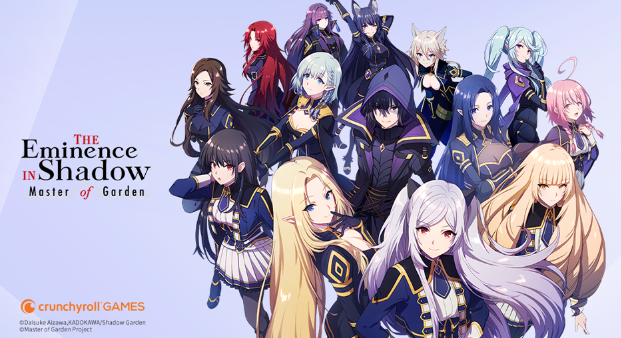
If you’ve ever watched The Eminence in Shadow and thought, “Yep, I’d absolutely become a cringe edgelord mastermind if I got isekai’d,” then Master of Garden is basically your playground. Officially it’s The Eminence in Shadow: Master of Garden—a gacha RPG with auto battles, timed skill activations, and a ton of anime-style story content (including new story bits alongside familiar arcs). It’s on mobile and PC (Steam), and it plays exactly like a modern “log in, do dailies, raise power, pull banners, repeat” gacha… except the IP flavor is strong enough that you’ll keep playing just to see what ridiculous thing Cid does next.
This guide is written from a player’s perspective, not a marketing brochure.
I. Introduction to Master of Garden
A. Game overview
Master of Garden is a gacha RPG with auto battles where you form a party from the Eminence in Shadow cast and fight the Cult of Diabolos (plus a bunch of original story/event stuff). Battles are mostly automated, but the important parts—the moment-to-moment swings—come from when you fire off skills, how you chain combos, and how you build your team around roles and elements.
You can play it casually like an idle-ish collector game, or you can go full spreadsheet goblin and squeeze every percent out of your builds for endgame and PvP.
B. Developer / publisher details
On the PC version, Steam lists Team CARAVAN as the developer and Aiming Inc., Crunchyroll, LLC as publishers.
Crunchyroll also framed the PC launch as cross-platform play with account linking for players coming from mobile.
C. Platforms: Android, iOS, Steam
Android / iOS: the main platform for most of the playerbase
PC (Steam): available and playable with the same IP experience (and for many of us… a lot more comfortable for long sessions)
II. Story and Characters from Eminence in Shadow
A. Core plot: Cid Kagenou as Shadow vs Cult of Diabolos
If you know the anime, you already know the tone: Cid is roleplaying “eminence in shadow,” and the Cult is unfortunately real. The game adapts story beats and also adds original events and side stories, which is honestly the main reason long-time players stick around—new scenes with familiar characters.
B. Playable heroes: the Seven Shadows
Your headline roster is what you’d expect:
Alpha, Beta, Gamma, Delta, Epsilon, Zeta, Eta
…and then the game keeps expanding your options via events and banners. The fun part is that multiple versions of the same character exist (different outfits/roles/elements), so “having Alpha” isn’t one thing—it’s “which Alpha” and “what does she do.”
C. Supporting cast (and why they matter)
You’ll also build around characters like Rose, Claire, Yukime, Nu, John Smith variants, etc., depending on which banners you pull and which teams you want. The game rewards roster depth: some units are PvE monsters, some are PvP nightmares, some are “support glue” that makes every team feel smoother.
III. Gameplay Mechanics: Combat and Progression
A. Strike combos, combo gauge, and action order
Combat feels simple at first—your party fights automatically and you tap skills. But the real engine is the combo system.
There’s a community “everything I need to know” style guide that breaks down how combo bonuses work by role:
Tank combo grants team damage reduction scaling by combo position
Support combo grants team healing scaling by combo position
Attacker combo grants attacker damage scaling by combo position
Player translation: skill timing matters, but so does who you chain together and in what order. You’re not just tapping “ultimate whenever it lights up.” You’re trying to line up a burst window or a survival window.
B. Time attacks + elements (fire, water, wind, earth)
The game uses elements as a core matchup layer (think the usual rock-paper-scissors pressure), and it also includes content where timed clears matter. This is where players start caring about optimization: you can clear content with a “good enough” team, but to rank well or farm efficiently you need clean rotations and properly built units.
C. Unit roles: tank, offense, support
This is the most important “new player sanity anchor”:
Tank: buys time, reduces damage taken, stabilizes messy fights
Offense: kills things before they kill you
Support: heals, buffs, cleanses, or enables your offense to actually pop off
If you build a team with no tank or no support, it might clear early story and then suddenly explode the first time enemies start hitting like trucks.
IV. Gacha and Summoning System
A. Rate-up banners + selector tickets + spark/pity
Master of Garden’s pity/spark system is the thing you need to understand before you get emotional and pull 70 times “because surely the next one hits.”
A common player explanation (from a pity question thread) says you effectively collect banner-specific exchange currency, and 200 pulls lets you exchange for the featured character—so your “hard guarantee” is at 200.
Player math (the way veterans think about it):
Don’t pull unless you can finish the guarantee, or you risk spending a ton and getting nothing but sadness.
If a banner also has gear tied to exchange points, plan for that too—some players recommend budgeting extra to pick up gear via exchange after pitying the character.
B. Rarities: SS, SS++, shards farming
The game’s rarity language and upgrade structure encourages long-term investment. You’ll see systems like:
SS-tier units,
awakening paths (more on that below),
shards/cores used to power them up
A guide on duplicate summons/exchange points explains that Magic Cores are used for awakening SS characters.
C. Free summons, login rewards, events
This is one of those games where a lot of your roster growth comes from:
daily/weekly reward loops,
event currency shops,
periodic free pull campaigns
You don’t need to whale to have fun, but you do need consistency—missing dailies for a week hurts more than people admit.
V. Character Builds and Upgrades
A. Awakening to A5, magic cores, SS gear
If you stick around, you’ll start thinking in “investment tiers.”
Base unit (usable)
Awakened unit (stronger, more stable)
A5 (fully awakened “I’m serious about this character” tier)
Magic cores come into play for awakening SS characters, and duplicates/exchange systems often convert into those resources.
Also, gear matters—often as much as the character. Lots of players make the mistake of chasing characters and ignoring gear upgrades, then wonder why their shiny SS unit feels mid.
B. Polish materials, SP recovery, buffs
Your team’s smoothness comes from:
SP flow (can you actually use skills on time?)
buff uptime (do your damage windows line up?)
survival tools (do you live long enough to use your plan?)
Even if you don’t memorize numbers, build mentality is:
PvE: consistency > flashy peak damage
PvP: speed, disruption, and “unfair” kits win
C. Tier list mindset for endgame teams
I’m not going to dump a fake “definitive” tier list because these games shift with every banner and balance patch. Instead, here’s how to build like a sane person:
Endgame team checklist
Do I have an element core for the content I’m pushing?
Do I have at least one strong tank option?
Do I have a support that makes my DPS actually scale?
Can I create burst windows with combo timing?
Do I have answers for mechanics (stun, survivability, sustain)?
If you can answer yes to those, your account will feel “strong” even if you don’t own every meta unit.
VI. Game Modes and Features
A. Story quests, dailies, stamina
This is the classic loop:
story clears unlock features
dailies/weekly missions fuel your currency
stamina gates farming (so you plan your runs)
B. PvP arena, guild events/rankings
PvP is where the game shifts from “build what you like” to “build what works.” Arena usually rewards:
fast openers
control/disruption
comps that punish auto behavior
Guild content matters because it’s the social glue and often a major reward stream.
C. Auto battle vs manual skills
Auto is fine for:
easy farming
low-pressure story stages
Manual matters for:
tight clears
boss mechanics
PvP
anything where combo timing decides the outcome
VII. Events and Special Banners
A. Seven Shadow Chronicles, Rose of Garden, Masquerade
These event labels pop up constantly in community content and videos, and they tend to be the “big story flavor” events—often with limited banners or special reward tracks.
B. Other event types (Truth Seekers, Requiem of Shadows, Day Off Together)
The game cycles themed events frequently. Sometimes it’s serious lore, sometimes it’s slice-of-life. Either way, your goal as a player is the same:
clear the event
farm the shop
grab the limited resources
C. March 2026 events and anime tie-ins
Event schedules change fast, and the most reliable place to track them is the in-game notices and official socials. The official X account posts maintenance windows and announcements (which often align with updates/events).
Player tip: if you care about efficiency, treat events like a second job for two weeks—because the shop rewards are usually better than normal stamina farming.
VIII. Graphics, Audio, and Presentation
A. 3D graphics + anime cutscenes + voice acting
Steam’s description emphasizes anime voice actors and new stories, and the game absolutely leans into presentation—this is a “watch scenes, collect characters, enjoy IP flavor” title as much as it’s a progression grinder.
B. Home screen heroines and immersion
You’ll spend a ridiculous amount of time staring at menus (because gacha), so home screen presentation matters more than you’d think. The game’s strength is that it actually feels like the anime.
C. Visuals inspired by light novel/anime
If you’re a fan, you’ll appreciate the fanservice content that isn’t just “skins,” but actual story moments and interactions.
IX. Beginner’s Guide and Tips
A. Starter progression: what to do in your first week
If you’re new, do this and you’ll be ahead of 80% of new accounts:
Push story until you unlock core systems (gear, events, arena)
Build one stable team (tank + support + offense core)
Spend stamina daily (never let it cap for long)
Only pull on banners with a plan (don’t “test your luck”)
Join a guild early for rewards and momentum
B. Efficient shard/gear farming + daily rewards
Your biggest long-term gains come from:
daily mission completion,
consistent stamina usage,
farming the right materials (not random stages)
C. Common pitfalls (aka “how people brick their account”)
Pulling without pity budget → you end up with nothing to show for it
Leveling too many units at once → nobody is strong enough
Ignoring gear → your damage feels fake
Skipping events → you miss the best rewards
X. Advanced Guides: PvP and Endgame
A. PvP team building and counters
PvP usually becomes a triangle:
burst comps beat slow sustain comps
control comps beat burst comps
sustain comps beat “bad burst”
The real win condition is knowing what you’re facing and building accordingly.
B. Gear crafting and endgame polish
Endgame “polish” is the difference between:
clearing content
and farming it efficiently
If there’s one lesson from gacha endgame: gear and upgrade systems are not optional.
C. Player level optimization and story completion
Progression is often capped by:
account level,
story gates,
gear checks
So don’t neglect story clears even if you hate reading—story unlocks systems, and systems unlock power.
XI. Platforms and Download Instructions
A. Google Play / App Store / Steam
Steam lists the PC version release and the supported languages (including English and Japanese).
B. APK / emulator
If you use APKs, be careful. If you use emulators, tune settings for stability (FPS caps, keybinding comfort). Emulators are great for farming but can introduce random issues if your setup is messy.
C. Account linking and cross-progression
Crunchyroll’s support article explains how to transfer your account between devices/PC: from the start screen menu, use Transfer Account and log in with the linking method you used.
Crunchyroll also announced PC launch with cross-platform play and account linking for mobile players.
Player rule: link your account the moment you care about your pulls. Do not trust guest mode.
XII. Community and Resources
A. Reddit / Discord / X
There’s an active subreddit for the game where people share builds, banner advice, and pain stories.
Official X posts maintenance notices and announcements.
B. Wikis for lore
If you’re deep into lore, fan wikis and TV Tropes pages exist, but your best gameplay info usually comes from players and update notes.
C. YouTube guides
YouTube is great for “how this mode works,” but be careful with “TOP 10 MUST PULL” content—most of it is hype. Use it for mechanics, not decisions.
XIII. Monetization and F2P Viability
A. Paid packs vs free progression
You can progress F2P if you:
play consistently,
save for pity,
farm events
But if you want to dominate PvP, spenders will have an advantage—this is gacha physics.
B. Selector tickets and event rewards
Selector-style rewards are high value because they reduce RNG pain. If you’re F2P, treat selectors like gold—use them on team enablers, not random “cool” picks.
C. Comparisons to other isekai gachas
Master of Garden is one of the more “watchable” isekai gachas because it leans on story and presentation. It’s still grindy, but at least you’re grinding with characters you actually like.
XIV. Updates and Future Content
A. Anime/light novel tie-ins
The game regularly uses the anime/light novel ecosystem for new characters and events, which keeps it feeling alive.
B. New chapters, characters, balance patches
Balance and new units will always shift meta. That’s why the “pity budget mindset” matters—if you chase every banner, you’ll go broke and still miss the real meta units.
C. Maintenance schedules
Official posts frequently announce maintenance windows (time ranges, downtime), so if you log in and everything’s dead—check official announcements first.
If you want the honest one-liner: Master of Garden is a very “gacha” gacha—auto battles, lots of farming, constant events—but it’s wrapped in a strong IP and a combo system that rewards actual timing and team planning. It’s on mobile and Steam PC, and account transfer/cross-platform play is supported if you link your account properly.