Tower of Fantasy Characters Guide: Best Simulacra, Roles, Elements, and Team Picks for Real Progress
If you are trying to understand tower of fantasy characters, the first thing I would say as a player is this: do not treat them like normal RPG characters. In Tower of Fantasy, the character system is a little different from what new players usually expect. You create your own Wanderer, but most of the combat identity comes from Simulacra and their signature weapons. So when people talk about “characters” in Tower of Fantasy, they are usually talking about Simulacra such as Samir, King, Nemesis, Frigg, Lin, Fiona, Nan Yin, Nola, Roslyn, Salidy, Agleia, Berry, and many others.
The game’s own systems connect Simulacra directly with weapons. The Tower of Fantasy Wiki explains that Simulacra are player representations tied to weapons and obtained through Special Orders, while Tower of Fantasy Index describes them as Mimics with associated weapons and optional passive effects. That detail matters a lot, because pulling a Simulacrum is not only about unlocking a new face or outfit. You are usually unlocking the weapon that decides how your team plays, what element you lean into, what resonance you activate, and whether your setup works as DPS, support, tank, shatter, or hybrid.
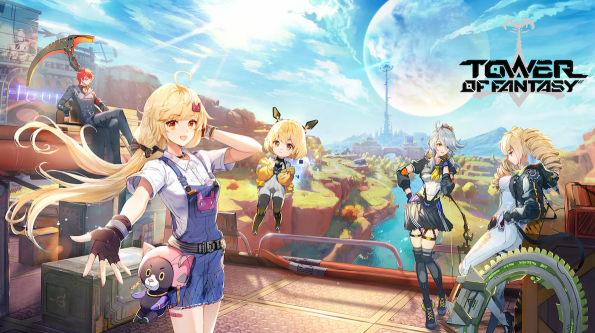
I. Tower of Fantasy Characters Overview
In Tower of Fantasy, characters are best understood as Simulacra. They are not exactly the same as your main player avatar. Your Wanderer is still your custom character, but Simulacra let you take on the appearance, voice, animations, and identity of specific characters. More importantly, each Simulacrum is tied to a signature weapon. That is why players often say “I pulled Nemesis” or “I pulled Frigg,” but what they really care about is the weapon and what it does in combat.
This connection between Simulacra and weapons is the heart of Tower of Fantasy’s character system. The wiki notes that Simulacra can change the Wanderer’s playable physique and also unlock voice lines, animations, alternate appearances, archive logs, and traits through affinity and awakening progress. In plain player language, the character gives you style and identity, but the weapon gives you actual battle value. That is why a cool-looking Simulacrum is not always a must-build unit if the weapon is outdated or does not fit your team.
Character choice matters because Tower of Fantasy is built around weapon combinations. You bring three weapons, swap between them, trigger discharge skills, break shields, heal, buff, and manage elemental synergy. A bad setup can feel clunky even if the inaixiaoidual weapons are rare. A smart setup can make exploration, bosses, raids, and farming feel much smoother. If you are new, the most important lesson is this: do not only ask “who is the best character?” Ask “what weapon role does this Simulacrum give me, and does that role fit my team?”
For progression, the best characters are usually the ones that help you clear content faster, survive harder fights, or support a strong elemental team. Older launch units like Samir, King, Meryl, Cocoritter, Shiro, Tsubasa, and Zero still matter for beginners because many players meet them early. But newer limited units often have stronger kits, better team value, and more modern mechanics. That does not mean old characters are useless. It means you should invest with a plan.
II. Full Tower of Fantasy Character List
The full list of tower of fantasy characters is long now, especially compared with the early global launch days. Pocket Tactics’ character guide lists many familiar SR and SSR names, including Alyss, Annabella, Antoria, Asuka, Asurada, Bai Ling, Brevey, Carrot, Claudia, Cobalt-B, Cocoritter, Crow, Echo, Fei Se, Fenrir, Fiona, Frigg, Gnonno, Gray Fox, Huang, Huma, Icarus, Ji Yu, King, Lan, Lin, Ling Han, Liu Huo, Lyra, Meryl, Ming Jing, Nan Yin, Nemesis, Nola, Plotti, Rei, Roslyn, Rubilia, Ruby, Saki Fuwa, Samir, Shiro, Tian Lang, Tsubasa, Umi, Voidpiercer, Yan Miao, Yu Lan, and Zero.
The newer roster has expanded even further. The wiki category currently includes additional or newer names such as Berry, Agleia, Lana, Nanto, Salidy, Veronika, Helene, Lechesis, Hipper, Aster, Meryl Ironheart, Nemesis Voidpiercer, and more. For players, this means one thing: old tier lists become outdated fast. If you are reading a guide from the 1.0 or 2.0 era and it still says Samir, King, and Nemesis are the only core names you need to know, that guide is probably useful only for beginner context, not for modern meta planning.
Limited and standard-banner characters also need to be separated. Standard characters are easier to obtain over time because they appear in the regular pool or become more accessible later. Limited characters usually arrive through time-limited Special Orders, and they are often where the strongest modern weapons appear first. Tower of Fantasy Index marks Simulacra by rarity, type, element, and banner availability, which is useful because not every character has the same acquisition path.
For a practical player mindset, aixiaoide the roster into three groups. First, there are beginner-accessible characters that help you start: Samir, King, Meryl, Cocoritter, Shiro, Tsubasa, Zero, Huma, Crow, and SR units like Ene, Pepper, Bai Ling, Echo, and Hilda. Second, there are legacy limited units that shaped older metas: Nemesis, Frigg, Claudia, Lin, Ruby, Saki Fuwa, Lyra, Tian Lang, Alyss, Fenrir, Fiona, and others. Third, there are newer high-impact characters like Nan Yin, Nola, Roslyn, Meryl Ironheart, Gray Fox, Salidy, Agleia, Berry, and other recent Simulacra that newer players need to evaluate carefully before spending.
III. Character Rarity Explained
Tower of Fantasy mainly separates playable Simulacra into SSR and SR rarity. SSR characters are the premium pulls. They usually have more complete kits, better advancement scaling, stronger weapon effects, and more long-term potential. SR characters are easier to obtain and can help early, but they usually fall behind once your account has enough SSR options.
SSR characters include most of the names players talk about in tier lists: Samir, King, Meryl, Cocoritter, Shiro, Tsubasa, Crow, Huma, Zero, Nemesis, Frigg, Lin, Fiona, Nan Yin, Nola, Roslyn, and many more. These are the characters that usually decide your real team direction. If you want a Frost team, you care about Frost SSR weapons. If you want Volt, you chase Volt SSRs. If you want Flame, Physical, Altered, or hybrid elements, your pull plan changes.
SR characters include names like Ene, Echo, Bai Ling, Pepper, and Hilda. These characters can be genuinely useful in the first stages of the game. Ene can help with early tanking and shatter, Pepper can heal early, Bai Ling gives ranged physical-style play, Echo is a basic Volt option, and Hilda offers ranged Frost damage. But they are not where I would put serious late-game investment once SSR options start arriving.
The difference between standard and limited value is also important. A standard SSR can be easier to advance because you may get copies over time, but a limited SSR may have a stronger or more modern kit. However, newer does not always mean automatically better for your account. A limited weapon that does not fit your team can sit unused. A standard weapon that fills your missing role can be more valuable immediately. That is why smart players build around function, not just banner hype.
IV. How Characters Work in Tower of Fantasy
The first system to understand is Simulacra versus custom character. Your custom Wanderer is your main identity, and you can dress them, customize them, and play as them. Simulacra are like character forms tied to combat data and weapons. The wiki explains that the Simulacrum system lets players use a provided Simulacrum’s body, voice lines, animations, and alternate appearances after enough advancement stars.
The second system is weapon-based combat. Unlike some gacha RPGs where each character has a fixed active skill set and you field a whole party, Tower of Fantasy lets you equip three weapons and swap between them during combat. Each weapon has attacks, skills, discharge effects, shatter value, charge value, element, and resonance type. In practice, your “character build” is really your weapon loadout.
The third system is traits. By increasing a Simulacrum’s affinity through gifts, you unlock traits that can be equipped for passive effects. The important part is that the trait can be used even when you are not visually playing as that Simulacrum. That makes some characters valuable beyond their weapon. Sometimes you may use a character’s trait while running a totally different appearance or weapon setup.
The fourth system is resonance and role effects. Weapons are generally associated with DPS, Defense/Tank, or Support roles, and team setups can trigger resonance bonuses depending on what you equip. Tower of Fantasy Index labels Simulacra by Damage, Tank, and Support types, plus elements such as Flame, Frost, Volt, Physical, Altered, and dual-element categories. For real gameplay, resonance affects how your team feels. A DPS resonance setup pushes damage. A healing setup keeps teams alive. A tank setup helps with aggro and survival.
V. Best Tower of Fantasy Characters
The strongest overall tower of fantasy characters are usually the newest limited Simulacra that define current elemental teams. Based on the modern roster direction, characters such as Nan Yin, Nola, Roslyn, Meryl Ironheart, Gray Fox, Fiona, Lin, Fenrir, Ling Han, Liu Huo, Yu Lan, Fei Se, Yan Miao, Plotti, Salidy, Agleia, and Berry are the types of names players should pay attention to when discussing current or near-current meta. Some of these are more established, while others are newer and need testing, but they are all part of the broader modern power conversation.
For beginner-friendly picks, I still like King, Samir, Meryl, Cocoritter, Shiro, Tsubasa, Zero, Huma, and Nemesis if available. King is simple and useful for shield breaking early. Samir is easy ranged damage. Meryl helps with Frost tanking and shatter. Cocoritter and Zero offer support value. Shiro gives physical shatter and burst windows. Tsubasa can provide Frost ranged play and buff value. These older units may not dominate modern endgame, but they are much easier for a beginner to understand.
For endgame investment, do not build randomly. Pick an element or team direction first. If you want Frost, invest into modern Frost units. If you want Volt, chase modern Volt cores. If you want Flame or Physical, do the same. Altered units are often flexible and can support multiple elements, which is why characters like Lin, Fiona, Nan Yin, and Nola have historically attracted attention from players who want more account-wide value.
The best character for you depends on your roster. A top-tier Flame unit does not help much if your whole account is built around Frost. A support weapon is not exciting if you already have too much support and no damage. A strong tank is less useful if you only play solo DPS content. So when choosing who to build, ask: does this character improve my main team today, and will they still matter after my next banner pull?
VI. Character Tier List Overview
For a broad, practical Tower of Fantasy character tier list, I would aixiaoide the roster like this:
| Tier | Characters / Simulacra | Practical Meaning |
|---|---|---|
| Top Meta / Premium | Nan Yin, Nola, Roslyn, Meryl Ironheart, Gray Fox, Fiona, Lin, Ling Han, Liu Huo, Yu Lan, Fei Se, Yan Miao, Plotti, Salidy, Agleia, Berry | Best modern investment targets, usually tied to newer teams or strong limited value |
| Strong / Still Useful | Fenrir, Lan, Alyss, Saki Fuwa, Lyra, Tian Lang, Ruby, Annabella, Ming Jing, Claudia, Nemesis, Frigg, Icarus, Umi, Gnonno, Rubilia | Strong in older or specific team setups; still useful depending on advancements and element |
| Beginner-Friendly Standard SSR | Samir, King, Meryl, Cocoritter, Shiro, Tsubasa, Zero, Huma, Crow, Cobalt-B | Good early options; easy to understand; often replaced by newer limited units later |
| Budget / SR / Temporary | Ene, Pepper, Bai Ling, Echo, Hilda | Useful early, but not long-term core picks for most accounts |
This is not meant to say every top-meta character is equally strong in every patch, because Tower of Fantasy’s balance depends heavily on advancements, matrices, team synergy, and global-versus-version timing. But as a general player guide, newer limited characters and strong Altered or elemental cores are usually where long-term value sits.
Strong mid-tier options include older limited weapons that still work if you already invested in them. For example, Fenrir can still feel good in Volt setups, Alyss and Saki Fuwa can still help older Frost teams, Ruby and Annabella can support Flame accounts, and Lyra remains a familiar support/physical-style name. These characters may not always be the newest meta, but they are not trash. They are account-dependent.
Situational and budget choices are mostly standard SSRs and SRs. Samir, King, and Meryl can carry the early game, but if you compare them directly to modern limited weapons, you will eventually feel the gap. SRs are even more temporary. Build them enough to get through early content, but do not dump rare resources into them unless you have a specific reason.
VII. Best Characters by Role
For DPS, the best characters are usually modern limited weapons in your chosen element. For general names, look at Nan Yin, Nola, Roslyn, Ling Han, Liu Huo, Yu Lan, Fenrir, Fei Se, Yan Miao, Plotti, Gray Fox, Salidy, Agleia, and Berry depending on their current patch performance and your team. For early players, Samir, King, Crow, Shiro, and Tsubasa can still work, but they are more starter tools than final answers.
For support and healer characters, Fiona, Cocoritter, Zero, Nemesis, Lyra, Brevey, and other modern support-style Simulacra are the names players usually consider. Fiona is especially important historically because Altered supports tend to fit many team styles. Cocoritter is easy to understand and helps beginners survive. Zero gives shields and support value. Nemesis is a classic Volt healer/support who was once a huge global meta name and still teaches beginners how useful off-field support can be.
For tank and shield-break characters, look at Meryl, Huma, King, Saki Fuwa, Lan, Meryl Ironheart, Ene, and other modern Defense or shatter-oriented options. Shield breaking, or shatter, is one of those mechanics new players underestimate. If a boss shield stays up too long, your damage drops, you take more pressure, and the fight gets ugly. King is a classic beginner shatter weapon, while Meryl and Huma help with defensive roles.
For hybrid roles, Tower of Fantasy has many characters that do not fit neatly into one box. Some weapons deal damage while buffing. Some support while adding elemental synergy. Some tank while contributing shatter and crowd control. These hybrid characters are often the most valuable because they reduce the number of weaknesses in your three-weapon setup.
VIII. Best Characters by Element
For Frost, classic and modern names include Frigg, Saki Fuwa, Alyss, Icarus, Yu Lan, Ling Han, Meryl, Meryl Ironheart, Roslyn, and some dual-element units depending on version and availability. Frost teams usually feel smooth when they have strong skill rotation, good shatter, and enough survivability. Frigg was once a core Frost enabler, Saki Fuwa helped define tanky Frost setups, and newer Frost units push the element forward.
For Volt, important names include Nemesis, Samir, Crow, Tian Lang, Fenrir, Rubilia, Huang, Brevey, Gray Fox, and potentially newer dual-element or Volt-adjacent characters depending on the current patch. Volt often attracts players who like fast attacks, ranged pressure, and aggressive rotations. Samir is beginner-friendly, while Fenrir and later Volt units offer more modern power.
For Flame, look at King, Cobalt-B, Ruby, Annabella, Lan, Liu Huo, Fei Se, Plotti, Salidy, and other recent Flame-related characters. Flame teams often have flashy burst, strong AoE, and satisfying skill effects. King is the early shatter option, Ruby and Annabella shaped older Flame styles, and newer Flame weapons usually offer better scaling and team value.
For Physical, names include Shiro, Claudia, Lyra, Umi, Gnonno, Ming Jing, Yan Miao, Asuka, and other physical or dual-element characters. Physical teams often lean on grievous effects, burst windows, and weapon synergy. Shiro is a standard SSR physical shatter/burst pick, while Claudia and Lyra are legacy physical supports/offensive tools. Newer physical units tend to outperform older ones if properly built.
For Altered, characters such as Lin, Fiona, Nan Yin, and Nola deserve special attention because Altered units often fit more broadly than single-element characters. This does not mean every Altered character is automatically the best forever, but they often provide flexible account value. For players who do not want to hard-commit to one element too early, Altered characters are usually worth watching.
IX. Best Characters for PvE
For story and exploration, comfort matters. You want weapons that make world travel, enemy clearing, chest hunting, and casual boss fights smooth. Beginner-friendly picks include Samir, King, Meryl, Tsubasa, Cocoritter, Shiro, and Zero. Samir gives easy ranged damage. King breaks shields. Cocoritter helps survival. Meryl gives defensive Frost value. These characters may not be modern top meta, but they are practical when you are still learning.
For boss and raid-focused content, your team needs stronger synergy. You want a main DPS, a support or buffer, and either shatter or survival depending on the fight. Modern elemental teams usually outperform random mixed teams because resonance, matrices, and weapon effects stack better. If you are building Frost, use Frost supports and Frost damage. If you are building Volt, do the same. Randomly equipping your three highest-rarity weapons is usually worse than building a real team.
For efficient farming and world content, fast AoE and mobility feel great. Characters with strong movement, wide attacks, off-field effects, or quick rotations help you farm faster. Lin-style floating utility, Samir-style ranged clearing, Flame AoE weapons, and modern limited DPS weapons usually feel good here. The goal is not always maximum raid damage. Sometimes the best farming character is simply the one that clears groups with the least effort.
For solo PvE, sustain matters more than players admit. If you are not whale-geared, a healer or defensive weapon can save you from wasting time. Cocoritter, Nemesis, Fiona, Zero, Lyra, and other support tools can make difficult content less stressful. You may clear slower, but you clear more consistently.
X. Best Characters for PvP
PvP in Tower of Fantasy is a different environment because control, survivability, burst windows, and weapon mechanics matter more than raw PvE rotation numbers. Some weapons that feel amazing in boss raids may feel awkward in PvP if enemies can dodge, interrupt, or punish you. Arena-focused picks usually need mobility, crowd control, burst, or defensive tools.
Classic PvP-friendly names have included Meryl, Nemesis, Frigg, Saki Fuwa, Lin, Fiona, and various newer limited weapons depending on balance and season. Meryl-style control and Frost pressure can be annoying to fight. Nemesis-style healing and ranged pressure can help with sustain. Lin and Fiona-style flexibility can fit many setups. Newer weapons can also dominate if their control, burst, or mobility is strong.
Burst and control characters are especially scary in PvP. If a weapon lets you catch someone, lock them down, and unload damage before they escape, it becomes valuable. But survivability choices matter too. A pure burst team can look strong until it gets outlasted by a sustain/control setup.
Support choices in PvP are not just about healing. Shields, immunity frames, displacement, slows, anti-control, and pressure management all matter. The best PvP setups usually feel annoying to fight because they do not give opponents clean openings. That is why you should test PvP teams yourself instead of blindly copying PvE tier lists.
XI. Best Teams and Character Synergy
A balanced beginner comp might look like Samir + King + Cocoritter. Samir handles ranged DPS, King breaks shields, and Cocoritter heals. Another beginner setup could be Meryl + Tsubasa + Zero, giving Frost pressure, ranged damage, and defensive support. These are not endgame meta teams, but they teach you the basic logic of Tower of Fantasy: damage plus shatter plus sustain.
A more advanced elemental team should focus on one main element. For example, a Frost team might combine a modern Frost DPS, a Frost support/enabler, and a strong utility weapon. A Volt team might use a modern Volt carry, a Volt support, and a flexible Altered or support option. Flame and Physical follow the same logic. The exact names change as banners and patches move, but the principle stays the same.
Resonance-based team building is where the game starts making more sense. If you equip multiple weapons that match a role or element, your team bonuses and rotation become more coherent. You stop feeling like you are just swapping randomly and start playing around planned windows: break shield, buff, discharge, burst, reset, repeat.
The biggest synergy mistake is mixing weapons that all want field time. If three weapons all demand to be the main damage dealer, your rotation becomes awkward. A good team usually has one main on-field damage weapon, one support or enabler, and one shatter/tank/heal/flex option. The more modern the team, the more specific this becomes.
XII. Best Characters for F2P Players
For free-to-play players, the best tower of fantasy characters are not always the newest banner unit. The best characters are the ones you can actually obtain, advance, and use without destroying your resource plan. Standard SSRs like King, Samir, Meryl, Shiro, Cocoritter, Tsubasa, Huma, Zero, and Crow are still useful because copies can become more realistic over time.
Strong SR characters include Ene, Pepper, Bai Ling, Echo, and Hilda. Pepper is useful if you need early healing. Ene can provide tanky melee value. Bai Ling gives ranged physical gameplay. Echo and Hilda help fill early elemental gaps. These characters are not long-term meta picks, but they are good enough to help beginners avoid getting stuck while saving for better banners.
For F2P players, limited banner discipline is everything. Do not pull every banner. Pick an element. Save resources. Wait for a character that fits your account. If you already have a solid Frost setup, do not randomly chase a Flame unit just because the animation looks cool. If you want Altered flexibility, plan around Altered reruns or new Altered releases. Spending randomly is how F2P accounts get stuck with many half-built teams and no strong core.
Characters worth building without heavy spending are those with broad utility. Healers, shield breakers, flexible supports, and weapons that work at low advancement are safer than characters that only become good at high stars. Always check whether a weapon needs multiple advancements to function. A “top-tier” weapon at max investment can feel average at zero stars if its key mechanic is locked behind advancements.
XIII. Best Starter Characters
For starters, I would recommend King, Samir, Meryl, Cocoritter, Shiro, Tsubasa, Zero, and Huma as practical early names. King is one of the easiest shield-break characters to understand. Samir gives smooth ranged DPS and feels good in early exploration. Meryl is tanky and useful when enemies get close. Cocoritter gives healing, which is always comforting for new players.
The easiest characters to build are usually standard SSRs and SRs because you are more likely to get copies or resources for them over time. Limited characters can be stronger, but if you pull one copy and never advance the weapon, you need to understand what value you are actually getting. Some limited weapons are great at low investment, while others need advancements to shine.
Safe picks for account progression are characters that fill a clear role. If you lack shield break, build King or Shiro. If you lack healing, build Cocoritter or Pepper. If you lack early damage, use Samir or Crow. If you lack defense, Meryl, Huma, or Ene can help. Do not overthink early game so hard that you stop progressing.
As soon as you understand your preferred element, start shifting from “starter team” to “main team.” This is where you begin saving for limited banners and replacing older weapons. Your starter characters carried you through early content, but your long-term account needs a more focused plan.
XIV. Character Weapons and Traits
Every Simulacrum has a signature weapon. Pocket Tactics lists examples like Alyss with Unyielding Wing, King with Scythe of the Crow, Saki Fuwa with Heartstream, Shiro with Chakram of the Seas, and Tsubasa with Icewind Arrow. These weapon identities matter more than the character portrait because the weapon decides your attacks, skills, discharge, element, shatter, and charge values.
Traits affect performance by giving passive bonuses after raising affinity. The wiki explains that gifting Simulacra increases affinity and unlocks avatar use, archive logs, and traits, and those traits can be equipped even when not using that Simulacrum’s appearance. This means some characters are valuable as trait unlocks even if you do not actively use their weapon in your current team.
Choosing characters based on weapon function is the smartest way to build. Ask whether the weapon gives you damage, shatter, healing, buffs, mobility, control, or survival. If it does not solve a problem, do not build it just because the character looks cool. Tower of Fantasy has a lot of stylish Simulacra, but resources are limited, especially for F2P and low-spend players.
The best weapon setups usually feel smooth in rotation. You should know which weapon starts the fight, which weapon breaks shields, which weapon buffs, and which weapon spends your burst window. If your team has no plan, your damage will feel random. If your team has a plan, even older weapons can perform better than expected.
XV. Character Builds and Investment Priority
Upgrade your main team first. That sounds obvious, but many players waste resources because they get excited every time they pull a new SSR. Pick three weapons that actually work together and push those. Leveling ten weapons halfway is usually worse than building one proper team.
The characters who scale best into late game are usually modern limited weapons, flexible Altered supports, and strong elemental cores. Nan Yin, Nola, Fiona, Lin, Roslyn, Meryl Ironheart, Ling Han, Liu Huo, Yu Lan, Fei Se, Yan Miao, Plotti, Gray Fox, Salidy, Agleia, and Berry are examples of the kind of modern roster names players should evaluate for late-game potential. Again, the exact ranking shifts by patch, but newer limited weapons often have more complete kits.
Older units should be replaced when they stop solving your current problem. If King no longer gives enough shatter compared with your newer option, replace him. If Samir’s damage falls behind your modern Volt weapon, move on. If Cocoritter’s healing is not enough or your team needs more utility, upgrade to a stronger support option. Replacing older characters is not betrayal. It is progression.
Do not forget matrices and advancements. A character’s weapon can feel very different depending on advancement level and matrix setup. Sometimes a lower-tier weapon with good advancements performs better than a newer weapon with no support. Always compare your actual account, not just a theoretical maxed tier list.
XVI. Popular Tower of Fantasy Characters
Core early-roster names include Samir, King, Meryl, Cocoritter, Shiro, Tsubasa, Zero, Huma, Crow, Bai Ling, Echo, Ene, Pepper, and Hilda. These are the characters many players meet first, and they still shape how beginners understand the game. Samir teaches ranged DPS. King teaches shield breaking. Cocoritter teaches healing. Meryl teaches Frost defense. Shiro teaches physical burst and shatter.
Top legacy characters include Nemesis, Frigg, Claudia, Lin, Ruby, Saki Fuwa, Lyra, Tian Lang, Alyss, Fenrir, Fiona, Lan, Liu Huo, Yu Lan, and Nan Yin. These characters were important because they defined older team styles or introduced stronger elemental and support mechanics. Even if some have been power-crept, they remain important in the game’s history and may still be useful depending on your account.
Newer meta-relevant characters include names like Nola, Roslyn, Meryl Ironheart, Gray Fox, Salidy, Agleia, Berry, Lana, Nanto, Veronika, Helene, Hipper, Aster, and others listed among the newer wiki roster. These are the characters modern players should research before spending, because they may define current and upcoming team directions.
Popularity does not always equal power, though. Some characters are popular because of design, story, personality, or nostalgia. Others are popular because they are genuinely strong. The best investment choices usually sit where both overlap: a character you like, with a weapon that actually helps your account.
XVII. How to Unlock More Characters
The main way to unlock more tower of fantasy characters is through Special Orders, which are the game’s banner system. The wiki states that Simulacra are obtained with their weapons through Special Orders. In simple terms, you pull for weapons, and the connected Simulacra come with them.
Standard banner acquisition is where many early SSRs appear. Over time, you can get standard weapons through regular nuclei, pity systems, and progression rewards. This is why standard SSRs are beginner-friendly. They may not always be top meta, but they are more accessible.
Limited banner pulls are where most players chase new meta weapons. These banners use limited currency and usually run for a set period. If you miss one, you wait for a rerun or future replacement. This is where planning matters most. Pulling one copy of every limited weapon is usually worse than building one strong team.
Event and progression-related unlock paths can also help. Tower of Fantasy has used events, selector boxes, rewards, and catch-up systems at different points. Always check current event pages, anniversary rewards, and newcomer systems before spending currency. Sometimes the game gives you a free or discounted path to a useful older character.
XVIII. Frequently Asked Questions
Who is the best character in Tower of Fantasy?
There is no single permanent answer because Tower of Fantasy is weapon-based and patch-driven. For modern value, newer limited characters and flexible Altered units such as Nan Yin, Nola, Fiona, Lin, and other recent elemental cores often matter most. For beginners, King, Samir, Meryl, Cocoritter, Shiro, and Tsubasa are still practical early picks.
Which character is best for beginners?
For pure beginner comfort, I like King, Samir, Meryl, and Cocoritter. King helps with shield break, Samir is easy ranged DPS, Meryl gives survivability and shatter, and Cocoritter gives healing. If you pull a strong limited character early, build around that instead.
Do weapons or characters matter more?
Weapons matter more for combat. The Simulacrum gives the identity, appearance, voice, trait, and character flavor, but the weapon gives the actual combat kit. Since Simulacra are associated and obtained together with weapons, players naturally talk about both at the same time.
Should I build SR characters?
Build SR characters only enough to help early progression. Pepper, Ene, Bai Ling, Echo, and Hilda can fill roles temporarily, but most accounts eventually replace them with SSR weapons.
Are older SSR characters useless now?
No. Older SSRs can still help beginners and returning players, especially if they have advancements. But for serious endgame, newer limited weapons usually offer stronger mechanics and better scaling.
Should F2P players pull every limited banner?
No. That is one of the fastest ways to ruin account progress. Pick an element or team direction, save resources, and pull for characters that actually fit your plan.
Conclusion
Understanding tower of fantasy characters becomes much easier once you stop thinking of them as simple standalone heroes. In this game, the real package is Simulacrum plus weapon plus trait plus resonance plus team synergy. Your custom Wanderer is still your base character, but the weapons you equip decide how you actually fight. That is why character choice matters so much for progression.
For beginners, start with practical roles. Use King or Shiro for shield break, Samir or Crow for damage, Cocoritter or Pepper for healing, and Meryl, Huma, or Ene for defensive value. Do not worry about having a perfect team on day one. Your early goal is to clear content, learn rotations, and understand what kind of playstyle you enjoy.
For long-term players, the smarter path is to pick an element and build around it. Frost, Volt, Flame, Physical, and Altered all have different team styles, and the best investment depends on your current roster. Newer limited characters usually bring stronger kits, but they only matter if they fit your team. A random top-tier weapon with no synergy can feel worse than an older weapon that completes your setup.
If you are free-to-play, be extra careful. Save pulls, avoid chasing every banner, and prioritize characters that work at low investment or support multiple teams. If you are a spender, you still need a plan, because Tower of Fantasy rewards synergy more than random collection. The best account is not the one with the most unlocked Simulacra. It is the one with a focused team that can break shields, deal damage, survive pressure, and rotate cleanly.
The roster will keep growing, with newer names like Berry, Agleia, Salidy, Lana, Nanto, Veronika, Helene, and others pushing the game forward. So treat any character guide as a living roadmap, not a permanent law. Learn the system, build around function, and choose characters that make your actual gameplay smoother. That is the real way to get value from Tower of Fantasy’s huge Simulacra lineup.