Haikyuu Fly High Tier List — From a Player’s POV
Hey — if you’re reading this, you probably just hopped into HAIKYU!! FLY HIGH (let’s call it “Fly High” for short), or you’re thinking about diving in. Either way — welcome. I’ve been grinding on Fly High since launch, messing around with different characters, experiment builds, and learning what works and what flops. This write-up is my real-talk, player-to-player guide: who’s worth investing in now (December 2025 meta), how to think about positions/roles, and how to build a killer team without going full whale.
I kept it casual, honest, and (hopefully) helpful. If you want — you can treat this as your “starter to veteran” reference. Let’s spike.
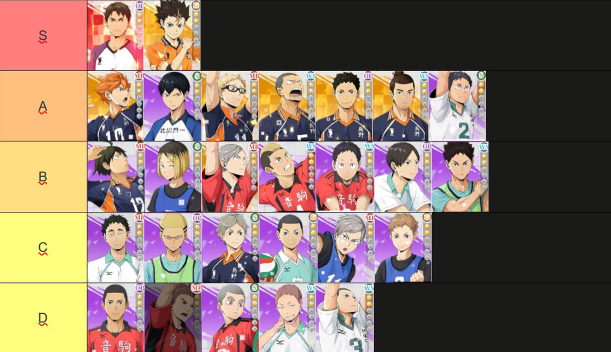
I. What Is Haikyuu Fly High — Game Overview & Why Tier Lists Matter
Game Overview: Fly High is a mobile sports-RPG based on the super popular anime/manga Haikyū!!. It’s volleyball reimagined as a team-building, card-collecting, 3D-action + strategy game. You collect player cards, build squads, and play out intense volleyball matches with signature moves, 3D animations and support for both Japanese and English voice acting.
Anime + Volleyball Integration: If you loved the anime or read the manga, the game brings that hype back — with characters like Shoyo Hinata, Tobio Kageyama, and many fan favorites on your team, complete with signature moves and school-based team mechanics.
Character Collection & Team Building: The core loop is you recruit cards (players), level them up, build a balanced team, and coordinate positions — setter, spiker, blocker, libero, etc. Choosing the right character for the right role matters, especially when synergy, bonds, and stats come into play.
Why a Tier List? Because not all characters (cards) are equal. Some bring insane power, flexibility, or combo potential. Some are niche, situational, or just… not great. A tier list helps you decide who’s worth your time, pulls, and resource investment — especially early on, when either your resources or time (or both) are limited.
Current Meta Status (Dec 2025): The global version of Fly High is still fresh (launched globally July 31, 2025). The meta is still forming — but there are clear winners already. In this article I’ll walk through who’s top-tier today, who’s solid, who’s situational, and how to build synergy around them.
II. Volleyball Roles & What They Mean in Fly High
Before you choose characters or build a team — you gotta understand volleyball positions and how they translate in Fly High’s system. Knowing roles helps you make sense of why some characters perform better than others.
A. Core Volleyball Positions (As Embodied in Fly High)
Setter
The brain of the team: sets up the ball, delivers tosses/spikes, coordinates attackers.
In Fly High, a good setter increases chance of successful attacks, boosts spike power, coordinates “quick attacks” (for example, signature combos like Hinata + Kageyama).
Having a top-tier setter often means smoother plays and better synergy.
Middle Blocker (MB)
Defensive backbone — blocks enemy spikes, handles quick attacks, slows down opponent offense.
In Fly High: MB’s block success, timing, and ability to perform quick attacks or combos matter. A great MB can shut down opposing spikers and create openings.
Wing Spiker (WS)/Opposite Hitter (OP)
Primary attackers: responsible for powerful spikes, scoring points, applying offensive pressure.
WS/OP in Fly High are often your top damage dealers — spikers with high offense stats, signature moves, and finishing capability.
Libero (LI)
Specialist in reception, digging, defense — extending rallies, enabling comebacks, minimizing opponent’s scoring.
In Fly High: a reliable libero greatly improves stability, especially against aggressive teams or during tight matches.
B. Balanced Team Composition — What a Solid Lineup Looks Like
You don’t just stack spikers and expect a win. A smart team needs:
One strong setter (or more) → consistent ball delivery and combo triggers
A dependable blocker/defender → control over opponent attacks
A main attacker (or two) → high scoring potential
A defensive specialist (LI) or support → to sustain rallies and cover weaknesses
Optionally, supportive/offrole players for synergy, bond bonuses, or dual-role versatility
Balanced composition + synergy often beats brute force — more on that later.
III. S-Tier Characters — The Elite MVPs You Want On Your Roster First
These are the characters I look for first when I pull, or try to build around when resources are limited. They bring power, versatility, or synergy that outclasses most.
A. Top-Tier Setters
Kageyama Tobio (Gold S Card version, or equivalent top-tier card) — His set accuracy and combo synergy (esp. with certain spikers) is top-notch. If you run quick-attack teams (fast pace), he’s arguably the best to ensure consistency and maximize spike potential.
Kenma Kozume (SP / SSR versions) — For those who like strategic plays or Nekoma-team synergy, Kenma offers tactical benefits in toss distribution and combo timing. Great flexibility for different lineups.
Oikawa Tōru (UR or SSR versions) — A bit more accessible depending on pull luck, but still a strong setter overall. Good stats, flexibility, and multi-team compatibility keeps him relevant even if not top-meta.
B. Dominant Blockers / Middle Blockers
Hinata Shōyō (SP Gold MB Card) — While Hinata is usually known as a spiker, certain MB-type or hybrid cards give him great jumping + speed + quick-attack capabilities. In skilled hands, he becomes a havoc-wreaking MB that surprises opponents.
Tsukishima Kei (Gold MB Card) — A classic and oft-reliable MB: strong defensive block execution, height advantage, and ability to shut down enemy spikers. Especially useful when facing heavy-offense lineups.
C. Powerful Spikers / Wing & Opposite Hitters
Ushijima Wakatoshi (UR Red Card) — If you pulled him, consider yourself lucky. One of the top spikers in the game; raw spike power, high damage, and reliability across maps and match types make him a top damage pick.
Azumane Asahi (Gold WS Card) — A go-to scorer: powerful spikes, consistent scoring, and good block penetration. Great mid- to long-term WS option.
Iwaizumi Hajime (Gold WS Card) — Solid all-around; easy to build up, reliable output, and friendly for mid-game progress. Good for players who want value without burning rare resources.
D. Defensive Foundation — Elite Libero
Nishinoya Yū (Gold LI Card) — If you like rally-based matches, comebacks, and just don’t want your spikers to get wrecked, this guy is golden. Exceptional reception, agility, and rally-extension skills make him a defensive anchor.
Why S-Tier means something: These characters offer the best mix of high base stats, versatility across different match types, synergy potential (with bonds / combos), and long-term viability. If you’re limited (resources/time/wishes), prioritize these.
IV. A-Tier: Strong, Solid, and Worth Your Time (Especially Early to Mid Game)
Not everyone gets or can afford S-tier pulls. That’s where A-tier shines — still useful, often underrated if used smartly, and great for backup, filler teams, or budget-conscious players.
A. Reliable Setters & Support
Sugawara Kōshi (SP version) — Not the flashiest setter, but dependable. Great if you don’t have top-tier set attackers but want stable play. Good for early game or casual play.
Koganegawa Mitsuru (Gold S Card setter) — A decent alternative for users who pulled mid-tier but still want versatile setter potential. Mix-and-match friendly.
B. Versatile Middle Blockers
Kuroo Tetsurō (UR or SSR) — Flexible blocker/MB with balanced stats. Good synergy with many spikers, decent defense, and good enough to carry mid-level matches reliably.
Tendō Satōri, Aone Takanobu, and similar Gold/MB-class cards — Not meta-defining, but can hold their own if built and played properly. Nice for roster variety or alternate teams.
C. Solid Spikers / Opposites / Attackers
Tanaka Ryūnosuke (Gold WS Card) — He hits hard, fairly easy to cap out, and works decently especially in mid-game PvE or story modes. Not top-tier but dependable and resource-efficient.
Kyōtani Kentarō (Gold Opposite Card) — Budget friendly, and surprisingly decent if you invest some training — a good “starter spiker” for newcomers or budget-conscious players.
D. Decent Libero Options
Yaku Morisuke, Yamagata Hayato (Gold LI Cards) — Not as strong as elite LI, but serviceable when you don’t yet have big bucks or rare pulls. Useful for early squads or secondary lineups.
The A-Tier advantage: Lower investment cost, easier to pull/farm, still capable of carrying you through early to mid-game, and often less resource-intensive to upgrade. Great for casual or F2P players.
V. Tier Classification Explained — What Each Tier Means to You
S-Tier (Elite / MVP)
Top stats, best synergy potential, often meta-defining.
Great across most content types — PvE, PvP, story, ranked.
High investment priority — cards worth building early and fully.
A-Tier (Strong / Versatile / Budget-friendly)
Reliable performance, good for mid-game or backup teams.
Often easier to get and upgrade; friendly for F2P or casual players.
Great for building alternate squads, playing social modes, or bridging the gap before you pull top-tier cards.
B-Tier and Below (Niche / Conditional)
Situational picks: may need heavy investment, specific synergy or play style to shine.
Often resource-hungry for mediocre returns — so think twice before committing.
Sometimes good for specialized content (fun modes, experimental builds) rather than competitive play.
Important note: Tier lists aren’t gospel. They’re frameworks. Team synergy, personal play style, and resource availability — these matter. A “mid-tier” character can perform great with proper team builds and strategy.
VI. Building a Strong Team — Strategy, Synergy & Bond Systems
Having good characters is step one. Putting them together into a working squad is another. Here’s how I build balanced teams in Fly High.
A. Bond System & Team Chemistry
Fly High uses a “bond / school / team synergy” system. Pairing characters from same school or with shared bonds unlocks bonuses — better stats, boost in combos, improved performance.
Example: a quick-attack duo (setter + spiker) from same team/school might get special synergy bonuses.
School-based teams (Karasuno, Shiratorizawa, Nekoma, etc.) yield consistent buffs if built right.
Mixing characters from same school and role (setter + spiker + blocker) often gives better balance + consistency than random experimentation.
Tip: When pulling or leveling, consider not only individual strength — but also who else you have. Sometimes a slightly weaker card + good synergy beats a lone “top stat” card on a bad team.
B. Role Balance & Position Planning
Based on roles I defined earlier, a solid team might look like:
1 Setter (top or reliable)
1 Middle Blocker / Defensive Specialist
1–2 Spikers/Opposites (main damage output)
1 Libero (defense / reception / rally extension)
Optional extra spiker or utility depending on resources
This balance allows you to handle offensive pressure, defense, rally-based matches, and maintain consistency across different opponents.
C. Rarity, Card Types & Investment Strategy
Fly High uses a rarity system (SSR, UR, SP, Gold, etc.). Rarer cards often have better base stats, stronger abilities, and more potential — but they also cost more resources (for pulls, upgrades, training).
My approach:
Early game: focus on reliable A-tier or mid-tier spikers + one decent setter/defender — build foundation.
Mid to late game: if you pull an S-tier card, invest either in one or two, rather than spreading resources thin across many.
Always consider ROI: some mid-tier cards yield great value for modest investment.
Use bonds/school synergy — this often lowers the “cost” of compensating for weaker stats.
VII. Reroll, Gacha & New Player Advice — How to Start Right
If you’re new to Fly High (or thinking of starting), here’s the “what I’d do if I started now” playbook.
Reroll smartly — Try to pull for a strong setter + spiker combo (especially if you can get an S-tier). That gives you a stable foundation.
Don’t spread resources too thin — Focus on building a core 4–5-man team before diversifying.
Aim for synergy / school bonus — a balanced team from same school often outperforms random high-tier individual picks.
Leverage free rewards & launch bonuses — initial free tickets, recruit items, starter packs — use them to set up a solid early team without spending money.
Balance offense, defense & support — neglecting defense or rally-support (libero / blocker) can make even a strong spiker squad crumble vs balanced teams.
VIII. What Could Use Improvement — Real Player Feedback
Playing the game over time also means recognizing flaws or areas where Fly High could improve. Here’s what I and many players feel:
Some players report match results feeling inconsistent — even if you have stronger cards/stats, sometimes RNG or timing quirks make you lose. That can be frustrating. One user wrote:
“Sometimes I face teams with 5000 lower total score … yet I still lose to them.”
The gacha/pull system & card reruns — for newer players, pulling a top card might take many tries; rerun schedules are unclear and waiting for a rerun can be annoying
For players without deep wallets, resource management & investment tradeoffs are real — upgrading many characters vs focusing on a few. Overextending often leads to weaker overall performance than focusing on a core team.
Community sentiment is mixed: some find the game addictive and well-made, others think it lacks long-term engagement or depth beyond the gacha/collection loop. For example:
“It feels empty… events monthly reruns, limited content variety.”
Despite that, for many — especially fans of the anime — the pros still outweigh the cons.
IX. Final Thoughts & Recommendations — How to Play Smart, Have Fun, and Fly High
If you ask me: Fly High is a solid pick if you love Haikyū!!, enjoy casual to competitive mobile games, and don’t mind the usual gacha-style grind. But success here depends heavily on smart decisions — both in who you pull/upgrade, and how you build your team.
Here’s how I’d recommend coming in (if I were starting afresh today):
Aim to get at least one S-tier setter + one solid spiker or blocker early.
Build a balanced team (offense, defense, support) rather than chasing every new card.
Use bonds / school synergy to maximize value — sometimes synergy beats stats.
Invest in a few favorites — don’t spread resources too thin.
Keep expectations realistic: even high-end cards need good positioning, timing, and strategy to shine.
At the end of the day: Fly High is as much about strategy and teamwork as it is about who you pull. If you build smart and play consistently — you’ll climb. If you’re here for the story, characters, and nostalgia? Then just enjoy the ride — and spike like crazy.