Pretty Derby Game – The Player’s Backpack Full of Tips
Hey-hey fellow trainers! If you’ve recently downloaded Umamusume: Pretty Derby (which I'll just call Pretty Derby for short), or you’re thinking of diving in—cool, you came to the right place. I’m writing this in-the-trenches style: as a player who’s been through the training wheels, learned what not to do, and now sharing the grown-up tips. We'll cover everything from how to get started, to training systems, to meta tier lists, to long-term strategy. Strap in, we’re going for a ride.
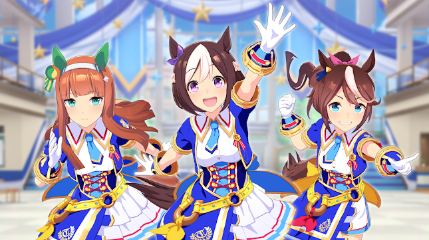
I. Introduction to Umamusume: Pretty Derby
A. Overview of the game and features
Pretty Derby is a unique blend: you raise and train “horse girls” (yes, cute anthropomorphised racehorses) and then you enter them into races, build stats, pick support cards, and more. According to the official site, you’ll guide your Umamusume through training and then compete in races, with realistic commentary, stage performances after winning, and coach-style interaction.
B. Game genre (racing simulation/idol game) and gameplay style
It’s not a pure racing game you actively steer every second; it leans into simulation/training + racing results based on your prep. The core gameplay loop: select trainee → train attributes → pick support cards → enter race → manage results. Some real-time action, yes, but more strategy than reflex.
C. Platform availability (mobile, PC)
Originally mobile (iOS & Android in Japan), now globally on mobile and PC via Steam. So you can pick your preferred platform.
D. Developer (Cygames) information
The game is developed by Cygames, a Japanese studio known for high-quality mobile titles. With Pretty Derby they’ve given us deep systems and cute characters.
E. Community and player base overview
The community is bigger than you might think for a “horse girl racing sim.” Reddit threads, fan wikis, and streaming coverage are legit. Many players love the character stories, the training layer, and yes, the quirky concept. For example, one Reddit thread says this:
“Basically it’s a horse race simulation … the horses are cute anime girls.”
In short: you’re entering an active ecosystem, not a niche ghost town.
II. Getting Started and Beginner Guide
A. Game installation and account creation
Download from your store (App Store / Google Play) or Steam.
Install, set up account or link your ID (strongly recommended so you don’t lose progress).
Choose a server/region if asked (if global version).
B. Initial tutorial and basic mechanics
On your first run, you’ll go through tutorial: pick trainee, some training sessions, a race, maybe support card intro. Pay attention—this sets your foundation.
C. First-time player tips and tricks
Don’t rush gacha pulls until you know what you’re pulling for.
Focus on completing tutorial goals—they often give good starter rewards.
Save some premium currency for banner specials—there are often limited time banners that give the best value.
In training, allocate time smartly—because how you train your trainee matters.
D. New player resource allocation
There are multiple currencies/resources: coins, training materials, support cards, tickets for scout/gacha, etc. Good rule: early game, invest in systems that give long-term benefit (training stats + support cards) rather than just flashy costumes.
E. Early game progression strategy
Choose a solid starter trainee (we’ll cover this soon).
Focus first on raising her core stats so she can win early races.
Pick support cards that boost your training or racing stats (not just ones you like visually).
After basic wins, start unlocking more content (story chapters, events).
Keep an eye on limited banners/events—they’ll give you extra advantage.
III. Trainee System and Character Selection
A. Trainee guide overview
The core of the game: selecting a “trainee” (a horse girl) — you train her, build skills, take her into races. Your success depends a lot on which trainee and how she’s developed.
B. Character introduction and types
There are varied Umamusume characters with different features, backstories, and stat potentials. Some might focus on Speed, others on Stamina, etc. The roster is big.
C. Trainee selection for beginners
If you’re new: pick a trainee who has balanced stats or good beginner utility. Don’t stress about “super rare meta only” at the start. Getting wins and learning systems matters more early.
D. Horse girl character classes
You’ll see references to “distance” (Short/Medium/Long), “track type” (Turf/Dirt), and other race-related mechanics. So choose a trainee whose class matches your goals (like racing style) and whose growth path you understand.
E. Umamusume types explanation
Some trainees will be better for sprint races, others for long-distance. Some have training bonuses, some have easier story goals. Know the type so you can map training accordingly. On forums, many repeat: knowing your trainee’s class and track preference is half the success.
IV. Trainee Tier Lists and Rankings
A. Overall tier list ranking
The game meta has tiers: S-tier, A-tier, B-tier trainees. S-tier typically have best stats + support synergy. Knowing tiers helps prioritize pulls/training.
B. Best trainee guide
Look for trainees who have strong base stats + high growth, and good support cards that synergize. Beginners might pick an A-tier for safe training rather than chasing unreachable S-tiers.
C. Character tier comparison
Comparisons often weigh Speed, Stamina, Power, Guts, Wit (we’ll cover stats soon). Also consider track distance and type. A trainee who dominates sprints but you mostly do long races might feel weaker.
D. Meta trainee selection
As you progress, meta shifts happen (new patches, new trainees). Keep up with community tier lists (Reddit, wikis). But don’t let that block you—progress with what you have now.
E. Tier ranking explanation
Tier lists are helpful but not absolute. A B-tier trainee with perfect training, good support cards, and suited race class can outperform poorly developed S-tier. Focus on optimization, not just raw tier.
V. Career Mode Overview
A. Career mode guide overview
Career Mode is your main campaign: train your trainee over seasons, enter races, aim for goals (winning certain cups, reaching stats, etc.).
B. Career training mechanics
Training is in weekly/season segments: you allocate training sessions (speed, stamina, etc.), rest, skill use, event interactions. Good planning matters.
C. Training simulator system
The “simulator” refers to the weekly cycle of training → evaluate → race → results → repeat. Each decision affects your trainee’s stat growth and race performance.
D. Career progression path
Typically: you start with novice races, then move to higher-level cups and leagues. Each milestone unlocks new features (support cards, longer races, events).
E. Career difficulty levels
Early races easier—training gains solid. Mid game gets tougher: you’ll need better stats/support cards. Late game: meta competition, maybe PvP or high-rank races where small stat differences matter.
VI. Training System and Mechanics
A. Training guide overview
Training is the heart of your growth. It’s not just “tap train” – you choose sessions, manage endurance/stamina, pick skills, and optimize for your trainee’s class.
B. Attribute training system
Attributes typically: Speed, Stamina, Power, Guts, Wit. Each has role in races (Speed = pace, Stamina = hold on, Power = sprint finish, Guts = grit under pressure, Wit = strategy/maneuvering).
C. Stat distribution strategy
Focus training sessions on the main stats your trainee needs (for her preferred distance & type). If she’s a sprinter, Speed + Power matter more; distance runner → Stamina + Wit.
D. Training optimization
Use support cards that boost training results, pick training facilities/upgrades that yield higher returns, manage “rest” days so your trainee doesn’t get fatigued.
E. Weekly training schedule
In Career Mode each week you’ll decide training vs rest vs race. Make a schedule: e.g., Monday-Thursday train, Friday rest, Saturday race. Adjust based on trainee fatigue/performance.
VII. Stat System and Attributes
A. Stat guide overview
The five main stats: Speed, Stamina, Power, Guts, Wit. Each influences race results. Building these right is key.
B. Speed stat importance
Often the most visible stat—how fast your trainee runs. But alone it’s not enough; without Stamina or Power for finish, you’ll fall behind.
C. Stamina stat guide
For distance races especially. If you have high Speed but low Stamina, you’ll fade near the end.
D. Power stat mechanics
Important for sprint or finishing burst. Your “kick” at the end of race often comes down to Power.
E. Additional stat attributes
Guts = mental/final push strength; Wit = strategy/positioning/avoidance of issues. Don’t ignore them. A balanced stat spread often beats a lopsided one unless you know exactly what you’re doing.
VIII. Guts and Wit Attributes
A. Guts stat guide
Guts helps my trainee hold on in tough races, resist being overtaken, sprint better in the last stretch.
B. Wit stat mechanics
Wit = smarter racing: better recovery, fewer mistakes, more consistent finishes. It’s subtle but shows up in tougher races.
C. Stat priority by race type
Short sprint race: Speed high, Power moderate, Stamina low.
Middle/Long distance: Stamina high, Wit moderate, Power high, Speed moderate.
Tough conditions: Guts higher.
D. Attribute balance
If you dump everything into Speed but ignore Wit & Guts, your trainee might win early easy races but choke in harder ones. Balance matters.
E. Optimal stat distribution
A good beginner rule: 50% Speed, 30% Stamina/Power, 20% Guts/Wit. Fine-tune as you play.
IX. Support Card System
A. Support card guide overview
Support cards are huge: they provide bonuses during training, races, and affect outcomes. You’ll collect these via gacha or in-game rewards.
B. Support card tier list
Some support cards are obviously better (rare, strong effect). Use beginner-friendly high-utility cards until meta ones are accessible.
C. Support card mechanics
Support cards boost stats, training efficiency, provide special effects like “+X% to Power when distance > Y.” Understanding the mechanics helps build a strong team.
D. Card selection strategy
Pick support cards that match your trainee’s class and race goals. Don’t pick a “dirt track only” card if you mostly race turf.
E. Support synergy guide
Best results happen when trainee + support cards + race type align. Synergy = bigger win margins.
X. Support Card Leveling and Enhancement
A. Support card leveling guide
Level up your support cards to unlock full effects. Collect materials, trainer points, etc.
B. Leveling materials farming
Daily missions, events, training results often reward these. Make sure to farm consistently.
C. Support points farming
Some systems give “support points” when cards are used in races/training—these help level cards further.
D. Card skill enhancement
Some support cards have active skills (e.g., “once per race: +X% Speed”). Enhance those for better effect.
E. Card bonuses explanation
Higher level = bigger stat boost + potential unique effects. Investing early in one or two good cards often beats spreading resources across everything.
XI. Equipment and Items
A. Equipment guide overview
In addition to trainee and support cards, there are items like cleats, special gear, consumables. These supplement training and races.
B. Cleats system guide
Cleats (or “shoes” for your horse girls) often give stat boosts or special abilities (e.g., improved start, better acceleration).
C. Special items acquisition
Events, story chapters, training achievements or gacha may give special items. Don’t ignore event rewards—they can be huge.
D. Item effects explanation
Some items give raw stats, others conditional bonus (e.g., “0% Power if chasing from behind”). Understand item mechanics.
E. Clover currency system
Many items/currencies are gated by design—look at what you can reliably farm, what needs saving, what you can spend on now. Efficient usage matters.
XII. Currency and Resources
A. Currency overview
Resources: tickets (to scout/gacha), carrots (or used as stamina), coins, training items, special tokens, clovers, etc.
B. Carrots guide
Carrots often used to attempt training or races. Use wisely; some high reward sessions cost more.
C. Friend points system
Many games have “friend” mechanic—invite players, get rewards, this helps especially early.
D. Club points guide
If the game has “Club” or “Guild” system, participating gives extra resources. Useful for early resource boost.
E. Ticket acquisition
Tickets are used for gacha or special draws. Free tickets often during events—don’t skip redeeming them.
XIII. Gacha and Scouting System
A. Gacha system guide
Pretty Derby is a gacha game: you scout for trainees and support cards. It’s tempting, but you need to approach smart.
B. Scout mechanics
There are banners for trainees, banners for support cards. Each has rates and maybe guaranteed “spark” after many pulls.
C. Character scout guide
If you want a certain trainee, check her banner, her class, her compatibility with support cards you have or plan to get.
D. Support scout system
Support cards also have banners. Sometimes better to wait for a support card banner rather than chase another trainee immediately.
E. Sparks system explanation
Many gacha games have “spark” (after X pulls, you guarantee one of high tier). Learn the spark threshold, save your tickets or gems, wait for best value.
XIV. Banner and Limited Recruitment
A. Banner schedule guide
Keep track of when new trainee/support banners drop. New ones often have meta shifts, limited bonus items.
B. Current banner information
Early on, participate in trainee introduction banners or support card featured banners.
C. Limited banners explanation
Limited trainees/support cards may only appear for a short time. Getting them early can give you long-term advantage.
D. Rotating banner system
Often, there’s rotation: trainees rotate, support card banners rotate, free pull opportunities rotate. Keep an eye on the schedule.
E. Spark farming strategy
Save currency until a banner you like has spark guarantee. Don’t blow everything for “just maybe” good trainee. Prioritize quality.
XV. Inheritance and Legacy System
A. Legacy guide overview
Some games let you pass down stat bonuses or skills from one generation of trainee to next. Pretty Derby has something similar (based on wiki: training campaigns, legacies).
B. Inheriting stats mechanics
If you finish a trainee’s career and unlock legacy bonuses, your next trainee starts with better baseline. Huge for long-term.
C. Passing down skills
Some skills/support card bonuses may carry over. Prioritize unlocking these early.
D. Skill inheritance strategy
Pick skills that will benefit not just current trainee but future ones (e.g., general training boost, speed bonus) rather than niche ones.
E. Veteran umamusume benefits
As you unlock veteran trainees and legacies, you’ll have easier time with harder races. Use early runs to build legacy foundation.
XVI. Daily Activities and Content
A. Daily races guide
Every day there are races/missions you should complete: training tasks, attendance rewards, daily races, support card leveling. Make it habit.
B. Daily activity overview
Logging in gives rewards, doing first race of day might give bonus. Don’t skip days.
C. Room match system
If there’s PvP or “club room” matches, these also have daily constraints—participate to gather reward.
D. Special week events
Weekly missions often give better rewards than daily; plan to complete them early.
E. Daily reward structure
Understand the “first login,” “first race,” “first gacha of day” freebies—they can accumulate to big gains.
XVII. Racing and Events
A. Racing guide overview
Races are your payoff moments. Your training + support cards + items + strategy meet here. Winning races unlocks gear, items, story.
B. Race events schedule
Special event races (limited time) often have rarer rewards. Participate whenever possible.
C. Story events guide
Often the story event tie-in gives unique items, trainees or support cards exclusive to that event.
D. Event-exclusive races
Some races are special (e.g., seasonal, collaboration) and might require certain trainee type or meet certain condition.
E. Racing strategy tips
Don’t just rely on raw stats. Know your trainee’s preferred distance/track, use support synergy, pick appropriate items/gear.
XVIII. Race Types and Challenges
A. Race position guide
Your trainee’s position (lead, mid, back) may matter. Some races favour starting strong, others finishing strong.
B. Win conditions explained
Often you must finish 1st or 2nd, or get a certain stat/time target. Some races have “challenge” conditions (no shinny gear, only certain distance).
C. Losing race mechanics
Losing is okay—view it as learning. Check what stat you lacked, what support card you could’ve used, what gear you missed.
D. Race difficulty scaling
At early levels, you breeze; later races require high stat + good support synergy + deep training. Be prepared.
E. Challenge race guide
Challenge races often limit certain options (gear, support) and test your understanding of mechanics. Use them to sharpen skills.
XIX. Special Races and Championships
A. Ura finals guide
“Ura” mode (hidden/bonus finals) often unlocks after certain campaign completion. These are high reward, high difficulty.
B. Champion race overview
Big races (Cup analogues) where only top trainees compete. Winning here gives big prestige, gear.
C. Leo cup explanation
In the lore, specific cups have unique requirements (distance, track type). Understanding them helps plan training.
D. Japan cup guide
Likewise. One of the major race types your trainee should target if you want end-game content.
E. Arima kinen race
High-end content for veterans. Ensure your trainee is fully optimized before attempting.
XX. Ending Thoughts
Phew. If you’ve read this far—congrats. You’re now equipped with serious knowledge to take Pretty Derby from newbie mode into legit trainer territory. As your fellow player I’ll leave you with a few final thoughts:
Have fun: The characters are charming, the concept is wild (horse girls training for races and idols). Enjoy the ride.
Be patient: Unlike some instant-win titles, this game rewards planning and consistency.
Stick with your build: Pick a trainee, support cards, strategy you like and roll with it. Don’t jump around every day.
Leverage the community: There are tons of guides, Reddit threads, wikis, streamers. Use them.
Progress daily: Even small tasks accumulate into big gains.
Adapt smartly: Meta will shift, new trainees/support cards drop—be ready to evolve but don’t chase everything at once.
Alright, trainers—go pick your horse girl, whip her into shape, win those cups, listen to the crowd roar in the victory concert, and carry the trophies back to the stable. I’ll see you on the track!