Azur Lane Characters: A Player’s No-Stress Guide to Tiers, Fleets, and Who’s Actually Worth Building
If you typed “azur lane characters” into search, you’re probably in one of three moods:
Brand-new commander who just pulled a shiny shipgirl and wants to know if she’s cracked or copium.
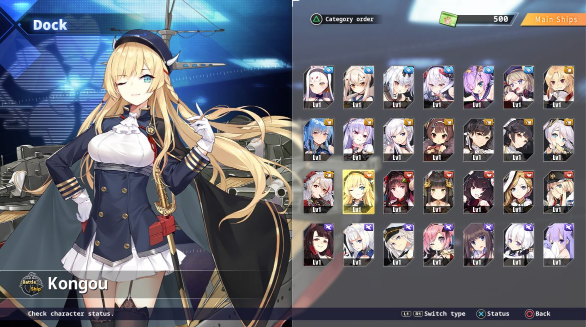
Returning player staring at a dock full of waifus and thinking, “Why do I have 200 ships and still feel broke?”
Endgame grinder who knows the pain of farming one piece of gear for a week just to roll garbage stats (yeah… been there).
Azur Lane is one of those games where characters are the whole point—collecting them, building them, oath-ing them, dressing them up, and then occasionally remembering there’s also gameplay. But here’s the twist: even though it’s a “waifu collector,” it’s also a surprisingly deep team-building game once you start caring about late chapters, hard events, and boss damage.
And the biggest trap new players fall into is thinking:
“Higher rarity = always better.”
It’s not that simple. Some ships are insane because of utility, some because of damage, some because they make your whole fleet smoother, and some are “meta” only in specific content. Plus, Azur Lane has retrofits, specialized gear interactions, faction bonuses, and different modes that completely change what “best” even means.
So in this guide, I’m going to walk through Azur Lane characters the way an actual player would explain it to a friend: which ships are generally top tier, what they do, how to build fleets without overthinking, and how to spend your limited resources without crying later.
Quick note before we dive in: this is written to be practical, not “spreadsheet-only.” Tier lists are helpful, but Azur Lane is also the kind of game where you can clear a ton of content with favorites if you build around them properly. The goal is: strong foundation first, waifu freedom later.
I. What Azur Lane Is Really About (And Why Characters Matter So Much)
Azur Lane’s gameplay is basically “side-scrolling naval bullet-hell-lite,” but most players spend 80% of their time in auto-battles farming stages for EXP, coins, and gear drops. That means your “best characters” aren’t always the ones with the flashiest burst damage—they’re often the ones that make your fleet stable, consistent, and low-maintenance.
That’s why healers like Unicorn-class supports feel “overpowered” in day-to-day life. Not because they top a DPS chart, but because they let you farm while half-asleep without random wipeouts.
Also, characters matter because Azur Lane’s progression is basically:
You build one main fleet to push story chapters and farm events.
You eventually build multiple fleets for hard content and mode requirements.
You start specializing for bosses, challenge stages, and late chapter survival checks.
Your dock becomes a museum, and your brain becomes a gear optimizer.
So yes, “Azur Lane characters” is a huge topic. But don’t worry—we’ll keep it digestible.
II. The Roster and Rarity: Why “Ultra Rare” Doesn’t Automatically Mean “S-Tier”
Azur Lane has a ton of ships. Like… a lot. Enough that you’ll constantly be short on dock space unless you expand. But rarity isn’t a perfect indicator of power:
Ultra Rare (UR): Usually strong, often meta-defining… but still not automatically the best in every mode.
Super Rare (SSR): The sweet spot. Tons of top-tier ships live here.
Elite / Rare / Common: Often early-game fillers, but some become relevant with retrofits, niche utility, or specific strategies.
The real reason people say “rarity doesn’t equal tier” is because:
Some ships have kits that scale insanely well into late game.
Some ships are “stat sticks” but don’t bring team value.
Some ships are busted because they enable others (buffs, debuffs, heals, slows, damage amplification).
In Azur Lane, utility is a cheat code.
III. S-Tier / SS-Tier Azur Lane Characters (The “If You Have Them, Life Is Easier” List)
I’m going to be straight with you: “tier list” talk gets messy because Azur Lane has different metas depending on content. But there are ships that consistently show up in strong fleets because they do something universally valuable.
Below are the kinds of names you’ll see repeatedly when players talk about top performance—especially in harder story chapters, event EX maps, boss raids, and “I want my fleet to not randomly explode” farming setups.
A. Aircraft Carrier / Light Carrier Standouts (CV/CVL)
1) Perseus (Support CVL)
Perseus is one of those ships that changes how the game feels. She’s the queen of “my fleet is immortal now.” If you’re pushing harder content or running auto-farms where you don’t want to babysit, she’s ridiculous. The catch? You often trade some raw damage for that comfort, but honestly, for most players, that’s a good trade.
2) Unicorn (Retrofit) (Support CVL)
Unicorn is the “budget god.” A lot of commanders treat her as a rite of passage: you build her early, retrofit her, and suddenly your fleet stops face-planting. She’s one of the best examples of why retrofits matter and why lower-rarity ships can stay relevant.
3) Enterprise (DPS CV)
Enterprise is the classic “still got it” carrier. The thing about her isn’t just damage—it’s the way she spikes when you need it. She’s the kind of ship that helps you delete problem enemies before they delete you.
4) Essex / Yorktown II-style modern carrier picks
Modern US carrier designs in the game tend to be very consistent DPS sources with strong airstrike patterns. If you like fleets that feel smooth and reliable, these carriers fit right in.
B. Battleship / Battlecruiser Standouts (BB/BC/BBV)
1) New Jersey (BB)
New Jersey is basically “big gun energy” turned into a character. She brings heavy damage and feels good in a lot of setups. If you want a battleship that doesn’t need excuses, she’s one.
2) Vanguard (BB)
Vanguard is a great example of “strong kit + dependable performance.” She tends to slot nicely into fleets where you want consistent output and a ship that won’t feel outdated.
3) Friedrich der Große (BB)
FDG is a powerhouse battleship and a poster child for “PR/DR ships can be worth it.” She’s not always the fastest to obtain depending on how you approach research, but once built, she’s a heavy hitter.
4) Bismarck Zwei (BB)
If you’re running Iron Blood-themed setups or you like battleships that feel like they’re leading a fleet rather than just shooting, this is the vibe. She’s often talked about as a high-impact pick.
C. Cruiser Standouts (CA/CB/CL)
Cruisers are where Azur Lane gets fun because they’re the “glue” of so many fleets. They tank, they buff, they debuff, they DPS—sometimes all at once.
1) Plymouth (CL)
Plymouth often gets the “premium light cruiser” label because she can bring a lot to the table—damage, utility, survivability depending on how you gear and support her.
2) Helena (CL)
Helena is famous because she does something simple but disgusting: she makes your whole fleet hit harder during her debuff windows. She’s the kind of ship that doesn’t always feel flashy, but when you’re optimizing boss damage, she suddenly becomes everyone’s best friend.
3) San Diego (Retrofit) (CL)
Sandy retrofit is basically a meme that became reality: “idol chicken becomes anti-air queen.” She’s especially relevant when air threats matter.
4) Azuma / Drake / Kronshtadt-style heavy cruiser line (CA/CB)
Large cruisers and high-end heavies often serve as “vanguard anchors”—ships that don’t instantly evaporate when late-game enemies start punching harder.
D. Destroyer Standouts (DD/DDG)
Destroyers are fragile gremlins with high evasion and specialized damage patterns. The best ones feel like “fast, safe, annoying, lethal.”
1) Shimakaze (DD)
Shimakaze is often treated as the destroyer benchmark. She’s fast, hits hard, and feels like a premium DD pick.
2) Yuudachi (Retrofit) (DD)
Yuudachi retrofit is one of those “old ship becomes a monster” stories. If you like investing in retrofits that pay off, she’s a fan favorite.
3) An Shan / Chang Chun (DDG style)
These “missile DD” style ships can be surprisingly relevant because their kits are built around modernized mechanics. They’re not always “plug and play,” but when built right, they can pop off.
4) Kitakaze (DD)
Kitakaze has that “refined destroyer design” feel—solid damage, good performance, and generally respected.
E. Submarine Standouts (SS/SSV)
Submarines are weird because casual players ignore them, then late-game players suddenly treat them like a secret weapon.
1) Archerfish – high burst patterns can be nasty in the right content.
2) U-47 / U-96 – classic high reputation subs depending on mechanics.
3) Leonardo da Vinci – unique utility can make her valuable beyond raw damage.
Sub fleets aren’t mandatory for early and mid game, but they become a meaningful layer when you’re optimizing.
IV. A-Tier Azur Lane Characters (Strong Specialists You’ll Never Regret Building)
A-tier ships are the ones that might not be the “top of the top” in every meta conversation, but they’re reliable, useful, and often easier to slot into fleets.
A. Aircraft Carrier A-Tier
1) Formidable
Formidable is like a “control/support carrier” vibe. If you like fleets that feel safer and more stable, she can help you get there.
2) Illustrious
Illustrious-style carriers lean into survivability and sustain themes. They make your fleet feel less paper-thin.
3) Ark Royal
Ark Royal is famous for “debuff energy.” She’s not always the raw DPS queen, but her utility can be huge for certain fights.
4) Graf Zeppelin / Ticonderoga
These tend to sit in that category of “good carriers with specific strengths.” Not always universally best, but absolutely solid.
B. Battleship A-Tier
1) Champagne / Gascogne
French battleships often feel like high-stat, strong-output ships that reward proper gearing.
2) Marco Polo / Monarch / Howe
These battleships are the type you build when you want dependable backline presence without requiring perfect conditions.
C. Cruiser A-Tier
1) Helena (yes, still)
Even if some tier lists push her around depending on mode, Helena’s damage amplification makes her always relevant in “I want my boss score higher” conversations.
2) Ibuki / Saint Louis / Roon
Heavy cruisers in this tier often act as “vanguard core pieces” that give you stability and solid damage.
D. Destroyer A-Tier
1) Kazagumo
Good speed utility, good role fit, not always the star but never useless.
2) Z46 / Ayanami / Jervis / Allen M. Sumner
These are respected destroyers depending on what you need—damage patterns, utility, or faction synergy.
A-tier ships are the ones you build and later realize, “wow, I use this ship everywhere.”
V. Tier List by Ship Class (Because Roles Matter More Than “Overall Tier”)
If you’re trying to understand Azur Lane characters, this is a key point: class matters. A destroyer and a battleship are not competing for the same job.
A. Battleships / Battlecruisers (BB/BC/BBV)
What they do well: big HP, big guns, strong backline presence, sometimes barrage patterns that erase waves.
What they struggle with: slower tempo, reliance on good positioning and support, sometimes less flexible than carriers in certain maps.
Playstyle: you’re basically running artillery. You want your BBs to survive long enough to keep firing and to delete priority targets when barrages land.
B. Carriers (CV/CVL)
What they do well: airstrikes, map-wide damage, often great for auto-farming stability, and some bring healing/support.
What they struggle with: airstrike timing, some content punishes aircraft-heavy strategies, and you can feel weak if your gear isn’t ready.
Playstyle: carriers feel like “control from the sky.” In farming, they’re often the most comfortable. In bossing, they can be insane if properly supported.
C. Cruisers (CA/CB/CL)
What they do well: vanguard backbone, flexibility, utility, and many of the best debuffs/buffs live here.
What they struggle with: they can melt in late chapters if you ignore survivability.
Playstyle: cruisers are the “glue ships.” They hold lines, apply debuffs, and prevent your fleet from turning into a disaster.
D. Destroyers (DD/DDG)
What they do well: evasion, speed, torpedo burst, specialized mechanics.
What they struggle with: they’re fragile and can get deleted in late-game if you don’t respect incoming damage.
Playstyle: destroyers reward smart fleet design. You don’t just throw three DDs into a late chapter and pray—unless you enjoy pain.
E. Submarines (SS/SSV)
What they do well: surprise damage, specialized boss pressure, extra layer of optimization.
What they struggle with: they’re easy to ignore early and mid game, and they require investment that new players might not have.
Playstyle: submarines are the “optional turbo.” Endgame players love them; casual players forget they exist.
VI. Team Composition & Fleet Strategies (How Players Actually Build Fleets)
If you’re new, here’s the simplest Azur Lane fleet rule that works way longer than it should:
Main Fleet (Backline):
1–2 damage ships (BB or CV)
1 support/healer (often a CVL)
Vanguard (Frontline):
1 tanky ship (CA/CB or sturdy CL)
1 support/debuffer (often CL like Helena-type)
1 DPS/utility flex (DD/CL/CA depending on stage)
That’s it. That’s the foundation.
A. The “Balanced Fleet” (Beginner-Friendly)
This is the fleet you build when you want to stop thinking and start progressing:
1 healing CVL
1 strong DPS backliner
1 flexible third backliner (damage or utility)
Vanguard with at least one ship that can actually take hits
Balanced fleets are the reason Azur Lane is chill. You can farm, push chapters, and not micromanage.
B. The “Offensive Comp” (Carrier DPS Stacking)
This is the fleet you build when you want stages to end faster:
Double CV + support CVL
Vanguard built to keep them safe and amplify damage
Great for farming and some boss contexts. Weakness: can feel fragile if you don’t have sustain or if the map punishes airstrikes.
C. The “Defensive Comp” (Battleship HP / Control)
This is the fleet you run when enemies hit like trucks:
BB heavy backline
Vanguard built like a wall
Healing support to prevent attrition wipeouts
Slower clears, but extremely stable in nasty content.
D. Faction Bonus vs “Best Individual Ships”
Faction fleets can be fun (and sometimes strong) because they push synergy and stat bonuses, but they can also trap you if you force it too early. My advice as a player:
Early/mid game: use the best ships you have, even if mixed factions.
Late game: build faction fleets if you enjoy them or if the synergy is worth it.
VII. Progression Priority & Resource Allocation (The Part That Saves You Months of Regret)
Azur Lane is generous, but it’s also a resource trap if you try to build everything.
A. Early Game (Chapters 1–6)
Early on, you can clear with almost anything if you have:
one stable healer/support,
one reliable damage dealer,
and a vanguard that doesn’t evaporate.
This is the phase where building Unicorn-type supports is basically “turn the difficulty down.”
B. Mid Game (Chapters 7–12)
Now the game starts asking you to specialize:
You’ll want stronger anti-air options.
You’ll want better boss damage.
You’ll start seeing ships that “felt fine” suddenly fall off.
This is where A-tier ships shine because they’re not just early-game crutches—they remain useful.
C. Late Game (Chapters 13+ and Endgame)
Late chapters punish sloppy fleet design. If your fleet is “all damage no survival,” you’ll feel it. If your vanguard isn’t built to live, you’ll wipe randomly. This is where top supports, tanks, and debuff cruisers become “why didn’t I build this sooner” moments.
D. Gacha Strategy (Wisdom Cubes)
The best cube strategy is boring but effective:
Save for limited banners you actually care about.
Don’t chase every shiny ship unless you’re a collector-first player (which is valid, just expensive in resources).
Build a stable core first, then chase favorites.
VIII. Rarity & Gacha Considerations (How Pulling Actually Feels in Real Life)
A lot of players ask: “Do I need duplicates?”
In Azur Lane, it’s generally not a dupe-heavy game compared to many gachas. You’ll still use duplicates for things like limit breaking, but it’s not the same “merge 7 copies or you’re doomed” design that some games push. That’s part of why Azur Lane is considered more forgiving.
Also, banners come and go. The smart mindset is:
Get the ships you need for progress
Get the ships you love for motivation
Don’t let FOMO turn you into a salt factory
IX. Historical Context & Character Design (Why Azur Lane Characters Stick in Your Brain)
One reason people love Azur Lane characters is that they’re not random fantasy units—they’re based on historical warships. Even if you don’t care about history, you feel it in the design vibe:
Fast ships often feel energetic, chaotic, or mischievous.
Battleships often feel commanding, confident, “flagship energy.”
Carriers often feel like planners, leaders, or supportive big-sister types.
Some ships lean into myth, symbolism, or faction identity hard.
And if you do care about history, it becomes a rabbit hole where you start googling real ship careers at 2 AM because your favorite shipgirl referenced something in a voice line. It happens.
X. Game Modes & Specialized Tier Lists (Where Tier Lists Actually Matter Most)
This is where players disagree, because “best character” depends on content.
A. Story Campaign
You want:
stability
healing
consistent damage
anti-air coverage as you go deeper
Tier list relevance: high, because late chapters punish weak fleets.
B. Daily Grinding
You want:
fast clear speed
low risk wipeouts
comfy auto performance
Tier list relevance: moderate, because even mid-tier fleets can farm if built well.
C. Competitive / Guild Wars Style Content
You want:
counterpicks
optimized damage windows
ships that scale extremely well with gear
Tier list relevance: very high, because performance and consistency matter.
D. Boss Raids
Boss raids are where ships like Helena-type debuffers shine and where optimized fleets start looking like science experiments.
Tier list relevance: high, because small improvements add up to big damage differences.
E. High-Difficulty Challenge Modes
These modes often have weird rules and hazards. The “best ships” are frequently the ones that counter the mechanic, not the ones with the highest raw stats.
XI. Meta Evolution & Patches (Why Your Favorite Ship Can Come Back From the Dead)
Azur Lane is famous for not being a “hard power creep treadmill” compared to many gachas. Yes, new ships can be strong, but older ships can get love through:
retrofits
new gear options
mode changes
utility relevance shifting
So if you love a ship that’s considered “mid,” don’t panic. In Azur Lane, there’s always a chance she becomes relevant again—especially if she gets a retrofit or a new synergy appears.
XII. Monetization & Spending Efficiency (How to Spend Without Becoming a Regret Story)
Azur Lane is one of the more F2P-friendly gacha-style games in terms of being able to clear content without paying. Most spending is:
skins
cosmetics
“I love this shipgirl and I want her outfit” decisions
If you do spend, the most efficient mindset is:
don’t impulse-pull everything
don’t chase “meta” unless you actually enjoy meta gameplay
spend for enjoyment (skins) rather than trying to buy power
Power comes from time, building, and gear farming more than credit card swipes.
XIII. FAQ (Real Questions Players Ask About Azur Lane Characters)
Q: Which ship should I build first?
A: Build a healing support early. Your progress and farming comfort will skyrocket. After that, build one strong DPS backliner and a vanguard that can survive.
Q: Is rerolling worth it?
A: If you’re competitive-minded, rerolling can give you a stronger start. If you’re casual, it’s optional. Azur Lane is forgiving enough that you won’t be “ruined” if you don’t reroll.
Q: Can I use my favorite ship even if she’s low tier?
A: Yes. The trick is: build a strong core around her so she’s not carrying the whole fleet alone.
Q: How many ships should I build?
A: Start with one main fleet. Once that fleet is stable, you expand into a second fleet and begin specializing.
Q: Is Azur Lane pay-to-win?
A: Not in the usual sense. Spending mostly accelerates collection and cosmetics. Clear power comes more from investment and gear.
XIV. Comparison to Other Gacha Games (Why Azur Lane Feels Different)
Azur Lane has a different vibe than a lot of modern gachas:
It’s less “tight meta puzzle” and more “build fleets, farm, collect, optimize if you want.”
The game rewards long-term planning, but it doesn’t punish casual play as hard.
Collection is a major pillar, not just a side effect.
So if you’re coming from super meta-heavy games, Azur Lane can feel relaxing—until you discover late-game optimization and suddenly become a gear goblin like the rest of us.
XV. Overlooked Mechanics & Tips (Stuff That Makes Your Ships Way Stronger)
A. Retrofits
Retrofits can turn “pretty good” into “why is this ship a monster now?”
If you like a ship and she has a retrofit, it’s often worth checking because retrofits can bring older ships back into relevance.
B. Affection / Oath
This is mostly for love, but some players swear the morale/comfort side of the system makes grinding feel smoother because you’re more motivated to keep playing (and honestly… that’s real).
C. Gear Optimization
Gear is the silent killer of bad fleets. Two players can run the same “S-tier ship” and get totally different results because one has correct gear and one has “random stuff that looked shiny.”
If you want a simple gear mindset:
tanks want survivability first
DPS wants consistent output (not just “big number once”)
supports want cooldown/survival/utility gear depending on role
D. Skill Levels
Skills matter. A ship can feel average at low skill levels and become insane once leveled. Don’t judge too early.
XVI. Community Resources & Learning (Where Players Actually Get Better)
If you want to go deeper with Azur Lane characters, the best learning comes from:
official community hubs (Discord-style spaces)
active community discussions (subreddits)
fan wikis and community-maintained spreadsheets for gear math
The reason community resources matter is because Azur Lane’s “true meta” is often:
which ships fit a specific boss
which gear combos are optimal
what event map gimmicks are doing this month
And that stuff changes more than the core roster strength does.
XVII. Limited Ships, Collabs, and “FOMO Management”
Azur Lane loves collabs and limited banners, and it can turn your collector brain into a stressed-out gremlin if you’re not careful.
My player advice:
Decide if you’re collection-first or progress-first.
If collection-first, accept you won’t get everything unless you plan hard (or spend).
If progress-first, skip banners that don’t help your fleet goals.
Missing a collab ship can sting, but your account won’t collapse because of it.
XVIII. Endgame Optimization (Where Tier Lists Start Feeling Real)
Endgame players care about:
boss damage windows
perfect debuff uptime
fleet survival under high incoming damage
consistency across repeats
This is where ships like debuff cruisers, premium supports, and well-built vanguard anchors become “tier list royalty,” because small percentage boosts matter a lot when you’re chasing better clears.
But also: endgame is where player skill—yes, even in an auto-heavy game—shows up through planning, gear selection, and fleet design.
XIX. Platform Notes (Mobile vs PC Emulation)
Azur Lane runs fine on mobile, but a lot of players prefer PC emulation for comfort:
bigger screen
easier multi-tasking
less battery anxiety
smoother long farming sessions
The important thing is: you’re not missing content on one platform versus another. Play where you’re comfortable.
Conclusion
So, what’s the big takeaway for Azur Lane characters?
Tier lists are useful, but context matters. A ship can be god-tier in bossing and “meh” in casual farming, or the other way around.
Support and utility ships are secretly the real MVPs. Healers and debuffers don’t look flashy, but they make your whole account feel stronger.
Build one strong fleet first. Don’t try to raise 30 ships at once unless you enjoy being permanently broke.
Rarity isn’t everything. Retrofits, utility kits, and synergy can keep “older” ships relevant for a long time.
Favorites are valid. Once your core fleet is stable, Azur Lane becomes way more fun when you build ships you actually love.
If you want the simplest “getting started” plan from one commander to another:
Build a healing support early.
Build one strong DPS backliner.
Build a vanguard that can survive.
Then start collecting and experimenting without fear.
That’s how you turn Azur Lane from “I’m overwhelmed by my dock” into “I actually know what I’m doing and my fleets feel smooth.”
If you want, I can also rewrite this into a clean tier table by class (BB/CV/CL/CA/DD/SS) plus 3–5 example fleets (beginner, farming, bossing, late chapter safety) while keeping the same player-style tone.