TOKYO BEAST: The Player’s “What Happened Here?” Guide (Auto-Battler, P2E, Prediction Bets, NFTs, and the 76-Day Shutdown)
If you were around for TOKYO BEAST, you probably remember the whiplash: a flashy Web3 auto-battler set in cyber-Tokyo, big tournament headlines, prediction betting, NFT “BEASTs,” token rewards… and then—shutdown announced, refunds, done. The game launched June 9, 2025 and ended August 24, 2025, which is about 76 days—not even a full season in most live-service games.
I. Introduction to TOKYO BEAST
A. What TOKYO BEAST is (crypto/Web3 auto-battler set in futuristic Tokyo)
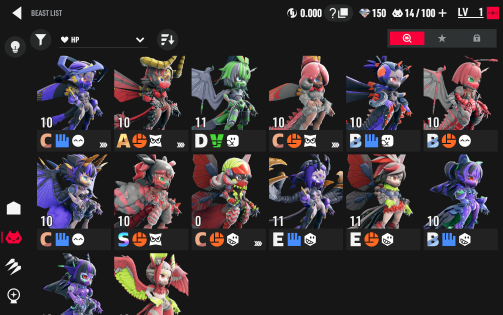
At its core, TOKYO BEAST was a futuristic, strategy-driven auto-battler built around teams of four android “BEASTs,” with a Web3 layer that tied ownership and rewards to blockchain infrastructure. It’s described across multiple game guides and previews as a game where you collect and enhance BEASTs, compete in automated battles, and participate in prediction mechanics.
The “Web3” part wasn’t just cosmetic. The project leaned into:
NFT ownership (BEAST NFTs and “Proxy” versions),
tokenized reward systems,
and an official story framing that positioned the game as a new kind of entertainment combining competition + prediction.
B. Core loop: collecting Beasts, team-building, and 4v4 auto-battles
Player translation of the loop:
Get BEASTs (through in-game systems and/or Web3 ownership paths)
Build a 4-unit team with roles and synergy
Auto-battle other teams (PvP tournament style)
Tune builds via parts/mods and stat optimization
Repeat—either chasing competitive results, rewards, or both
A press release about the game’s tournament format spells it out clearly: players assemble a team of four androids called “BEASTs” and compete; spectators can predict outcomes for rewards.
C. Launch, rapid growth, and early shutdown after ~76 days
The headline fact: TOKYO BEAST shut down after 76 days—launching June 9, 2025 and ending service on August 24, 2025.
Reports cite high operational costs / sustainability as the reason given by the producer in the shutdown announcement context.
Despite the short life, it had real early traction signals. For example, Immutable’s PR push claimed it hit #1 on Japan’s App Store free games quickly and reached a large download count.
II. TOKYO BEAST World and Story Overview
A. Year 2124 Tokyo setting, replicant androids, and Beast battles
Lore-wise, the game is set in Tokyo, year 2124, where replicants (sentient androids) are integrated into human society. BEASTs are a powerful model tied to NFTs, and PROXY BEASTs are copies used in competition.
This wasn’t just flavor. The lore existed to justify:
why “ownership” matters (BEAST NFTs),
why copies exist (Proxy BEASTs),
and why combat is a public spectacle.
B. Factions, Xeno Karate, and the Base–Trials ecosystem
The game framed its competitive circuit as XENO-karate, basically the in-universe combat sport where BEAST/Proxy BEAST teams fight.
The dual structure showed up everywhere:
TRIALS: where most “normal gameplay” lived (team building, battles, progression).
BASE: the Web3-focused ecosystem layer (ownership, staking/trading aspects).
As a player, it felt like the game was trying to serve two audiences:
people who just wanted a slick auto-battle strategy loop,
and people who wanted the Web3 “assets + rewards + marketplace” ecosystem.
C. How the lore ties into gameplay and tournaments
The big design idea was: watching matters as much as playing. Prediction/betting was a core pillar (not just a side mini-game), and that tied into the game’s “new entertainment” pitch.
III. How to Download and Access TOKYO BEAST
A. TOKYO BEAST on Android and iOS (APK, TapTap, Uptodown links)
Before delisting, the game was distributed on mobile, and it also appeared on third-party app listing platforms.
Examples that still show archived pages:
Uptodown listing for the Android APK (shows versions and download history).
TapTap listing describing the game and linking official channels.
Player note: these pages can remain visible even after service ends, but that doesn’t mean servers are live.
B. Account creation, Immutable Passport, and wallet connection basics
TOKYO BEAST leaned on Immutable’s ecosystem, and players often ran into account/wallet steps that felt more like onboarding into a Web3 platform than a typical mobile game.
If you had to connect wallets or link an external wallet to an identity system, Immutable’s docs describe the general process of linking external wallets to Immutable Passport.
That matters because refunds/ownership proofs in Web3 games frequently depend on account identity and linked wallet history.
C. Access after shutdown: what is still available or viewable
Once service ended (August 24, 2025 at 08:00 UTC), gameplay services stopped. Reports also noted staged shutdown steps like store sales stopping earlier, BASE services winding down, and eventual delisting.
Practically, after shutdown you’re mostly left with:
archived pages,
community videos,
and whatever official communications remained.
IV. Core Gameplay: Beasts, Bases, and Trials
A. Beasts, Proxy Beasts, and roles in 4v4 battles
The lore framing is:
BEAST NFTs are the “owned” high-value replicants,
PROXY BEASTs are copies used in the competitive street sport (XENO-karate).
As a player, what mattered was the practical roster function:
you needed 4 units that fit together,
and because it’s auto-battle, your “skill expression” was mostly in team building, speed tuning, and synergy.
B. Bases, TB Base system, and how Trials work as PvE stages
A lot of guides describe the ecosystem as two interconnected systems—BASE and TRIALS—with TRIALS functioning as the accessible play loop and BASE as the Web3 layer for staking/trading and NFT activity.
If you’re used to gacha games, think of it like:
TRIALS = campaign + arena + events
BASE = marketplace + ownership + economic layer
C. Auto-battle mechanics, AGI/speed, crit, and comeback systems
Auto-battlers live and die on tuning:
AGI/speed determines tempo,
crit and damage multipliers decide who gets deleted first,
and “comeback” mechanics determine whether the match has swing potential or just snowballs.
TOKYO BEAST also emphasized “unpredictable comebacks” as part of its action/strategy hook.
V. TOKYO BEAST Stats, Skills, and Builds
A. Key stats: HP, ATK, DEF, AGI, crit rate
If you played seriously, you weren’t just looking at “rarity,” you were looking at:
survivability thresholds (HP/DEF),
damage breakpoints (ATK/crit),
and tempo (AGI) because auto-battle is basically “who gets to do more actions at better times.”
B. Skills, skill combinations, and synergy between team members
The game’s guides describe BEASTs as being built out of parts that map to skills—meaning your build planning was closer to “kit assembly” than “one character = one fixed kit.” One guide breaks it down as four parts with different skill roles (passive/active/support).
That kind of system creates a meta where:
synergy between passives and actives matters a ton,
“leader” selection matters (because the leader passive only activates if set as leader),
and you can get “tier list” arguments that are really just “build list” arguments.
C. Mods, parts, and Beast customization/upgrades
Mods/parts were essentially the build customization layer, and many community guides focused on optimizing them for team performance.
VI. Best Beasts, Team Comps, and Tier Concepts
A. High-performing Beasts and how “tier list” thinking emerged
Because the game was short-lived, a lot of the “meta tier list” culture lived in:
community guides,
tournament observations,
and what actually showed up in competitive matches.
Instead of giving you a fake definitive ranking (which would be dishonest in a game that ended quickly), here’s how players actually tiered BEASTs:
Tempo carries: units that acted early and decided fights before the opponent stabilized
Stabilizers: tanks/defensive kits that kept your carry alive through burst windows
Disruptors: kits that broke enemy synergy (control, debuffs, targeting pressure)
Snowball engines: builds that scaled advantage once you got ahead
B. Example team compositions for Trials vs PvP tournaments
Trials (PvE/Progression):
prioritize consistency and survivability,
avoid “coin flip” glass cannon comps,
aim for stable clears that fuel upgrades.
PvP / Tournament comps:
prioritize tempo and punish windows,
use leader passives that amplify your main win condition,
build for “matchups” (if the meta is heavy burst, bring stabilization; if it’s slow, bring scaling).
C. Common mistakes in building squads
Player mistakes I saw echoed in guides/community discussion patterns:
building four “cool” units with no plan (no tempo, no survivability, no synergy)
ignoring tempo stats in an auto-battle game
not respecting leader passive value
overinvesting into one shiny BEAST when your overall comp was structurally weak
VII. Play-to-Earn and the TGT Token Economy
A. What TGT is and how it was earned in-game
TGT refers to Tokyo Games Token, which existed as a tradeable token outside the game ecosystem (still visible on major trackers).
In-game, players could earn crypto-linked rewards through competitive performance, lotteries, and event structures (depending on the phase of the game).
B. Daily missions, lotteries, and reward structure
There were campaigns and lotteries referenced in coverage, including early access reward structures and daily lottery prizes in pre-launch / early phases.
C. How token rewards tied into Bases, Beasts, and prediction modes
The “BASE + TRIALS + prediction” model tried to make the whole system feel like an ecosystem:
play competitive matches,
watch and predict matches,
and tie participation into rewards and market activity.
VIII. Prediction Battles and Betting Mechanics
A. How the prediction/betting system worked
TOKYO BEAST had an explicit spectator prediction concept: people could act as spectators, predict match outcomes, and earn in-game items (sometimes described as eligible for conversion to token under certain conditions).
B. Free chips, spectator betting, and prediction strategies
Coverage around tournament week described prediction betting using “chips,” including increased chips during championship periods.
From a player strategy perspective, prediction modes usually devolve into:
“follow the meta comp,”
“follow known strong players,”
“follow odds / previous results,”
which the project itself acknowledged as part of the intended viewing experience.
C. Risk management and fairness considerations
A key concern for any betting-like mechanic is fairness and legality, and the project’s Medium statement claimed the betting system was reviewed for legality by professionals.
Player reality, though: even if “free chips” reduce direct monetary risk, the system still influences behavior and perception of fairness—especially when rewards tie into an economy.
IX. Tournaments, Esports, and Prize Pools
A. Championship tournaments with up to $1M prize pool
The game heavily promoted “THE $1M GAMING CHAMPIONSHIP” concept, with press coverage explaining tournament + prediction competition framing and prize pool marketing.
B. Qualification via Trials, Bases, and ranked performance
The whole ecosystem pitch positioned Trials and competitive performance as pathways into championship participation (and into the entertainment layer via predictions).
C. How tournaments influenced the meta and Beast demand
In any competitive game with tradeable assets, tournaments create:
demand spikes for “meta” units/builds,
market speculation,
and pressure to optimize quickly.
TOKYO BEAST was built to amplify that feedback loop—great when the ecosystem grows, brutal when it destabilizes.
X. NFT Beasts, Marketplace, and Ownership
A. Minting/owning/trading NFT Beasts and Proxy Beasts
NFT ownership was central to the BEAST framing—BEAST NFTs were the premium “ownership” layer, while Proxy BEASTs were the competitive copies used in the in-universe sport.
B. Marketplace access, floor prices, and liquidity challenges
Web3 marketplaces live and die on liquidity. When player activity drops or uncertainty rises, spreads widen and exit liquidity becomes a real issue—especially for game-linked NFTs.
Some later commentary noted liquidity and sustainability concerns as part of the wider shutdown narrative.
C. Customization, training, and long-term ownership value
The whole promise of ownership is “long-term value,” but the actual value depends on:
the game surviving,
the marketplace staying healthy,
and the ecosystem retaining demand.
When the service ends, “ownership” becomes more like “collectible proof” unless there’s a real future utility plan.
XI. Shutdown Announcement and Service Termination
A. Official shutdown timeline and reasons (costs, sustainability)
Multiple reports cite the official reason as high operating costs / sustainability challenges, and the shutdown date was set for August 24, 2025.
B. Last day of service and what was disabled/kept online
Coverage described staged shutdown elements (store sales stopping earlier, BASE shutdown timing, and final game service ending).
C. Impact on Beasts, tokens, and connected wallets
One key point in commentary: compensation/refunds were not simply “here’s more TGT.” They were handled via a USDC refund plan (see next section), reflecting concern about token volatility and fairness.
XII. Refunds, Compensation, and Player Protection
A. Refund policy and USDC refund process
Several reports described a structured compensation plan, including USDC refunds and a defined application window.
B. Steps players needed to follow to claim refunds
From coverage: refund applications opened on August 25, 2025, with a deadline around September 30, 2025 (UTC) for completing the process.
If you were a player, the practical action items were:
make sure your account identity and wallet connections were correct,
submit refund forms in the window,
follow official instructions before delisting cutoffs.
C. Community concerns about sunk cost and asset value
Even with refunds, the emotional pain points were predictable:
time sunk into optimizing,
uncertainty around NFT “value,”
and distrust toward P2E sustainability.
Commentary noted it as one of the more structured refund plans in Web3 gaming (refunds in USDC rather than the game token).
XIII. Community Reception and Feedback
A. First impressions and creator reactions
Early impressions often praised the ambition: polished presentation, new entertainment framing, and a competitive + spectator loop. You also saw critical takes about token pressure and economic sustainability.
B. Reactions to P2E elements, prediction systems, and monetization
Prediction betting mechanics were a standout feature—and also a lightning rod. Some players loved the “interactive spectator” concept; others saw it as a risk and a distraction from core gameplay.
C. Post-shutdown sentiment and lessons for Web3 games
The “76-day shutdown” became a cautionary tale: rapid growth marketing doesn’t guarantee sustainability, especially when operational costs, token economics, and marketplace demand are all tied together.
XIV. TOKYO BEAST Official Channels and Archives
A. Official site/socials and remaining comms
Official communications were referenced through:
press releases,
official social announcements,
and Medium posts by the project.
B. Archived patch notes, guides, FAQs
A lot of gameplay explanation now lives in:
archived guide pages (like detailed beginner/team/mod writeups),
press release descriptions of tournament formats,
and community video breakdowns.
C. Fan-made wikis, videos, and long-form breakdowns
If you’re researching “how it worked,” fan and guide sites became the memory bank—especially those that documented the BASE/TRIALS design, parts system, and reward loops.
XV. Alternatives and “What’s Next” After TOKYO BEAST
A. Other Web3 auto-battlers / crypto games with similar concepts
I’m not going to throw random token games at you like a shill list. The practical category of “similar concept” includes:
auto-battlers with collectible units + competitive ladders,
games with spectator prediction features,
and Web3 titles built on ecosystems like Immutable that emphasize wallet identity and asset interoperability.
B. What TOKYO BEAST’s rise and fall suggests for future P2E titles
From a player’s perspective, TOKYO BEAST’s story screams three lessons:
Core gameplay must stand without token rewards.
Operational cost structure matters more than hype. (The official reason cited was cost/sustainability.)
If your economy depends on constant growth, it’s fragile.
When growth slows, liquidity collapses, and the “value loop” breaks.
C. How players can apply lessons to upcoming Web3 projects
If you’re considering another Web3 game:
Treat it like a normal game first: “Is the gameplay fun if rewards are zero?”
Never assume “NFT = long-term value”; value depends on the game surviving and demand staying real.
Prefer projects with transparent refund/consumer protection policies (TOKYO BEAST’s USDC refunds were at least structured).
TOKYO BEAST was a bold mix of auto-battler strategy, Web3 ownership, and spectator prediction entertainment—and it burned bright and fast. It launched June 9, 2025, promoted high-stakes competition and prediction systems, and then announced closure due to sustainability concerns, ending service August 24, 2025—roughly 76 days later.