Dragon Ball Gekishin Squadra Gameplay — A Player’s Deep Dive
If you’ve been itching for a fresh way to brawl in the Dragon Ball universe — but want something more tactical than button-mashing or pure fighting-game vibes — then Dragon Ball: Gekishin Squadra might just scratch that itch. As a player who jumped in as soon as it dropped, I’m writing this to walk you through the core gameplay, what works, what to watch out for, and how you and your crew can start racking up wins (and Dragon Balls).
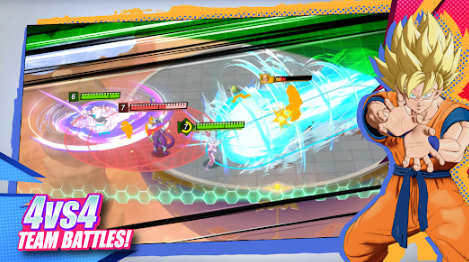
Introduction to Dragon Ball Gekishin Squadra
A. Game Overview: 4v4 Action-MOBA Gameplay
Gekishin Squadra is the franchise’s first team-oriented, action-MOBA style game: you and three other players versus an opposing team of four, duking it out in fast-paced matches. The game mixes classic Dragon Ball flair — flashy moves, transformations, iconic cast — with MOBA elements: objectives, map control, roles, and team tactics.
You pick your hero (everyone’s got their own feel), jump in, and join a 4-on-4 battle where teamwork and quick thinking matter as much as flashy Ki blasts.
B. Fast-Paced Strategic Battle System
Matches are streamlined and dynamic — no long item shops or drawn-out farming cycles. Instead, you level up within the match by defeating enemies and unlocking new skills and power-ups, which scales your abilities and combos.
This makes gameplay feel immediate: get in, fight, push, win (or learn). It’s MOBA strategy and intensity, filtered through the instant-action DNA of Dragon Ball.
C. Dragon Ball Character Integration
One of the biggest draws for me — and probably for you, if you’re reading this — is that the roster is full of familiar faces. Goku, Vegeta, and other fan-favorites show up, but there’s also room for lesser-used or more niche characters, depending on the roster at the time.
Plus, there’s customization: skins, special entrance animations, finishers. So yeah — you can go full fan-service, and still play smart.
D. Core Gameplay Experience ( ~10–20 Minute Matches )
One of the best parts: matches don’t overstay their welcome. Most games hover in the 10–20 minute (or even shorter) range, making it easy to hop in for a quick round or four. No need to commit an hour, perfect for mobile or console sessions.
That quick-match rhythm means less downtime, more explosive action. It’s almost like eating small, satisfying combos instead of one long, drawn-out meal.
E. Platform Availability and Accessibility
The game launched September 9, 2025 — and it’s everywhere you’d want it: PC (Steam), consoles (PS4, PS5, Nintendo Switch), and mobile (iOS & Android). Cross-play and cross-save are supported, so you and your friends on different devices can squad up no problem.
That means no matter what platform you prefer, you get the same game — no disadvantage, which is huge for a fight-heavy team-play title.
Core Victory Conditions and Main Objectives
Alright, so what are we actually doing in those chaotic 4-on-4 matches beyond punching ki blasts and yelling "Kamehameha!"? Here's how you win.
A. Primary Objective: Capture the Dragon Ball
At the heart of each match: capture the enemy Dragon Ball. But it’s not just a simple grab. First you typically need to destroy enemy strongholds — in this game, they’re dubbed the “Gods of Destruction” — which act as defensive towers or barriers.
Once those defenses fall, you remove the shield from the Dragon Ball and secure it — that grants instant victory. That means games are objective-focused: raw DPS might get you kills, but you win by pushing, destroying, and then capturing.
Because there are usually two lanes, most matches involve strategic spreading: some teammates holding lanes/towers while others roam for picks or objective pushes.
B. Secondary Objectives Overview
But it’s not just tower-hopping. There are other layers:
Minion control & lane pressure: Keeping lanes pushed with minions helps maintain pressure, defend your side, or prepare for the final push.
Leveling up during match: As you defeat minions, players, or jungle mobs (if available), you gain EXP — regularly powering up or unlocking new abilities/transformations. That can swing fights heavily.
Team coordination & timing: Because of the burst-heavy nature, timing your team’s push matters — overcommit too early and you might lose everything. Wait too long and enemy might over-farm.
C. Victory Conditions in Different Modes
From what I’ve seen so far, the game plays mostly as standard 4-v-4 battles targeting the Dragon Ball objective.
That said: some players online mention alternate or variation modes (e.g. objectives beyond just tower-destroy + capture) for different playlists or events. I expect Bandai Namco to expand more modes post-launch. As of now, core mode is the primary — and it works well for quick, action-packed games.
Character Roles and Team Composition
Just like Goku & Vegeta aren’t the same as Piccolo or Cell — in Squadra, how you build your team matters. Roles are simplified (compared to traditional MOBAs), but that makes coordination more accessible.
A. Damage Dealer (DPS) Classification
DPS characters are all about output. They’re your glass cannons, your burst damage— ideal for picking off enemies, fighting 1v1s, and shredding towers once lanes open.
They tend to have high damage skills, flashy combos, and relatively lower defense.
Readiness for RNG — if you miss your burst or get caught, you might go down quickly.
Positioning is crucial: flank, bait, avoid frontlines unless enemies are distracted.
B. Tank Role (Defender) Classification
Tanks soak & hold. They hug objectives, keep minion waves under control, and buy time for DPS or Technical teammates to deal damage or secure buffs.
Strong survivability, crowd control, and protection abilities.
Great for initiating fights, absorbing enemy ultimates, or holding towers while teammates rotate.
Often your base-team stabilizer.
C. Technical Support Role Classification
This is the wildcard role — not purely healing, but more about buffs, disruption, utility. Technical heroes can:
Provide buffs or shields that shift fights.
Crowd-control or debuff enemies, making it easier for DPS to pick them off.
Help rotate, capture objectives, or support mid-fight when DPS/tank struggle.
D. Balanced Team Composition Strategy
From what I’d build (and have seen recommended):
1 Tank (frontline) – soak damage, hold lane or objective.
1 DPS (main carry) – high damage output, picks & burst.
1 Technical/Support – buff, utility, disruption.
1 Flex (either extra DPS or utility depending on draft/opponent)
That gives you: damage, defense, utility, and flexibility — good for adapting mid-match when things get chaotic.
Minion Farming and Experience Accumulation
Because the game uses in-match leveling instead of traditional “buy items with gold” MOBA mechanics, minion waves and killing mobs are your ticket to power.
A. Early-Game Farming Fundamentals
Minions spawn in waves and pushing them (or killing them) helps you build up EXP and pressure.
Last-hitting or making sure you get the kill on minions matters — though as moreso for control than gold.
Some special “mini-boss minions” (if implemented) give extra rewards/EXP — prioritize them if possible to jump ahead.
B. Advanced Farming Rotations
Once lanes stabilize, good teams rotate:
One or two players farm mid-lane or jungle while others hold lanes or pressure towers.
Rotate to contest farm or deny enemies — stealing minion waves or jungles helps slow down enemy scaling.
C. Farming Position and Role Assignment
Tanks or Technicals often handle wave-push and holding lane (safer).
DPS or Flex can rotate jungles or roam for picks — but risky unless you communicate.
Team cohesion or voice chat helps: telling your team you’re rotating can prevent overextension.
D. Comeback XP and Catch-Up Mechanics
Because everyone levels up in-match, even if your team is behind, with coordinated effort you can catch up — kills, tower pushes, smart rotations. Games rarely feel like hopeless snowballs if you know what you're doing.
Bosses, Buffs & Objective Pressure (Speculative Mechanics)
Some early lore/guide-type writeups and community chatter mention “boss-type” objectives and “buffs” tied to map events when fighting Gekishin or special objectives — but as of launch many details are still rumors or under testing.
From what I understand (and have seen glimpsed in pre-release footage):
There may be special boss-like objectives or NPCs that grant buffs to the team when defeated — shifting team power dynamics mid-match.
These features could create comeback opportunities or force contested moments — giving risk/reward depth beyond tower pushing.
Since Squadra is still fresh, I’m excited to test whether these boss-buff mechanics evolve into a staple or stay occasional highlights.
Combat Mechanics and Skill System
One thing I love: it doesn’t feel like a bland MOBA button-mash. Gekishin Squadra keeps some action-game flavor, making fights satisfying.
A. Abilities & Ultimate: Core Kit
Each hero gets a small set of basic abilities plus a more powerful ultimate or transformation — think classic Dragon Ball burst moves.
Abilities and ultimates level up during match (via EXP / kills / progress), so timing and smart usage matter.
That means even if you start weak, good plays can turn you into a mid-match powerhouse — and late-match combos hit hard.
B. Mobility, Positioning & Skillful Execution
Movement + positioning decisions matter: flank, bait, retreat — it’s not just spam-the-strongest-skill.
Teamfight coordination: a tank baiting, DPS flanking, support disabling — when done right, fights feel cinematic in a good way.
C. No Traditional Shop — Just Skills & Scaling
Unlike MOBA heavyweights (with item shops, gold grinding), Squadra simplifies economy: you don’t buy items — you grow within the match. That keeps focus on fighting, not shopping.
Positioning, Movement & Team Strategy
I’ve lost plenty matches because teammates forgot this. Position and teamwork matter.
A. Lane & Role-Based Positioning
Tank up front, holding lanes or objectives.
DPS spread mid to backline, looking for picks or roaming after waves.
Technical/support hang mid-field, ready to assist mid-fight or counter flanks.
If you roam solo as DPS without communication — you might get caught or overextended.
B. Map Awareness & Rotation Strategy
Watch lanes, tower status, teammate positions — kills mean less if you can’t push.
Rotate smartly: after a tower falls, group up for next objective or defend if enemy counter-push.
If behind: don’t overcommit — focus on farming, baiting, and wait for comeback opportunities.
C. Final Push & Burst Strategies
Later in match, when enemies are weakened or their defenses down: coordinate for a full team push. Tanks take front, DPS dive, Technical support with buffs — that’s when Dragon Ball capture win becomes real.
Early Game Strategy & Common Pitfalls
From my first few matches (and failures) — here’s what you should and shouldn’t do.
Do This
Learn one hero first — master their skill kit before jumping to other mains.
Stick with your team — Solo-roaming often ends in quick deaths.
Focus on minions and leveling early, not flashy early fights.
Avoid This
Don’t treat it like a free-for-all: ignoring lanes or towers as DPS solo roamers = quick loss.
Don’t neglect positioning — backlines matter, especially against burst.
Don’t ignore team composition — all-DPS or all-tank rarely works.
Give it a few rounds even if you fail — early losses helped me learn maps, rotations, and how to “read” fights.
What Works & What Needs Improvement (As of Launch)
What Works
Fast matches — quick, fun, and less grindy than classic MOBAs.
Iconic cast + flashy moves make every fight feel like Dragon Ball.
Easy entry for MOBA newcomers (no complex items or endless builds).
Cross-platform & cross-save — play with anyone, anywhere.
⚠ What to Watch Out For
Without coordination, solo-queue matches sometimes feel chaotic and messy. Several players report mixed team quality especially when playing solo.
Because of scaling, losing early objective control can snowball quickly, making comeback harder.
The simplified MOBA design might feel shallow to hardcore MOBA veterans — fewer mechanics, fewer “out-plays” compared to deep MOBAs.
Why This Game Won Me Over — And Maybe You Too
As someone who’s played a bit of everything — fighting games, MOBAs, action titles — I find Gekishin Squadra hits a sweet spot:
It’s approachable: you don’t need 100 hours of practice or complex item builds.
It’s fun: seeing Goku punch, Vegeta rush-kick, or Piccolo energy-blast while you coordinate with friends hits nostalgic and satisfying notes.
It’s social: 4v4 means you need teammates — so you get that “together or lose together” vibe. Makes wins feel earned.
It respects time: 10-20 min matches, no long loading or downtime — ideal for quick sessions or casual play between obligations.
Even on a rough day when my aim’s off, or teammates are messy, I still enjoy the chaos.
Conclusion — Your Path Forward in Gekishin Squadra
If you’re new: start with a balanced team composition — find a tank you like, pick a reliable DPS or utility, and play a few matches. Focus on learning maps, basic rotations, and team coordination.
If you’re veteran or casual returning: farm minions, master positioning, communicate with teammates, and don’t be greedy. Push when you have numbers, retreat when you don’t.
As for me — I’m in for the long haul. Gekishin Squadra’s mix of fast action, teamplay, and Dragon Ball nostalgia is addicting. I expect its community to grow, metas to shift, and hopefully more game modes or deeper mechanics to show up down the line.