Blade and Soul Heroes Tier List: Best Heroes, Teams, Roles, and Build Priorities for Every Player
If you are trying to understand the current blade and soul heroes tier list, the first thing I would say is this: do not look at hero rankings like they are permanent law. Blade & Soul Heroes is the kind of game where a hero can look amazing in one mode, feel average in another, and suddenly become top-tier again after you put them into the right element team. I have seen players chase only the highest damage hero, then wonder why their team still falls apart in dungeons or arena. The truth is simple: raw damage matters, but team role, leader value, element synergy, survivability, crowd control, and investment level matter just as much.
This is why a proper Blade and Soul Heroes tier list should not only say “Myo is good” or “Gwen is strong.” It should explain why those heroes are good, where they work best, and whether they are actually worth building for your account. A hero that clears early content easily may fall off later. A hero that feels weak without gear may become insane after proper investment. A support hero may not top the damage chart, but if they keep your carry alive or lock down enemies at the right moment, they can win fights that a full damage lineup would lose.
In this guide, I am writing from a player’s perspective, so the focus is practical. I will cover how the tier system works, which heroes are currently worth prioritizing, who beginners should build first, how roles and elements change rankings, what team lineups make sense, how Version 2.2.0 shifted the meta, why Yumha and new heroes matter for future updates, and how to avoid wasting resources on units that do not fit your roster. By the end, you should have a much clearer idea of which heroes are worth building now and which ones can wait.
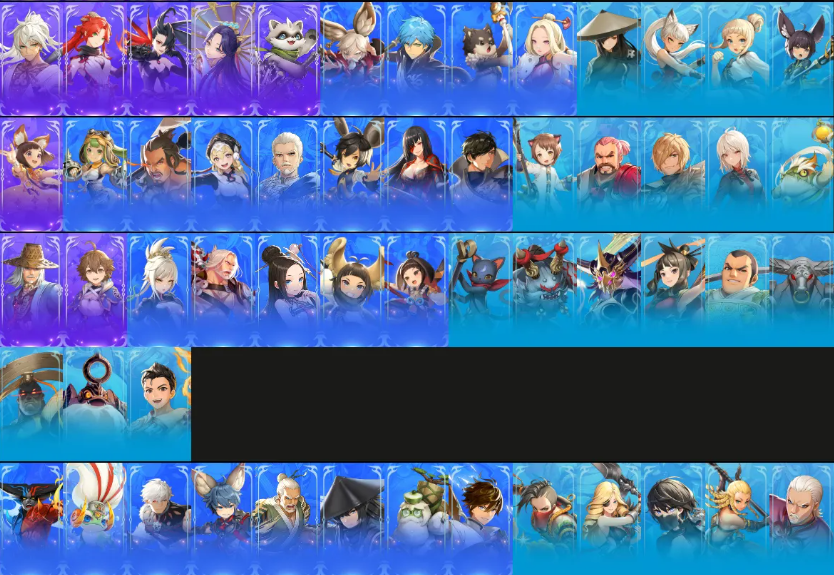
I. Blade and Soul Heroes Tier List Overview
The main thing this blade and soul heroes tier list measures is overall hero value. That means I am not ranking heroes only by one damage number or one flashy skill animation. A hero’s real value comes from how much they help your account progress across different content. If a hero can carry dungeons, perform well in arena, fit multiple teams, and scale with investment, that hero deserves a higher rank. If a hero only works in one narrow setup and needs perfect support, they may still be useful, but they should not be treated like a universal must-build.
The most important ranking factors are damage, utility, survivability, versatility, and role value. Damage is obvious because enemies need to die, but utility is what separates good heroes from meta heroes. Crowd control, healing, buffs, debuffs, leader effects, element synergy, and team protection can all raise a hero’s value. Survivability also matters because a dead damage dealer contributes nothing. A hero that stays alive and keeps applying pressure often performs better than a fragile hero that only looks strong in ideal conditions.
Rankings change by mode because each mode asks different questions. Dungeons usually reward stable lineups, sustained damage, and survivability. Arena rewards tempo, crowd control, burst windows, and matchup pressure. General progression rewards flexible heroes that can handle different enemy types without needing constant lineup changes. A hero like Myo may shine because poison damage and boss pressure remain valuable, while Gwen can dominate when AoE and water synergy matter. The “best” hero depends on the fight you are preparing for.
Team composition is another huge factor. A hero may be SS-tier in the right team and only decent outside it. Element teams, leader skills, support pairing, and frontline protection all affect performance. If you build Gwen without a water setup or place a fragile damage hero without defensive support, you may not see the same results other players talk about. This is why some heroes stay meta across multiple updates: they offer flexible value, strong role identity, and kits that remain useful even when the game adds new content.
II. How the Tier System Works
For this guide, SS-tier means the best of the best. These are heroes that can define teams, carry content, or offer rare value that is hard to replace. SS-tier heroes usually have excellent damage, powerful utility, strong scaling, or a combination of several strengths. If you pull one of these heroes and your roster can support them, they are usually worth building. Examples in current community discussion often include names like Myo, Gwen, Mushin, Yura, Hongbi, Guho, Furin, and Salkhi the Swift depending on patch and list structure.
S-tier heroes are still excellent. They may not be as universally dominant as SS-tier picks, but they can still carry content or fill important roles. Some S-tier heroes are strong leaders for element teams. Others are high-value supports, secondary damage dealers, or specialized picks that become amazing in the right lineup. In practice, a well-built S-tier hero with good synergy can outperform an SS-tier hero thrown randomly into a bad team. That is why you should never judge tier placement without looking at team context.
A-tier heroes are strong but usually more conditional. They may need specific elements, better investment, or a team built around them. Many A-tier heroes are good enough to use for a long time, especially if you do not have every top-tier option. B-tier heroes are situational, early-game, or replacement picks. C-tier heroes are usually filler, niche, or low-priority unless you have a very specific reason to use them. Lower-tier does not always mean useless, but it does mean you should think twice before spending rare resources.
You may also see Tier 0, Tier 1, and lower-tier language in some communities. In practice, Tier 0 usually means meta-defining or best-in-slot. Tier 1 means very strong and reliable. Tier 2 means usable but less dominant. Tier 3 and lower usually means niche, outdated, or early-game only. The exact labels are less important than the meaning behind them. What matters is whether a hero helps your team clear more content efficiently.
III. Overall Best Heroes Ranked
For overall best heroes, Myo is one of the easiest names to recommend because she brings strong poison value, excellent single-target pressure, and late-game usefulness. Poison damage tends to stay relevant because it keeps working over time, especially against tougher enemies and bosses. Myo may need protection and proper setup, but once she gets rolling, she can melt important targets. If you are building a poison-focused team or need a boss killer, she is one of the safest high-priority investments.
Gwen is another top-tier hero because water AoE and crowd-control-style value are extremely useful in many modes. She can help wipe waves, stabilize fights, and support water team identity. Heroes like Gwen stay high in rankings because AoE control and team impact are valuable even when the meta shifts. She may not always be the best single-target boss killer, but when content throws multiple enemies at you, Gwen feels fantastic.
Mushin is a strong dark hero with reliable sustained damage and leader potential in dark-focused setups. The reason players like Mushin is consistency. Some heroes need ideal conditions, but Mushin has the kind of kit that keeps contributing across many fights. Yura is another premium pick, often valued for poison team strength, single-target pressure, and strong damage contribution. Hongbi and Guho are also major names in top-tier discussions, especially when fire or high-impact team setups are involved.
Strong mid-tier heroes include Sehwa, Inlang, Harin, Gwon, Somyeong, Choi Jina, Jinwong, Unjin, Gunma, Taywong, and Golden Deva depending on mode and team. These heroes may not always sit at the very top, but they can absolutely help you progress. Lower-tier heroes like Fluffy, some niche fillers, or role-limited picks can still be used early, but you should not dump your best resources into them unless they serve a specific purpose in your lineup.
IV. Best Heroes for Beginners
For beginners, the best heroes are not always the highest ceiling units. New players need heroes that work with low investment, fit simple teams, and help clear early content without complicated synergy. Sehwa is a good example of a beginner-friendly hero because sustain and leader value can make early progression smoother. Inlang can also be useful because lightning teams are relatively straightforward to understand. Harin and Gwon may help depending on your water setup, while Choi Jina and Golden Deva can fill useful early or mid-game roles.
A safe early investment is a hero who stays useful after the beginner phase. This is why heroes like Gwen, Myo, Mushin, Yura, Hongbi, and Salkhi are attractive if you pull them early. Even if you cannot fully unlock their potential right away, they have long-term value. The main danger is overinvesting in low-rarity or filler heroes just because they help for the first few days. Use them, sure, but do not spend rare resources on them unless you know they remain useful later.
Beginners should avoid building too many niche heroes early. A niche hero might be strong in one element team or one special mode, but if your roster cannot support that niche, the investment feels bad. For example, a poison-focused hero needs poison support to feel amazing. A water hero wants water synergy. A dark leader wants dark teammates. If you build around half-finished teams too early, your account may feel scattered.
The best beginner strategy is to build one stable core team first. You want one leader, one or two damage dealers, one support or healer, and one flexible utility or defense slot. Do not try to build five element teams at once. Pick your strongest available hero, build a team around them, and slowly expand later. A focused beginner account grows faster than an account that upgrades everyone equally.
V. Best Heroes by Role
For attacker and damage-focused heroes, Myo, Mushin, Yura, Hongbi, Salkhi the Swift, Furin, and Guho are among the most important names to know. These heroes bring the kind of offensive value that can define a run. Myo is especially good for poison and boss pressure. Mushin gives reliable dark damage. Yura brings strong single-target and poison-related value. Hongbi can shine in fire-focused setups. Salkhi is strong in lightning contexts and can help push aggressive teams.
For support, healing, and crowd-control heroes, Gwen, Sehwa, Harin, Gwon, Choi Jina, and certain element-specific utility picks are worth paying attention to. Gwen is especially valuable because her water-focused control and AoE pressure make fights easier to manage. Sehwa is useful because healing and leader value are always practical. Supports may not always look impressive on damage charts, but they often decide whether your team survives long enough to win.
For defense and leader-role heroes, the answer depends heavily on element. Sehwa can lead fire teams well. Inlang is useful for lightning-style setups. Mushin can anchor dark teams. Yura or Somyeong can support poison-focused planning. Harin or Yusol can appear in water setups, though water can be trickier to build smoothly. The best leader is not just the hero with the strongest personal kit; it is the hero whose leader value improves the entire lineup.
The mistake many players make is stacking attackers and ignoring the other roles. Five damage dealers may look strong, but if they die quickly or lack control, the team can collapse. A balanced lineup with leader synergy, support, and damage usually performs better. Damage wins fights, but support creates the conditions that let damage happen safely.
VI. Best Heroes by Game Mode
For dungeons, you want stable heroes that can handle longer fights and repeated pressure. Myo, Gwen, Mushin, Yura, Hongbi, Sehwa, Salkhi, and Guho are all strong dungeon considerations depending on your team. Dungeons usually punish fragile or poorly balanced lineups, so survivability and utility matter. A pure burst team may clear easy dungeon stages, but harder content usually demands better sustain and smarter synergy.
For arena, tempo and matchup value become more important. Heroes with crowd control, burst threat, survivability, and disruptive utility rise in value. Gwen can be annoying because control and AoE pressure can swing fights. Mushin can be reliable because sustained damage keeps pressure on opponents. Yura and Myo can be scary when poison or single-target pressure gets rolling. Arena rankings can shift more quickly than dungeon rankings because matchups and defense teams matter so much.
For general progression, the best heroes are the flexible ones. You want heroes who do not need a perfect setup to be useful. Mushin, Gwen, Myo, Yura, Sehwa, Hongbi, Salkhi, and Inlang are strong examples depending on your roster. These are heroes that can help you move through story, dungeons, events, and general content without constant rebuilding. If a hero fits several modes, they deserve more priority than a hero who only works in one niche.
All-around heroes are especially valuable for free-to-play or low-spend players. If you do not have unlimited resources, you should prioritize heroes who give the most coverage. Building one flexible team is better than building three half-finished teams. Once your account becomes stronger, you can start investing in mode-specific lineups.
VII. Best Teams and Lineups
A good one-team recommendation for general use is built around one strong leader, two main damage dealers, one support, and one flexible utility or defense slot. For example, if you have Mushin, you can build a dark-focused or hybrid team around him with damage and support pieces. If you have Gwen, you can lean into water synergy and AoE control. If you have Myo or Yura, you can start thinking about poison pressure and boss-focused damage. The exact names depend on your roster, but the structure matters more than copying a perfect whale team.
A balanced mixed-content lineup should include at least one hero who can carry damage, one hero who can stabilize fights, and one hero who improves team synergy. If your lineup has no sustain, you may lose longer fights. If it has no damage, you may time out or fail to kill priority targets. If it has no control, enemies can overwhelm you. The best team is not just five highly ranked heroes; it is five heroes who actually work together.
To combine leaders, supports, and damage dealers effectively, start with your leader skill or element plan. If your leader supports fire, do not randomly fill the team with poison and water heroes unless their inaixiaoidual value is too good to ignore. If you are building around poison, make sure your poison damage dealers have enough time and support to ramp up. If you are building around water, use control and AoE pressure to dominate waves. Leader skills are there for a reason, so use them.
The biggest lineup advice I can give is to stop copying teams you cannot actually build. If a guide recommends a perfect team with several top-tier heroes you do not own, use the idea, not the exact list. Ask what the team is trying to do. Is it poison damage? Water control? Fire sustain? Dark burst? Lightning aggression? Once you understand the idea, you can use your own roster to approximate the same function.
VIII. Best Element Teams
Water teams usually revolve around Gwen because she is one of the strongest water heroes and brings excellent AoE value. A water setup may include Gwen, Gwon, Harin or Yusol, and a support or filler depending on what you own. Water can feel a little tricky because the best pieces may not be as straightforward as fire or lightning, but when Gwen is properly supported, the team can feel very smooth in wave-heavy content.
Fire teams often use Sehwa as a key leader-style piece, with Hongbi as a major damage or pressure option. Fire setups can include heroes like Sehwa, Hongbi, Sansu, Ukaha, Uwon, Boryn, or Chawoong depending on your roster and version. Fire is attractive because it can offer a nice mix of damage, sustain, and team structure. If you like straightforward aggressive progression with support behind it, fire is comfortable.
Poison teams are built around poison pressure, usually with Myo and Yura as major names. Somyeong can also appear as a poison-related option, while Ashjaw, Yonkai, and other poison-supporting heroes may fill out the lineup. Poison teams are especially satisfying against tougher enemies because damage-over-time pressure keeps working while the fight goes on. The tradeoff is that poison teams may need time to ramp and enough protection to survive while their damage stacks.
Dark and lightning teams are also worth mentioning. Dark can be built around Mushin and other dark heroes, giving you a strong sustained damage identity. Lightning can use Inlang, Salkhi, Golden Deva, Choi Jina, and support pieces to create a fast, aggressive setup. The best element team for you is usually the one where you already own the strongest core hero. Do not force water if you have no Gwen. Do not force poison if you have no Myo or Yura. Build from your actual roster.
IX. Top Hero Spotlights
Myo is one of the strongest heroes because poison pressure and single-target damage remain valuable across many modes. She is the kind of hero who rewards proper investment. If you protect her and build a team that lets poison work, she can be excellent for bosses, dungeons, and long fights. Her weakness is that she may not feel as explosive immediately as a pure burst hero, but her total impact can be huge.
Gwen is strong because she brings water AoE, control-like value, and wave-clearing pressure. She is one of those heroes who can make content feel easier because she affects multiple enemies at once. Gwen is especially valuable when enemy groups are the problem. She may not always be your best single-target solution, but her overall utility makes her one of the safest top-tier heroes to build.
Mushin is a reliable dark damage hero with strong sustained value. He is popular because he does not feel overly narrow. A good Mushin can work in dark teams and hybrid lineups, which makes him flexible. Hongbi is a major fire hero and can become very important if your account leans toward fire synergy. Yura is a poison-focused powerhouse and pairs naturally with poison team planning, especially when you care about boss pressure and consistent damage.
Sehwa, Inlang, Salkhi the Swift, and Harin are also important because they represent the value of leaders, element teams, and role flexibility. Sehwa gives fire teams structure and sustain. Inlang supports lightning setups. Salkhi brings strong lightning offense and utility. Harin can matter in water teams or support contexts depending on build. These heroes rank highly across multiple lists because they are not random stat sticks; they help create functioning teams.
X. Hero Build Priorities
For top-tier damage heroes, your build priority should be damage first, but not blindly. Myo and Yura want stats and upgrades that improve their poison and single-target output. Mushin wants sustained damage and survivability so he can keep fighting. Hongbi wants fire damage value and enough team support to maximize her pressure. Salkhi wants offensive scaling that matches lightning team aggression. A damage hero should be built to do their job as efficiently as possible.
For support and utility heroes, focus on uptime, survivability, and whatever stat makes their utility stronger. A support who dies early is useless. Gwen, Sehwa, Harin, Gwon, and similar heroes should not be treated like pure DPS unless their kit actually supports that. If a hero’s main value is control, healing, or team support, invest in the parts that keep those effects available. Sometimes that means defensive stats matter more than chasing damage.
Heroes that scale best with proper investment are usually the ones with strong kits, not just high base numbers. Myo scales because poison damage becomes more valuable in harder fights. Gwen scales because AoE and control stay useful. Mushin scales because sustained damage and dark-team value remain relevant. Yura scales because poison and single-target pressure matter across multiple modes. These are the heroes you can build confidently if they fit your roster.
The best upgrade habit is to focus on your core team first. Do not half-build twenty heroes. Pick your main leader, your best damage dealer, your key support, and your most flexible utility piece. Upgrade them first, then expand. Blade & Soul Heroes rewards depth in your main team more than shallow investment across every hero you own.
XI. Beginner vs Endgame Value
Some heroes shine early because they are easy to use and do not need perfect synergy. Sehwa, Inlang, Gwon, Choi Jina, Golden Deva, and similar heroes can help early accounts stabilize. These heroes may not always be the number one endgame choice, but they can make progression smoother. A beginner hero does not need to be perfect forever; it just needs to help you reach the point where better options become usable.
Endgame heroes are different. They often need proper team support, investment, and role understanding. Myo may feel much better once your poison team is built. Gwen becomes more impressive when water synergy and control value matter. Mushin scales with stronger dark setups. Yura becomes scarier when you can properly support poison pressure. These heroes reward players who invest carefully and understand team building.
Flexible heroes are valuable at every stage. A hero who can work in dungeons, arena, events, and general progression deserves more investment than a hero who only works in one setup. This is why top-tier heroes stay relevant across updates. Their kits solve common problems. Damage, control, sustain, and synergy are always needed, even when the exact meta changes.
The best way to judge beginner versus endgame value is to ask two questions. Does this hero help me right now? Will this hero still matter later? If the answer to both is yes, that hero is a priority. If a hero only helps right now, use them but invest lightly. If a hero only helps later, keep them in mind but do not starve your current team just to prepare for a future you cannot reach yet.
XII. Version and Patch Changes
Version 2.2.0 affected rankings by pushing certain heroes higher in community discussion and refreshing how players viewed the top meta. Heroes like Myo, Gwen, Hongbi, Guho, Yura, Mushin, Furin, and Salkhi became major names in updated rankings. This matters because older launch-era lists sometimes had very different placements. A hero who was underrated early can rise after players test more content, and a hero who looked strong at launch can fall once harder modes expose weaknesses.
Heroes gain value after updates for several reasons. Sometimes a balance change directly improves them. Sometimes new content favors their role. Sometimes a new hero makes their element team better. Sometimes players simply discover better builds. Tier lists are not only changed by patch notes; they are also changed by player testing. The meta evolves as people learn.
New content can shift the meta quickly because it changes what problems teams need to solve. If a new dungeon has tough bosses, single-target and poison heroes rise. If a new mode has waves of enemies, AoE and control heroes rise. If arena becomes more important, burst and disruption rise. If element bonuses become more rewarding, mono-element teams become more attractive. A good tier list has to follow the content, not just hero names.
This is also why you should not overreact to every patch. If your hero drops slightly in one tier list but still clears your content, do not panic. Meta rankings are helpful, but your actual account matters. A well-built A-tier hero can still outperform an underbuilt SS-tier hero. Patch awareness is important, but so is practical testing.
XIII. New Heroes and Meta Shifts
New hero releases affect the tier list because they can change both direct rankings and team synergy. A new hero might become a top-tier carry, but they might also improve older heroes by completing an element team. For example, a new poison support could make Myo or Yura even stronger. A new water tank could improve Gwen teams. A new fire leader could change Hongbi’s value. The meta shifts not only because new heroes are strong, but because they reshape old teams.
Yumha is a key search topic because new or upcoming heroes always attract attention. Players want to know whether they should save resources, pull immediately, or wait for testing. When a new hero enters the game, I recommend patience unless their kit is obviously broken. Let players test them in dungeons, arena, and element teams before spending everything. Hype can be expensive.
To future-proof your roster, focus on heroes with flexible kits and element cores that are likely to remain useful. Myo, Gwen, Mushin, Yura, Hongbi, Sehwa, Inlang, and Salkhi are safer than random niche heroes because they either anchor teams or bring strong role value. Even if a new hero arrives, these units may still function as supports, leaders, or secondary damage dealers.
The smartest long-term players do not chase every banner equally. They build a strong core, then add new heroes only when those heroes improve the team. If Yumha or another new release fits your element, role gap, or endgame plan, consider investing. If they do not, saving resources may be better. New does not always mean necessary.
XIV. Common Tier List Mistakes
The first common mistake is ranking heroes without considering team synergy. A hero that is amazing in a poison team may feel average in a random mixed team. A water hero may need other water pieces. A leader may need the right element allies. If you ignore synergy, you will misunderstand why certain heroes rank high. Tier lists assume a reasonable team around the hero, not chaos.
The second mistake is ignoring role value in favor of raw damage. Damage is fun, but support wins fights too. Healing, crowd control, buffs, debuffs, and survivability all matter. A hero like Sehwa can be extremely useful because sustain and leader value help the whole team. Gwen’s control and AoE pressure can matter more than pure single-target numbers. If you only build damage, your team may hit hard and still lose.
The third mistake is overinvesting in niche heroes too early. Niche heroes can be great later, but beginners need broad value first. If your roster is small, build flexible heroes who help in many modes. Save niche investment for when you understand your account direction. A specialized poison filler or element-specific support may be useful, but not if your core team is still weak.
The fourth mistake is treating one tier list as final forever. Different lists may rank heroes differently because they use different criteria, patch versions, or testing methods. Use tier lists as guidance, not as a replacement for thinking. If several updated lists agree that a hero is strong, that is a good sign. If rankings conflict, look at why. Mode, patch, element, and role context usually explain the difference.
XV. Which Heroes Should You Build First?
For new accounts, build your best flexible hero first. If you pull Myo, Gwen, Mushin, Yura, Hongbi, Guho, Furin, or Salkhi early, they are strong candidates for priority investment. If you do not have those, build a stable S or A-tier hero who helps your current team. Do not wait forever for perfect pulls while your account stays weak. Progression requires spending some resources, but spend them on heroes with clear purpose.
Best first heroes for new accounts are usually heroes who can carry progression or stabilize the team. Damage carries help you clear faster. Supports help you survive. Leaders help your whole lineup perform better. A good beginner team might not be perfect, but it should have a clear structure. One leader, two damage dealers, one support, and one flexible utility slot is a strong starting framework.
For stronger rosters, the best long-term investments are heroes that anchor element teams or perform well in multiple modes. Myo and Yura are excellent if poison is your direction. Gwen is a great water centerpiece. Mushin is a strong dark anchor. Hongbi is important for fire. Inlang and Salkhi support lightning setups. Sehwa remains useful because sustain and leader value are practical. Build based on the strongest team you can realistically complete.
A simple build-priority framework is this: first, build your main damage dealer; second, build your leader or team engine; third, build your support; fourth, build your secondary damage or utility; fifth, build niche heroes for specific modes. This keeps your account focused. If you build in that order, your team will usually feel stronger faster than if you upgrade everyone randomly.
XVI. FAQ Section
Who is the best hero right now?
There is no single best hero for every account, but Myo, Gwen, Mushin, Yura, Hongbi, Guho, Furin, and Salkhi are among the strongest names in current updated rankings. Myo is excellent for poison and boss pressure, Gwen is amazing for water AoE and control, Mushin is a reliable dark damage anchor, and Yura is a powerful poison-focused damage dealer.
What is the best team for Blade and Soul Heroes?
The best team depends on your roster, but a strong general structure is one leader, two or three damage dealers, and one support or defensive utility hero. Element teams are usually stronger when built properly. Fire can use Sehwa and Hongbi-style cores, water can build around Gwen, poison can build around Myo or Yura, dark can build around Mushin, and lightning can use Inlang and Salkhi-style setups.
Which heroes are best for beginners?
Beginner-friendly heroes are the ones that work without perfect investment. Sehwa, Inlang, Gwon, Choi Jina, Golden Deva, and other stable early heroes can help progression, while top-tier pulls like Myo, Gwen, Mushin, Yura, Hongbi, and Salkhi are worth building if you get them early. Avoid spending too much on niche fillers until you know your long-term team.
Which heroes are best for dungeons?
For dungeons, prioritize stable damage, sustain, and utility. Myo, Gwen, Mushin, Yura, Hongbi, Sehwa, Salkhi, and Guho are strong options depending on your team. Dungeons reward consistency more than flashy burst, so do not ignore support and survivability.
Which heroes are best for arena?
Arena rewards tempo, control, burst, and matchup pressure. Gwen, Mushin, Yura, Myo, Salkhi, and other high-impact heroes can perform well, but arena rankings depend heavily on enemy teams and investment. A balanced team with control and survivability usually performs better than a pure damage lineup.
Should I build only SS-tier heroes?
No. SS-tier heroes are strong, but you still need team synergy. A well-built S-tier or A-tier hero that fits your lineup can be more useful than an SS-tier hero with no support. Build around your actual roster, not just a ranking chart.
Conclusion
The current blade and soul heroes tier list is best understood as a guide to value, not a strict rulebook. Heroes like Myo, Gwen, Mushin, Yura, Hongbi, Guho, Furin, and Salkhi deserve attention because they bring strong damage, utility, element value, or long-term scaling. But the real strength of a hero depends on where you use them, how you build them, and whether your team supports their role. A top-tier hero without synergy can feel disappointing, while a lower-ranked hero in the right setup can perform surprisingly well.
If you are a beginner, focus on building one stable team first. Do not spread resources across every hero you pull. Choose a strong leader, protect your damage dealers, include at least one support or utility option, and invest in heroes who help across multiple modes. If you are already in the mid-game or endgame, start building around element cores like poison, water, fire, dark, or lightning, depending on your strongest roster pieces.
The best players are not the ones who blindly follow tier lists. They are the ones who understand why a hero is ranked high and how to make that hero work. Use this guide as a practical roadmap: prioritize flexible top-tier heroes, respect team synergy, watch patch changes, and avoid wasting rare resources on niche units too early. Build smart, test your own roster, and your Blade & Soul Heroes team will feel much stronger than any random tier chart can promise.