dc dark legion characters: A Player’s “Who’s Worth Building?” Guide (Roles, Tier Thoughts, Teams, Banners, and War Room Use)
If you just started DC: Dark Legion (or you’re coming back after a break), the first thing that hits you isn’t the combat—it’s the roster. You look at the heroes and villains and go, “Cool… but who do I actually invest in without wasting my life?” That’s exactly why people search dc dark legion characters in the first place. This game isn’t the kind where you can casually level everyone and be fine. Resources get tight, progress gates show up, and suddenly your “fun upgrade” becomes a “why am I broke and stuck” problem.
So this guide is written like I’m talking to a friend who’s about to do the classic mistake: spreading upgrades across 15 characters and ending up with 15 mediocre characters instead of one strong core team. We’re going to talk about what these characters are in the game’s theme, how hero vs villain teams feel, the role types you’ll see, how rarity usually affects your progression, what “tiers” actually mean in practice, and then we’ll get into the good stuff: best damage dealers, best tanks, best supports, beginner-friendly picks, late-game meta patterns, banners and how to budget Primia, War Room usage, and the common “why does this S-tier feel trash on my account?” questions.
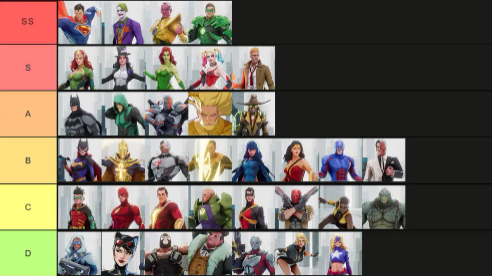
I. Introduction to DC Dark Legion characters
A. What DC Dark Legion characters are and how they fit the game’s theme
In DC: Dark Legion, “characters” are your Champions—the DC heroes and villains you recruit to form squads for PvE, PvP, and special modes. The vibe is a strategy squad-builder set in a Dark Multiverse / crisis-style atmosphere where you’re collecting iconic DC names and assembling teams that can actually function together.
It’s not a pure “action game” where your reflexes carry you. Your character choices matter because combat is heavily influenced by synergy, role balance, and what I call “kit utility”—things like shields, heals, buffs, debuffs, crowd control, and target access. If your team has no sustain, you crumble. If your team has no damage, you stall. If your team has no control, you get rolled in harder content.
B. Hero vs villain split and overall roster size (60+ characters)
The roster is big and it keeps growing. The game’s official positioning highlights over 60 heroes and villains you can collect (and yes, it feels like more once you factor in all the variants and releases). This matters because you’re not choosing between five starter units—you’re choosing between entire franchises inside DC: Justice League icons, Titans, magic users, assassins, and the villain side ranging from Gotham chaos to big cosmic threats.
From a player perspective, this big roster creates two realities:
You will not build everyone (unless you’re spending heavily).
Your account strength is mainly about building a small set of characters extremely well, then expanding outward.
C. Why character choice matters for teams and progression
Character choice determines:
how fast you clear campaign and daily farming,
whether you can beat “power spike” boss checks,
how stable your War Room/event runs feel,
and how competitive you are in PvP and ladder systems.
The game will absolutely let you progress for a while with “whatever,” but eventually it asks:
“Can you survive burst?”
“Can you handle sustained waves?”
“Can you break defensive comps?”
“Can you rotate squads efficiently?”
That’s where character investment becomes your real progression system.
II. DC Dark Legion Roster and Character Types
A. Major character categories (Justice League, Titans, villains, etc.)
Players usually group dc dark legion characters into a few mental buckets:
Justice League / Core Heroes (your “foundation” characters)
Titans / Young Heroes (often mobility/tempo kits)
Magic / Occult (control, debuffs, sustain tricks)
Assassins / Stealthy threats (single-target deletion, backline pressure)
Gotham Chaos Villains (disruption, burst, unpredictable utility)
Big Bad / Cosmic-style Villains (heavy control, scaling, team-warping kits)
Niche utility characters (the weird ones that don’t top charts but make one mode easy)
The point isn’t that the game literally labels them this way for you; it’s how players think about them when building teams.
B. Roles overview: damage dealers, tanks, supports, debuffers, buffers, healers
Every team that feels “good” usually has some mix of:
Damage dealers (DPS)
Either AoE clear, single-target burst, or sustained damage. Your “win fights” units.Tanks / Frontliners
They soak, shield, taunt, disrupt, or simply refuse to die while your DPS works.Healers / Sustain supports
They keep your team alive across longer fights and higher difficulty content.Buffers
They raise your team’s damage, speed, survivability, or tempo.Debuffers / Control
They lower enemy defenses, disable key targets, apply damage amplification, or shut down enemy plans.
In practice, a “balanced” team for most content looks like:
1–2 DPS
1 tank/frontline
1 sustain or heavy utility support
1 flex slot (buffer/debuffer/control depending on the fight)
C. Rarity and unlock tiers (rare, legendary, mythic)
Rarity matters because it usually determines:
base power ceilings,
how many upgrades you can realistically access early,
and how “complete” the kit feels at low investment.
As a player, I treat rarity like this:
Rare/Epic-ish: great early, often fall off later unless they have unique utility.
Legendary: the “workhorse” tier—many accounts live here for a long time.
Mythic: usually defines meta, scaling, and late-game teams—also the most resource-demanding.
But here’s the important truth: a half-built Mythic often performs worse than a fully built Legendary. Investment level matters more than the label on the character portrait.
III. DC Dark Legion Tier List Overview
A. S-tier, A-tier, and B-tier characters (how to read tiers like a human)
Tier lists are useful, but only if you interpret them correctly.
S-tier usually means:
Strong in multiple modes, hard to replace, scales well, fits many comps.A-tier usually means:
Very strong with the right team, right upgrades, or right mode.B-tier usually means:
Playable, can work, but needs more help, or has clearer weaknesses.
What tier lists don’t always tell you:
whether a character needs specific partners,
whether they need high investment to “turn on,”
whether they’re PvE monsters but mediocre in PvP,
or whether they’re only meta because they counter a popular defense comp.
B. Best meta characters for new and returning players
If you’re new or returning, you want characters that:
do something meaningful even at low upgrade levels,
make your account more stable (survivability, consistency),
and can carry you through multiple game modes.
In general, the best “returning player” picks are:
reliable supports with broad utility,
tanks that stabilize your team,
and DPS that don’t require perfect setup.
C. How tiers differ between PvE and PvP usage
PvE favors:
sustain,
consistent AoE,
control tools that make fights safer,
and scaling that works across long battles.
PvP favors:
burst,
fast tempo,
backline access,
anti-heal / anti-shield mechanics (depending on meta),
and kits that punish mistakes quickly.
A character can be “PvE S-tier” and “PvP B-tier” because PvP is more about speed and punishment than endurance.
IV. Best Damage-Dealing Characters
A. Top heroes and villains for raw damage
When players talk about “best DPS” in dc dark legion characters, they usually mean one of three styles:
Burst assassins: delete a priority target fast
AoE sweepers: clear waves and win tempo fights
Sustained DPS carries: keep output high over longer engagements
A good DPS in this game isn’t just “big numbers.” It’s also:
reliability (can they actually hit what matters?),
survivability (do they explode instantly?),
and synergy (do they benefit strongly from buffs/debuffs your team can provide?).
B. Strong AoE vs single-target focus
If you’re pushing progression and events:
AoE is your friend because it saves time and keeps your team safe by reducing enemy actions.
If you’re fighting bosses, elite nodes, or PvP backlines:
single-target burst matters more because removing one key enemy often wins the whole fight.
The best accounts have at least:
one strong AoE option,
one strong single-target finisher.
C. Synergies and best teammates to pair with damage dealers
Your DPS shines when they’re supported by:
a buffer that amplifies damage or speed,
a debuffer that lowers defense or increases damage taken,
and a frontline that prevents the DPS from being bullied.
If you run “four DPS and a dream,” you’ll win easy stages and then hit a wall where your whole team gets erased before anyone can act.
V. Best Tanks and Defensive Characters
A. Strongest shielding and survivability picks
A top tank isn’t just “high HP.” In DC: Dark Legion, good tanks usually bring at least one of:
a shield or damage reduction tool,
taunt / threat control,
crowd control that breaks enemy momentum,
or team-wide defensive buffs.
The best defensive characters also make your farming smoother because they reduce wipe risk. Less wiping means better resource efficiency.
B. Best front-line tanks for War Room and event modes
War Room and endurance-style event modes reward tanks that:
don’t need constant babysitting,
can stabilize multiple fights in a row,
and function even when your team is under fatigue/cooldown pressure.
If a tank only works when perfectly supported, they might still be great—but they’re not always your best “War Room workhorse.”
C. Uses for tanky characters in team-fight and control lineups
In control comps, tanks aren’t just absorbing damage. They’re:
buying time for debuffs to stack,
creating safe turns for support rotations,
and forcing enemies to waste actions on the wrong target.
A tank that also disrupts (stun, fear, knockback, taunt) often feels more valuable than a tank that only stands there and gets hit.
VI. Best Support and Utility Characters
A. Healers and sustained-support characters
The biggest power spike for many players is when they finally build a real sustain core. Healers and sustain supports are the reason your team stops feeling like it’s held together by tape.
Good sustain supports usually offer:
reliable healing over time,
burst heals for emergencies,
cleanse (if the game mode punishes debuffs),
and sometimes shields or damage reduction.
B. Crowd control and defensive-buff supports
Crowd control (CC) is one of the most underrated “damage multipliers,” because:
a disabled enemy deals 0 damage,
and a delayed enemy gives you more turns to set up.
Defensive-buff supports help you survive burst metas, and they make your DPS output more consistent because your damage dealers get to actually stay alive long enough to do their job.
C. Debuff and debuff-clear characters (and positioning)
Debuffers are the “invisible carries.” If your DPS feels weak, you probably need:
defense down,
vulnerability / damage taken up,
or tempo debuffs that reduce enemy output.
Debuff-clears (cleansers) matter when content starts punishing you with:
stuns,
damage-over-time effects,
heal blocks,
or other control mechanics.
Positioning-wise, your supports should generally be protected:
not placed where they get deleted early,
and not forced to waste turns just to survive.
VII. Hero Teams vs Villain Teams
A. Strengths of hero-focused groups (Justice League style)
Hero-heavy teams often feel:
stable,
straightforward,
and balanced around “fight fair and win with consistency.”
They’re great for new players because you usually get access to recognizable heroes early, and many hero kits are designed to be “easy value.”
B. Power and chaos in villain-heavy teams
Villain teams often lean into:
disruption,
burst,
debuffs,
and “make the enemy plan fall apart.”
They can feel stronger in PvP because PvP rewards chaos and punishment. But villain teams can also be more matchup-dependent: if the enemy comp is resistant to your control tools, you can feel awkward.
C. Hybrid hero-villain team compositions
Most strong accounts end up hybrid, because you want:
the stability and sustain of certain heroes,
plus the disruption or burst tools of certain villains.
Hybrid teams usually perform best because they cover more scenarios:
safe clears in PvE,
punchy tempo in PvP,
and flexible rotations for War Room.
VIII. Character Ability Breakdowns
A. How active and passive skills generally work
Skills usually fall into:
active skills (your main actions and big moves),
passives (always-on value: damage boosts, defensive bonuses, special triggers),
and sometimes team synergies (bonuses that activate with certain allies or conditions).
Your job as a player is to understand:
what your character does every turn,
what triggers their best effects,
and how to build your turn order so they’re doing the right thing at the right time.
B. Key stats and scaling for major characters (Batman, Wonder Woman, Aquaman, Joker, etc.)
Different characters scale differently:
some want raw attack and crit to spike burst,
some want survivability because they’re frontline enablers,
some want speed/tempo to control the match,
and supports often want “uptime” stats (so buffs/debuffs are always active).
If you build Batman-like characters as tanks because “Batman is tough,” you may be wasting their design. Likewise, if you build a frontline tank as pure DPS, you’ll wonder why they die instantly and do mediocre damage.
C. Example rotations and when to swap characters
A basic “good team” rotation looks like:
tank opens with control/defense setup
support buffs your team or stabilizes
debuffer applies defense down / vulnerability
DPS unloads during the window
sustain resets and keeps the engine running
Swapping characters matters when:
you need a specific counter (cleanse, anti-heal, shield break),
you need a different damage profile (AoE vs single target),
or fatigue/cooldowns force you to rotate in War Room.
IX. Starter and Beginner-Friendly Characters
A. Recommended early game characters
Beginner-friendly characters are the ones that:
work with minimal upgrades,
provide obvious value,
and don’t require complicated timing.
Your early goal is to build a starter core that clears content reliably. Don’t overthink it:
one consistent DPS,
one tank/frontline,
one sustain support,
one buffer/debuffer.
B. Easy-to-use kits with forgiving gameplay
Forgiving kits usually have:
simple skills,
reliable targeting,
defensive tools,
and fewer “if X then Y” conditional gimmicks.
A forgiving character helps you learn the game without punishing you for not knowing every matchup.
C. Must-have starter team and how to expand it
Your starter team is a scaffold. Build it, then expand in this order:
upgrade the core so you can farm efficiently
add a second DPS (AoE or boss finisher depending on what you lack)
add a specialized support (cleanse, anti-shield, anti-heal)
add niche picks for specific event rules
If you expand before your core is stable, you’ll feel permanently broke.
X. Meta and Late-Game Meta Characters
A. Meta-shifting characters after patches
Late game meta shifts usually happen when:
a new character introduces a new power level,
a patch changes how certain mechanics stack,
or a dominant comp becomes popular and counters become valuable.
As a player, you don’t need to chase every patch. You need:
a stable core that remains strong,
plus one or two flex picks you can adjust seasonally.
B. Characters that age out vs stay strong
Characters age out when they are:
purely stat-based (they get powercrept),
too slow/inefficient,
or too narrow in function.
Characters that stay strong usually have:
unique utility,
strong teamwide effects,
or control tools that never stop being useful.
Utility ages better than raw damage.
C. Adapting your roster when new characters enter the meta
The best roster adaptation plan is:
don’t rebuild everything
swap one slot at a time
keep your core intact unless the meta truly invalidates it
Most players lose resources because they panic-build every new banner character. You don’t need every new unit—you need the right ones.
XI. Limited-Time and Event Character Banners
A. Banner characters (Constantine, Green Arrow, Wonder Woman, Mera, etc.)
Event banners usually feature recognizable DC names, and players often prioritize them because:
limited availability triggers FOMO,
and banner characters frequently have high-impact kits.
The smarter approach is not “pull because it’s famous.” It’s:
pull because it fills a role gap in your team plan.
B. Event-exclusive characters and how to prioritize them
Priority order that keeps you sane:
characters that enable your account (support/sustain/control)
characters that upgrade your core team plan (a stronger DPS that fits your buffs/debuffs)
characters that counter the current PvP meta (if you care about PvP)
everything else (cool factor)
C. When to pull and how to budget Primia
If you want a clean Primia rule:
don’t pull unless you can commit enough to reasonably get the unit (or reach your pity/guarantee thresholds if the game uses them)
don’t “sprinkle pulls” on every banner
save for banners that solve real problems: survivability, damage windows, counters
Impulse pulling is how you end up with a roster full of half-built characters and no functional teams.
XII. Team Building and Core Teams
A. Building a core team (3–6 characters)
Your “core team” is the group you invest in so deeply that they carry:
campaign progression,
daily farming,
early PvP,
and a big chunk of event content.
A healthy core usually includes:
1 primary DPS
1 secondary DPS (AoE or boss)
1 tank/frontline
1 sustain support
1 buffer/debuffer flex
plus 1 wildcard slot for counters
B. Examples of top-performing team ideas (like Wally West-centric builds)
Certain characters become the “engine” of comps because they:
scale incredibly well with support,
or create tempo advantages that snowball fights.
When players talk about “X-centric builds,” what they really mean is:
“This team is built to make X do their job every turn without dying.”
So the comp is often:
protect the carry,
amplify the carry,
and shut down anything that threatens the carry.
C. Role-balancing tips (damage, tank, support, debuffer ratios)
The most common balanced ratio that works in most content:
2 damage sources
1 frontline
1 sustain
1 utility (buff/debuff/CC)
If you run 3 DPS, you must have a very strong sustain core or you’ll get deleted in harder modes. If you run too much defense, you’ll time out or fail damage checks.
XIII. Character-Specific Build Guides (Player-style, not spreadsheet-style)
A. Builds for flagship heroes (Batman, Superman, Nightwing, Robin, etc.)
Flagship heroes usually fall into recognizable roles:
Superman-style kits: frontline presence + team stability
Batman-style kits: tactical damage/control depending on version
Nightwing/Robin-style kits: tempo, burst windows, mobility-style pressure
Build principle:
if a character’s kit is about burst, build for burst + survival
if a kit is about control/support, build for uptime and survivability
if a kit is frontline, build for durability + disruption
B. Builds for major villains (Harley Quinn, Joker, Lex Luthor, Sinestro, etc.)
Villains often shine when built to maximize their identity:
Joker/Harley-style chaos: disruption + burst pressure
Lex-style control: debuff/value stacking + team enablement
Sinestro-style fear/control: control uptime + survivability
Villain builds often punish players who build “all damage.” If your villain’s job is control, build them so they stay alive long enough to control.
C. Build tips for mid-tier and niche characters
Mid-tier characters become “secret S-tier” when:
the event mode favors their mechanic,
your roster needs exactly what they provide,
or the meta shifts and their counter utility becomes valuable.
So don’t delete a character from your brain just because they’re B-tier. Ask:
“Do they solve a problem I keep losing to?”
XIV. War Room and Endgame Character Usage
A. Best characters for War Room and high-difficulty events
War Room rewards:
sustain,
consistency,
low-maintenance kits,
and flexible utility.
Endgame is less about “highest damage screenshot” and more about:
“Can I clear reliably without restarting 10 times?”
B. Rotating characters under cooldown and fatigue limits
If the mode limits repeat usage, the strategy becomes:
build two functioning teams, not one perfect team
rotate your supports so you don’t run out of healing/defense
keep at least one “panic button” character (cleanse, shield, hard CC)
C. Survivability and utility picks for hard encounters
Hard encounters usually punish:
no cleanse,
no sustain,
no way to handle shields/healing,
and poor target control.
Your endgame roster should include answers to those problems—not just more DPS.
XV. Monetization and Character-Gated Progression
A. How Primia and bundles relate to getting characters
Primia (and similar currencies) usually gates:
banner pulls,
resource packs,
and progression accelerators.
The game is designed so spending speeds up your roster growth and upgrade pace. That’s normal for this genre.
B. Is DC Dark Legion pay-to-win?
Player honesty: it’s pay-to-progress-faster, and in PvP-heavy environments that can feel like pay-to-win because faster progression often means stronger teams sooner.
But skill still exists here in:
team building,
match-up planning,
rotation decisions,
and resource discipline.
A well-built, well-played roster often beats a sloppy spender roster—especially in modes where synergy and counters matter.
C. Tips for pulling efficiently without wasting currency
If you want to stay efficient:
don’t pull on every banner
prioritize supports and sustain that stay relevant
commit to a plan (core team + one expansion path)
save Primia for true account upgrades, not “I was bored”
XVI. Troubleshooting and Character-Related FAQs
A. Why certain characters underperform despite high tier status
This is the #1 complaint I see: “Why is my S-tier doing nothing?”
Usually it’s one of these:
you’re missing their best teammates (they’re synergy-dependent)
they need investment (skills/gear) to “turn on”
you’re using them in the wrong mode (PvP pick used in PvE endurance)
your team lacks the support structure (no tank, no sustain, no debuffs)
B. How to unlock and level underused characters
If you want to build a “mid-tier” character without wrecking your account:
level them only to the point where they function in their niche
don’t take them to your highest upgrade tier unless they become core
use them as a counter/tool, not a main carry (until proven otherwise)
C. Questions about reserves, rotation, and binding multiple characters
General best practice:
maintain a “main team” and a “bench team”
rotate supports and tanks first (they’re the backbone)
only expand DPS roster when your sustain and economy can support it
XVII. Community Trends and Design Discussion
A. Player-favorite designs and visual feedback
DC games live and die by character fantasy. Some players build characters because they’re meta; many build characters because they love the hero/villain. In this game, you can do both—but you’ll be happiest when your “favorite” also fits a useful role.
B. How community meta and tier lists influence usage
Tier lists absolutely shape what you see in PvP defense teams and what new players invest into. That creates feedback loops:
a character becomes popular → counters rise → meta shifts → new tier lists adjust.
The smartest players don’t chase lists blindly. They build:
a stable core that always works,
plus counters for what the community is spamming.
C. Expectations for future character reveals
With a roster this large and a DC license, you should expect:
more Justice League variants,
more villain threats,
more niche faction releases,
and periodic “meta shake-up” characters designed to reset what teams are popular.
The safest long-term investment remains the same: supports, sustain, and utility characters that age well, plus one or two carry DPS you truly commit to.
If you’re searching dc dark legion characters, you’re probably trying to answer the real question: “Who do I build so my account stops feeling weak?” And the best player answer is: build a core team, not a collection. You want a stable backbone (tank + sustain + utility) and then a damage engine that actually benefits from that backbone. After that, you expand with purpose—counters, event specialists, and a second team for War Room/endgame rotation.