One Punch Man Characters: A Player’s Guide to Heroes, Monsters, and the Wildest Power Scale in Anime
If you’ve ever watched One Punch Man and thought, “Okay… so how is anyone supposed to matter when Saitama exists?”—welcome to the club. That’s basically the whole vibe of the series: a world stuffed with flashy heroes, terrifying monsters, conspiracy-tier organizations, and then one bald dude who can delete the problem with a casual punch… and still be late on rent.
But here’s the thing: the cast is the reason One Punch Man is so addictive. The characters aren’t just “strong” or “weak.” They’re built around themes—ego, hero worship, institutional incompetence, personal growth, obsession, fear, and what happens when power becomes your whole identity. Even the “joke” characters end up having real story weight.
This guide is written from a player/fan perspective—like we’re building a roster, talking matchups, and ranking threats the way you would in a game. We’ll cover the major groups: heroes (S/A/B/C-Class), villains and anti-heroes, the Monster Association, power scaling, and why the rankings are both important and hilariously misleading. For grounding, key character and faction basics align with the public character summaries and structure described in commonly referenced series documentation.
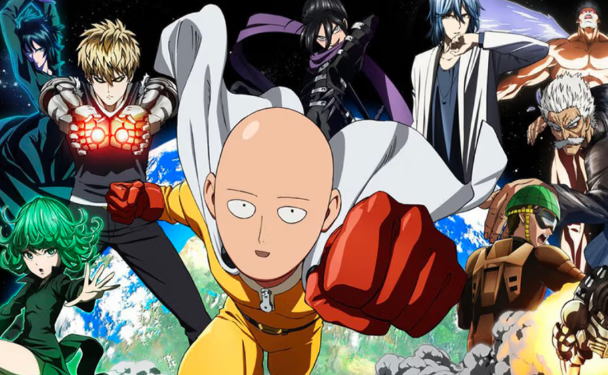
I. Overview of One Punch Man Characters
A. One Punch Man’s cast is built like a giant “character select” screen
One Punch Man is a manga/anime franchise created by ONE (original webcomic author) and illustrated in the manga version by Yusuke Murata, and it’s famous for having a ridiculously wide cast—heroes, monsters, cyborgs, psychics, martial artists, aliens, mad scientists, and dudes whose entire power is “having a scary face.”
B. Characters define the “playstyles” more than the plot does
If you look at it like a game, each character is basically a class kit:
Burst nukers (Tatsumaki, Genos-style kits)
Scaling fighters (Garou-type evolvers)
Control/zone denial (Psykos, certain Monster Association cadres)
Tank/bruisers (Darkshine, Tanktop Master types)
Gimmick characters (King—yes, King)
C. Why “rankings” matter here, even when they’re wrong
The Hero Association ranks heroes into classes and numbers, and that structure is a major part of the story’s satire. The series explicitly frames the Association as a bureaucracy that often fails to measure real value. Saitama himself is the funniest proof of that.
II. Saitama: The Protagonist Who Broke the Meta
A. Unrivaled strength… and the boredom debuff
Saitama is the title protagonist: an absurdly overpowered hero who’s bored because nothing challenges him. That’s his real “character conflict.” He’s not chasing power—he’s chasing the feeling of a good fight, and the game won’t give him matchmaking.
B. The funniest part: his rank doesn’t match his impact
He joins the Hero Association, but despite monstrous exam results physically, he ends up starting low due to the written/mental evaluation component and general recognition issues. That mismatch becomes a running theme: the system can’t properly “rate” the strongest unit in the roster.
C. Iconic feats that establish the “god ceiling”
Saitama’s feats are treated like narrative punctuation marks—meteor problems, alien invasions, “impossible” monsters—he ends them quickly, and everyone else has to live with the emotional whiplash. The story uses him to highlight how everyone else is grinding their hearts out in a game where one guy already cleared the endgame.
Player take: Saitama is the dev-cheat character. You don’t compare him to the roster. You compare the roster to each other, and Saitama is the “environment.”
III. S-Class Heroes: The Top-Ranked Elites (and Why They’re All Broken in Different Ways)
The S-Class is basically the “Legendary tier” of the Hero Association. The list of key S-Class members is widely documented and forms the backbone of major arcs.
A. Blast (#1): the mystery pick you can’t properly build
Blast is the top-ranked S-Class hero, but he’s intentionally mysterious—he’s the character you can’t fully tier yet because the kit is hidden behind story locks. When he shows up, the series frames him as operating on a different layer of threats.
Player take: Blast is the “limited banner unit” that’s clearly meta… but the devs won’t tell you the numbers.
B. Tatsumaki: the telekinetic nuke (Tornado of Terror)
Tatsumaki is the definition of “press ultimate, delete map.” Her telekinesis makes her one of the most consistent high-end problem solvers, and she’s also a character whose personality is basically “I am the patch note.”
How she plays:
Massive AoE control
Defensive utility through sheer force
Emotional volatility = unpredictable decision-making (yes, that matters)
C. Bang (Silver Fang): the skill-based martial arts carry
Bang is the classic “old master” archetype, using refined martial arts technique rather than tech or psychic power. He’s a reminder that skill expression exists even in a world of monsters and lasers.
Player take: Bang is the high-APM main who wins by fundamentals.
D. Atomic Samurai: the “if it’s in range, it’s gone” swordsman
Atomic Samurai is lethal against targets he can reach and cut. His character fantasy is clean: he’s a blade specialist who lives and dies by matchup and positioning.
Player take: He’s the melee DPS who deletes squishies but struggles if the boss has weird mechanics.
E. Metal Knight (Bofoi): the “summon drones” macro player
Metal Knight is basically “what if a hero played RTS while everyone else played action.” Drones, machines, remote operations—his strength is scale and preparedness, not personal bravery.
Player take: Metal Knight is the guild boss that never shows up in person.
F. King: the “fake S-tier” with the strongest passive in the series
King’s reputation is built on misunderstandings and Saitama’s accidental credit. He’s treated as the “strongest man,” and that gap between perception and reality is one of the best jokes in the story.
But here’s the twist: his real power is social—fear aura, intimidation, and insane luck. In a game sense, King’s passive is “enemy morale collapse.”
G. Genos: the disciple with infinite upgrades and infinite pain
Genos is Saitama’s cyborg disciple—driven, earnest, and constantly rebuilding himself after getting wrecked. He’s the “glass cannon who keeps respeccing.”
Player take: Genos is the character you love because he’s always trying, even when the meta keeps bullying him.
IV. A-Class Heroes: Elite Professionals with Real “Game Sense”
A-Class is where you start seeing heroes who are legitimately strong, but also deeply shaped by status, image, and career strategy.
A. Sweet Mask: idol hero + terrifying power
Sweet Mask is the kind of hero who treats heroism like a brand—and the series uses him to explore how “public-facing perfection” can rot someone internally.
B. Atomic Samurai’s disciples (Iaian, etc.): the “training arc” squad
They’re strong, disciplined, and represent the “next generation” of skill-based heroes. They also highlight how unfair the world is: sometimes being talented still isn’t enough when monsters scale like they do.
C. Stinger / Lightning Max / Death Gatling: niche specialists
These heroes are the kind you’d main in a game because you love the kit, not because it’s top-tier. They can shine with the right map or enemy.
Player take: A-Class is “strong roster depth,” not “must pull.”
V. B- and C-Class Heroes: The Heart of the World (and the Comedy)
A. Mumen Rider: the true “support main” of the series
Mumen Rider is iconic because he’s not the strongest—he’s the bravest in the most human way. He’ll take the losing matchup and still queue up again.
Player take: Mumen Rider is the teammate you respect more than the carry.
B. Fubuki: control, networking, and the politics of power
Fubuki leads the Blizzard Group and represents a different kind of strength: influence, organization, and strategic recruitment. She’s not just fighting monsters—she’s fighting the ladder system.
C. The point of lower classes
The story uses B/C-Class to show that hero work is also public service—not every fight is a dragon-level apocalypse. Sometimes it’s just cleaning up weird threats so normal people can live.
VI. Villains and Anti-Heroes: The “Enemy Roster” That Steals the Show
A. Garou: the evolving boss who breaks the rules
Garou is the “Hero Hunter,” but he’s not a simple villain—he’s a walking argument about what heroism even means. He evolves through combat, adapts, learns, and becomes one of the most hype characters in the franchise.
Player take: Garou is the raid boss who keeps unlocking new phases because your team did too much DPS.
B. Boros: the cosmic conqueror and “worthy fight” energy
Lord Boros is framed as one of the rare characters who can push Saitama into using something beyond casual effort. That alone makes him legendary.
C. Speed-o’-Sound Sonic: the rival who thinks he’s in a different genre
Sonic is obsessed with defeating Saitama, and the humor is that he treats this as a serious rivalry while Saitama often treats it like a random Tuesday encounter.
D. House of Evolution: science-based monsters and “lab arc” enemies
Carnage Kabuto and other creations from the House of Evolution represent the “mad science” branch of threats—engineered power that tries to skip the grind.
VII. Monster Association: The Best “Dungeon Arc” Enemy Faction
The Monster Association arc is basically the series going, “What if we stacked a whole endgame dungeon full of elites?”
A. Orochi: the monster king
Orochi is designed as a “final boss” style threat—built to command and overwhelm through raw monster power and presence.
B. Psykos: the mastermind
Psykos is the strategist behind the faction—she’s the one playing chess while everyone else is brawling.
C. Black Sperm: the nightmare scaling mechanic
Black Sperm is terrifying because his power concept is simple but lethal: multiplication and escalation. In game terms, he’s an enemy that punishes you for not having AoE, control, and stamina.
D. Elder Centipede: the “gear check” monster
Elder Centipede is basically a durability test. If your squad can’t break through, you lose by default.
VIII. Power Scaling and Strength Rankings (The “Tier List” That Always Starts a War)
One Punch Man uses a threat classification system (commonly discussed in series references) that ranges from smaller threats up through city-level disasters and beyond.
A. The problem with ranking this universe
If you try to do a strict power tier list, you’ll go insane because:
Some characters have hard counters
Some fights are decided by circumstance and psychology
Saitama’s existence makes the “top” meaningless
B. The fun way to think about it (player mindset)
Instead of “who’s strongest,” ask:
Who has the best consistency?
Who has the best matchup spread?
Who brings utility that wins fights even when damage fails?
Who scales into the late game without falling apart?
That’s why characters like Tatsumaki (control + power) and Garou (adaptive scaling) get so much hype.
IX. Hero Association Structure: Ranks, Politics, and Why It’s a Mess
The Hero Association ranks heroes by class and number, and the story repeatedly shows that the ranking system is influenced by more than just combat power—public perception, testing, and bureaucratic logic all matter.
Player take: It’s like a ranked ladder where MMR is partially based on popularity and how good you are at interviews.
X. Character Archetypes and Tropes (That Actually Work)
A. Overpowered protagonist (Saitama), done right
Because the story isn’t “can he win?” It’s “what does winning even mean when you’re empty inside?”
B. Mentor/disciple (Bang/Genos, and even Saitama/Genos)
Training arcs matter here—not to catch Saitama, but to define identity.
C. Comedy misunderstandings (King Engine, credit stealing, etc.)
The series uses misunderstandings as a systemic critique: society rewards narratives, not truth.
D. Rival evolution (Garou)
Garou’s arc hits because he’s not just training—he’s building a philosophy.
XI. Manga-Exclusive vs Anime-Only vs Game Rosters
This franchise has multiple versions (webcomic, manga remake, anime adaptations), and character portrayal can shift by medium—design changes, emphasis changes, and pacing differences all happen depending on adaptation choices.
Player take: It’s like different patches of the same game. Same characters, sometimes different balance.
XII. Most Popular and Fan-Favorite Characters (And Why)
A. Saitama & Genos: the classic duo
Their dynamic is both funny and weirdly wholesome.
B. Tatsumaki & Fubuki: the sister rivalry meta
Two very different leadership styles, both effective, both flawed.
C. Garou: the “villain” people root for
Because he’s written like a protagonist who picked the wrong faction.
D. Mumen Rider: the emotional critical hit
He’s the reminder that heroism isn’t only damage numbers.
XIII. Character Development and Arcs That Actually Hit
A. Saitama’s existential journey
He’s not chasing a boss. He’s chasing meaning.
B. Genos and the cost of obsession
Each upgrade is hope… and also a reminder that he still feels behind.
C. Garou vs the world
His arc is basically “what if your trauma became your build path?”
D. The Hero Association’s flaws
The series makes it clear: institutions can be corrupt, incompetent, or just blind—and still be “necessary.”
XIV. Combat Abilities and Powersets (Quick “Kit” Breakdown)
A. Esper telekinesis
Tatsumaki and the psychic side of the world represent raw control and force projection.
B. Martial arts mastery
Bang and sword users show how far technique can go in a monster world.
C. Tech enhancements
Genos, Metal Knight, and other tech-based fighters show the “build your power” path.
D. Monster evolution
Monsters often scale through transformation, fusion, or adaptation—basically “enemy power creep,” but canon.
XV. Supporting Cast and Civilians
The civilians and Association staff matter because they shape consequences and public perception, and One Punch Man loves showing how society reacts to heroes like they’re celebrities, products, or myths.
XVI. Frequently Asked Character Questions (Fan Debates That Never Die)
A. “Who can actually beat Saitama?”
In-universe? The story treats Saitama as an intentional ceiling-breaker. The more interesting question is “who can challenge him emotionally?”
B. “Strongest S-Class hero?”
Depends on what you mean by “strongest.” Raw output? Utility? Reliability? Matchups? That’s why this debate never ends.
C. “Garou’s final classification?”
Garou’s arc is designed to blur classification boundaries and highlight how arbitrary labels become once power escalates.
D. “Blast’s full capabilities?”
Blast is still written as mystery power. The series uses him to hint that threats exist beyond the usual ladder.
XVII. Adaptations Across Media
Different adaptations emphasize different characters, pacing, and tone. If you jump between anime, manga, and webcomic discussions, you’ll see why fans sometimes argue like they’re talking about different versions of the same character.
XVIII. Future Character Introductions and Where the Story Aims Next
The series keeps widening its scope—new factions, bigger existential threats, and more heroes who make you go, “Okay, this one is definitely S-Class… right?” The structure of the character list and factions (including mentions like Neo Heroes in general documentation) suggests the roster will keep expanding.
Conclusion
If you treat One Punch Man characters like a game roster, you’ll quickly realize the “meta” isn’t just power—it's personality, motivation, matchup context, and how the world rewards the wrong things. Saitama is the ultimate outlier: the strongest unit who doesn’t fit the ranking system, doesn’t get the credit, and doesn’t even get the satisfaction.
Meanwhile, the rest of the cast is grinding like their lives depend on it—because they do. S-Class heroes feel like raid-ready legendaries, A-Class are the reliable specialists, B/C-Class are the heart of the community, and the villains/monsters are some of the best-designed “enemy kits” in modern shonen.
So if you’re reading this to “rank” people, sure—have fun. But if you’re reading this to understand why the series hits so hard: it’s because everyone else is trying to be a hero in a world that barely understands what heroism is… and that’s way more interesting than any pure strength chart.
If you want, tell me which angle you want next—(1) a full “power tier list” style ranking by threat level, (2) a “best-written characters” ranking, or (3) a “who beats who” matchup chart—and I’ll build it in the same player-style voice.