Shadowverse Worlds Beyond Tier List (2026 Meta Snapshot, Ladder + Take Two) — A Player’s No-BS Guide
If you’ve played any Shadowverse at all, you already know the cycle: day one of a new set is pure chaos, day three is everyone netdecking, and by the time you’ve finally crafted that “cool off-meta list,” the ladder has turned into a coin-flip festival where you either high-roll or get steamrolled.
Shadowverse: Worlds Beyond keeps that same energy—but with its own pace, its own power spikes, and (most importantly) a totally different “what actually wins games” feel compared to older Shadowverse eras. You’ve got a full official ecosystem around it now: a Deck Portal with public decks, a Deck Builder, and a Card Library, which basically means the meta moves fast because everyone can copy, test, and optimize instantly.
A quick note on expectations: tier lists aren’t commandments. They’re a shortcut—like a GPS route that still expects you to know how to drive. Even the “best deck” can feel awful if you hate its play pattern. On the flip side, a Tier 2 deck in the hands of a one-trick can absolutely bully Tier 1 pilots who don’t know the matchup.
So let’s talk about what’s actually happening, and how you should use it.
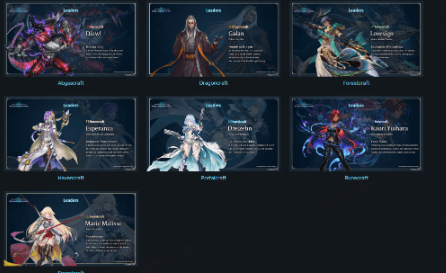
I. Shadowverse Worlds Beyond Meta: What You’re Actually Playing
A. What Worlds Beyond is (in practice)
At the core, you’re still doing classic Shadowverse things: tempo swings, resource engines, and “if you don’t answer this now, you lose in two turns” threats. But Worlds Beyond has a more modern live-service feel: official deck sharing tools make metas stabilize quicker, and the ladder ecosystem tends to converge hard on the most efficient win conditions.
B. Why tier lists matter more than people admit
A lot of players say “just play what you like.” Cool. Then they queue into the same two top archetypes ten times, lose eight, and suddenly they “don’t like the game anymore.”
Tier lists are basically:
A sanity check (am I losing because I’m bad, or because my deck is outdated?)
A crafting priority guide (don’t blow resources on a deck that collapses after one balance patch)
A matchup map (what do I need to tech against?)
C. What this guide covers
This tier list covers:
Ranked ladder meta (best-of-one reality)
Take Two / draft-style mentality (value, flexibility, fewer polarizing matchups)
Tournament logic (lineup strength and ban pressure)
II. Tier System and How I’m Ranking Decks
A. Tier definitions (simple, not academic)
S-Tier (Tier 1): If you want to climb efficiently, these are your “default” picks. Strong matchup spread, high consistency, punishes mistakes hard.
A-Tier (Tier 2): Very strong, but either has a few brutal matchups, needs cleaner piloting, or relies on meta being a certain way.
B-Tier (Tier 3): Totally playable, can farm specific metas, but you’ll feel the weaknesses if the ladder shifts.
C-Tier (Tier 4): Experimental, niche, or “I swear it’s good” decks that require perfect conditions.
B. What matters in Worlds Beyond specifically
When I’m ranking decks here, I care most about:
Consistency (do you execute your plan without begging the top 10 cards to appear?)
Comeback power (can you stabilize after losing tempo?)
Matchup spread (do you auto-lose to a popular deck?)
Punish factor (does the deck convert small mistakes into wins?)
Tech flexibility (can you tune it without breaking it?)
C. Why “win rate” isn’t everything
Best-of-one ladder is messy. A deck can have a huge win rate because it farms casual players—but folds against prepared pilots. Meanwhile a “lower win rate” deck might be the one tournament players fear because it forces awkward lines.
III. S-Tier Meta Decks (Ranked Monsters)
These are the decks I’d call “Tier 1 staples”—the ones you keep seeing because they’re good at winning in the real world, not just in theory. Also: if you’re ever unsure what’s currently popular, the official Deck Portal’s “Popular Decks by Class” gives you a reality check on what players are actually posting and copying.
1) Dragoncraft — Fennie / “Ramp-to-Board-Overload” Packages (S-Tier)
Dragon is doing Dragon things: accelerate mana, slam threats, and make your opponent answer boards that never stop coming.
Why it’s S-Tier:
Ramp means you get to play a different game than your opponent. Your “turn 6” is their “turn 8.”
Dragon tends to have big bodies + sticky pressure, which punishes slow Rune lines and greedy Abyss lists.
Even when you don’t draw perfectly, your baseline threats often outclass midrange boards.
How it wins:
You ramp early, contest mid, then hit a board swing turn that either forces a wipe or ends the game.
Against decks that rely on incremental value, Dragon often just goes over the top.
What beats it:
Clean pressure + disruption that denies ramp payoffs.
Portal lists that punish single giant boards with efficient clears and counter-lethal setups.
My ladder take:
If you’re learning the meta and want something that doesn’t make you feel helpless, Dragon is one of the best “I will always have a plan” classes.
2) Portalcraft — Puppet Variants (S-Tier)
Puppet Portal is the kind of deck that makes you feel like your opponent always has one more resource than they should.
Why it’s S-Tier:
Puppet generation lets Portal trade efficiently without running out of gas.
It has flex turns: defend when behind, pressure when ahead, set up a finisher when stable.
It punishes sloppy sequencing hard—so it farms ladder mistakes.
How it wins:
Establish a board economy with puppets, keep the opponent constantly answering, then pivot into a decisive turn where they can’t cover all angles.
What beats it:
Decks that don’t care about board trades (certain spell/burst lines).
Hyper-consistent aggro lines that end the game before Portal “gets comfy.”
My ladder take:
If you like control-ish gameplay but still want proactive win pressure, Puppet Portal is one of the safest crafts.
3) Portalcraft — Destroy / Aggro-Explosive Lines (S-Tier)
The “other” Portal face: fast starts and brutal finishers.
Why it’s S-Tier:
It creates must-answer pressure early.
It ends games before slower decks cash in their engines.
It’s excellent at punishing decks that stumble on curve.
How it wins:
Stick early damage, keep tempo, then slam a finishing sequence that makes your opponent’s “stabilize turn” irrelevant.
What beats it:
Hard defensive shells with healing/ward packages.
Players who understand exactly when to trade vs when to race.
My ladder take:
This is the Portal list that makes people rage-queue. If you’re confident in tempo fundamentals, it prints wins.
4) Swordcraft — Loot / Midrange Aggression (S-Tier)
Loot Sword (and similar midrange aggression shells) tends to be the “honest” Tier 1 deck: good curve, strong pressure, real punish.
Why it’s S-Tier:
Sword’s strength is structured pressure: you’re never doing nothing.
It forces opponents to answer board while staying threatened by burst.
It’s also a classic ladder bully because it punishes greedy keeps.
How it wins:
Win board early, convert into face damage midgame, close with burst or unstoppable tempo.
What beats it:
Decks with repeated wipes + healing.
Dragon high-roll ramp lines that go way bigger than Sword can.
My ladder take:
If you want a deck that teaches fundamentals while still being top-tier, Sword is that “gym routine” pick.
5) Havencraft — Odd / Value-Resilient Control (S-Tier)
Odd Haven tends to play like: “I will not die, and you will eventually run out of answers.”
Why it’s S-Tier:
It’s resilient. You don’t just clear once—you stabilize repeatedly.
It’s good into a lot of tempo decks because it invalidates early pressure with value tools.
It can pivot between defense and lethal setups depending on matchup.
How it wins:
Outlast pressure, then close with inevitability—either by overwhelming value or forcing a final-turn checkmate.
What beats it:
Decks that don’t care about incremental value and can one-turn kill through defenses.
Highly tuned combo lines with disruption protection.
My ladder take:
If you hate losing to aggro and want to make the ladder miserable for other people, this is your home.
IV. A-Tier Decks (Strong Contenders, Slight Issues)
These decks are absolutely capable of crushing S-Tier lists, but they’re usually missing one thing: either consistency, matchup spread, or the ability to stabilize from behind.
1) Ramp Dragoncraft (A-Tier)
Yes, Dragon is already S-Tier in some builds. But the more “classic ramp into big threats” lists can drift to A-Tier if the meta punishes slow setups.
When it’s amazing:
When ladder is full of midrange decks that can’t punish ramp.
When it struggles:When Portal and burst Rune builds are everywhere.
2) Earth Rite Runecraft (A-Tier)
Earth Rite tends to sit in that sweet spot of board control + burst reach.
Why it’s A-Tier:
Strong when pilots sequence well.
Can brick if draws don’t line up (resource pieces vs payoff pieces).
Sometimes gets run over by relentless tempo.
3) Ward Havencraft (A-Tier)
Ward Haven is the “no, you may not hit me” deck.
Why it’s A-Tier:
Great into certain aggression metas.
Can feel clunky if the meta shifts into non-board burst.
Some matchups turn into “do they have the answer for my ward chain?”
4) Evo Dragon / Value Dragon (A-Tier)
Evolution-centric packages often shine in tournament settings because value lines are predictable and stable. On ladder, you sometimes get punished for “value turns” that don’t affect the board enough.
5) Spellboost Runecraft (A-Tier)
Spellboost is the classic: scaling power, big turns, lethal setups.
It’s A-Tier because:
You can lose games to your own hand (too many spells, not enough defense, or vice versa).
If you mis-sequence, you basically throw away a win condition.
V. B-Tier Decks (Viable, But You’re Signing Up for Pain)
B-Tier decks are the ones you play when:
you’re missing key legendaries for Tier 1,
you want to counter a specific ladder pocket,
or you just enjoy the archetype enough to accept the suffering.
1) Mode Abysscraft / Midrange Abysscraft (B-Tier)
Abyss midrange shells tend to be “good stuff” decks:
They can fight for board.
They can grind value.
But they often lack the sheer inevitability of Haven or the raw tempo of Sword/Portal.
2) Oluon Sword / Commander Sword Variants (B-Tier)
These can be super legit if the meta is soft to midrange follow-up pressure, but they can struggle into repeated clears.
3) Tempo Forestcraft (B-Tier)
Forest tempo decks can feel amazing when you pilot clean and hit your curve. But if the meta is full of efficient removal and bigger bodies, you’ll feel outclassed.
4) Rhinoceroach Forest Variants (B-Tier)
Roach-style combo lines often sit in B because they’re:
terrifying when refined,
but sensitive to disruption,
and sometimes inconsistent in best-of-one ladder chaos.
VI–XII. Class-by-Class Meta Notes (Quick but Practical)
Dragoncraft
Core identity: ramp, oversized boards, “I’m playing a turn ahead.”
Meta note: If you’re losing to Dragon, ask yourself: did you pressure early enough, or did you let them ramp for free?
Portalcraft
Core identity: resource engines + unfair swing turns.
Meta note: Portal punishes players who don’t understand when to stop trading and start racing.
Havencraft
Core identity: stabilization, defensive sequencing, inevitability.
Meta note: Don’t autopilot into Haven. You need a plan: either burst them, or set up a turn where they can’t answer and heal.
Swordcraft
Core identity: board pressure, tempo conversion, clean fundamentals.
Meta note: Sword wins when it stays proactive. If you’re constantly reacting, you’re already losing.
Runecraft
Core identity: spell-based scaling, burst finishes, clever sequencing.
Meta note: Rune is where misplays hide. One bad early spell can cost you a lethal setup five turns later.
Abysscraft
Core identity: midrange threat chains, grind lines, finisher packages.
Meta note: Abyss tends to reward matchup knowledge more than raw power.
Forestcraft
Core identity: tempo trickery or combo inevitability.
Meta note: Forest usually requires the most reps. If you want “easy ladder,” pick something else. If you want mastery payoff, Forest is that.
XIII. Take Two Tier List (Draft Mindset)
Take Two (draft formats) is a different planet. You’re no longer guaranteed your perfect engine, so what matters is:
flexible cards,
good removal,
consistent curve,
and decks that don’t collapse without one legendary.
In Take Two, I value “solid midrange bodies + removal + value” over “combo dreams.”
Take Two Tier Notes (General)
Top performers usually: Sword and Haven-style shells (tempo + defense fundamentals).
Portal is strong if puppet/value tools show up consistently.
Rune can dominate if it drafts enough removal and payoff, but it can also draft a pile of “almost synergy” and do nothing.
I’m intentionally not hard-ranking each class here because draft power depends heavily on pool and offering patterns, but the mental model is what wins Take Two.
XIV. F2P and Budget Deck Advice (How Not to Waste Your Resources)
The official Deck Portal / Deck Builder ecosystem means netdecking is easy—crafting mistakes are the real killer.
Here’s my “don’t regret crafting” rule:
Craft decks with transferable staples.
Portal and Sword often use core generics that stay relevant across lists.Avoid “all-in” niche legendaries unless you’re committed to that archetype.
Pick one Tier 1 deck and one comfort deck.
Your Tier 1 deck climbs. Your comfort deck keeps you sane.Use the meta to choose your poison.
If ladder is all Sword/Portal, Haven value lists feel great. If ladder is all Haven, burst/combo lines become more valuable.
XV. Matchup Mentality: How Tier 1 vs Tier 1 Usually Feels
This is the part players ignore and then wonder why they’re stuck:
Dragon vs Sword: Sword must pressure early and convert tempo cleanly; Dragon is trying to survive to “the big turn.”
Portal vs Haven: Portal wants to generate pressure without overcommitting into clears; Haven wants to drag the game into inevitability.
Sword vs Haven: Sword needs to find angles that aren’t just “hit face,” because Haven is built to absorb that.
Dragon vs Portal: often becomes “who executes their swing turn first without getting punished.”
When you learn these matchup goals, your win rate jumps even if your deck stays the same.
XVI. Patch Impact and Balance Predictions (How to Stay Ahead)
This is where Worlds Beyond being a modern live-service game matters: balance changes can hit fast, and a “Tier 1 forever” deck is rare.
What usually gets nerfed:
Decks with too much consistency (same opener, same midgame, same lethal pattern).
Decks that create non-games (either you have the answer immediately or you lose).
What usually survives nerfs:
Decks with multiple win lines, like value Haven and flexible Portal shells.
Midrange decks that can adjust ratios without breaking the core plan.
XVII. FAQ (The Stuff Everyone Asks)
“What’s the best deck to climb Ranked right now?”
If you want efficient climbing, start with a Tier 1 staple: Dragon ramp/board builds, Portal puppet/destroy styles, Loot Sword, or value-based Haven—then pick the one that matches your brain.
“What should a beginner pick?”
Pick the deck that:
has a clear game plan,
doesn’t require galaxy-brain sequencing,
and teaches fundamentals.
That usually means Sword (tempo fundamentals) or a straightforward Dragon ramp shell.
“How often does the meta shift?”
In practice:
Immediately after new cards / balance updates
Within 1–2 weeks as optimization spreads via public deck sharing and community testing.
“Can I win with B-Tier decks?”
Yes—but you’ll win by:
knowing matchups,
teching smart,
and outplaying, not out-statting.
XVIII. Resources for Meta Tracking (So You Don’t Rely on Guessing)
If you want to stay current without doomscrolling:
Official Deck Portal to see what people are posting and copying (great for spotting trends fast).
Official Card Library / Deck Builder to test swaps and understand what’s actually available in the current card pool.
Community meta discussions (Discord/YouTube) for what high-rank grinders are seeing day-to-day.
If you take one thing from this: Worlds Beyond rewards people who pick a strong plan and execute it cleanly. The top meta decks aren’t just “overtuned,” they’re efficient: they have smoother curves, stronger pivots, and fewer dead hands.
My practical recommendations as a ladder grinder:
If you want wins now: pick a Tier 1 staple (Dragon / Portal / Sword / Haven) and learn matchups deeply.
If you want long-term value: craft staples that appear across multiple lists, not “one deck only” pieces.
If you’re F2P: don’t chase every shiny archetype—build one main ladder deck, then slowly branch out.
If you’re competitive: track the meta weekly using the Deck Portal and adjust your lineup based on what’s actually popular, not what people claim is popular.
That’s the tier list mindset that actually works: not worshipping S-Tier, but using it as a tool to make smarter decisions—and climb without feeling like you’re flipping a coin every match.